Beyond Meat is disrupting the traditional beef industry by developing plant-based burgers meant to look, cook, and taste like real meat. The burgers are made by breaking down meat into its basic components and recreating those qualities with plant ingredients such as pea protein, beet juice, and coconut oil. The significance lies in targeting mainstream meat eaters and positioning Beyond Meat as a direct challenger to the global meat industry. This innovation addresses rising health and environmental concerns, as reducing beef consumption can lower disease risks and decrease livestock-related environmental damage. Ultimately, the video shows how food technology is reshaping cultural eating habits, making sustainable alternatives more accessible and appealing, and challenging long-standing norms around meat consumption.
-
-
Link: https://youtu.be/ZUgPoFwlGxY?si=8jx1Wl5d9BiDupK3 (around minute 10:10)
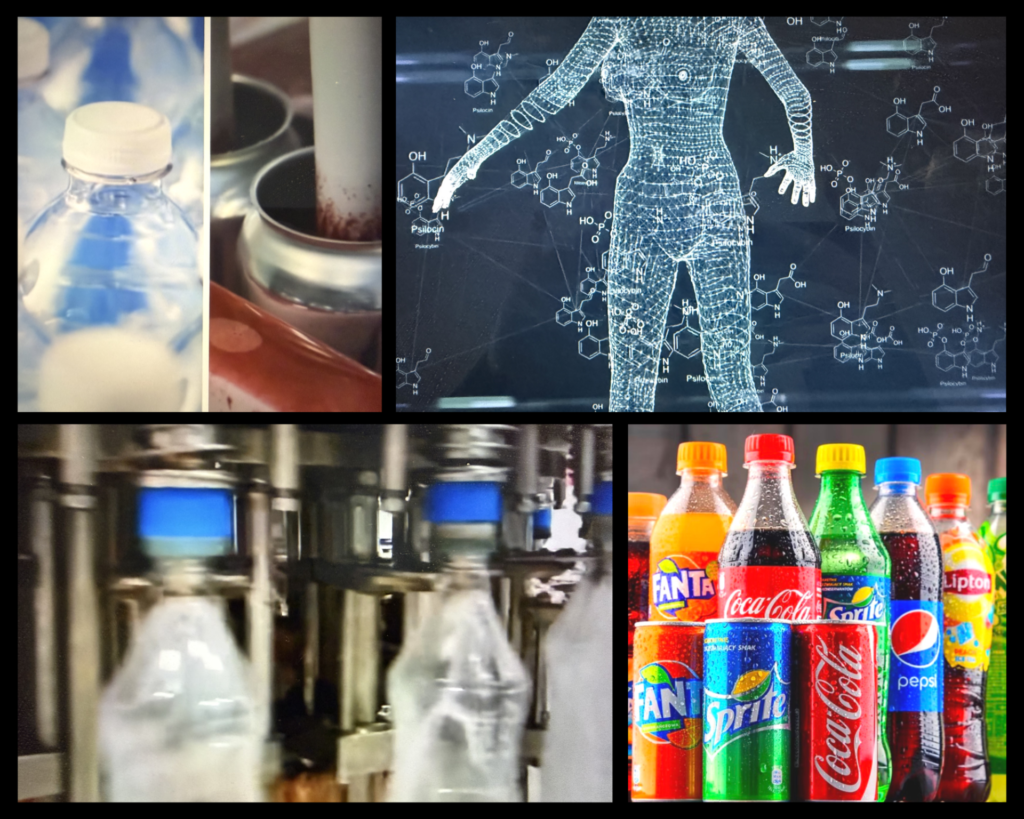
Soda is part of many people’s daily consumption without realizing how unhealthy it can be. It is one of the most commonly produced drinks, and the way it is made raises many concerns. It is usually made from carbonated water and high fructose corn syrup, along with artificial flavors, preservatives, and coloring. Due to this, soda has been linked to health issues like obesity, type 2 diabetes, tooth decay, and heart disease. What stood out to me from the video is how high sugar content is a key part of manufacturing. Many of these drinks contain large amounts of added sugar in just one serving, making them more appealing but also increasing health risks over time. This shows how companies design products to taste good and encourage repeated consumption. To add on, there are also environmental impacts. The production of high-fructose corn syrup requires extensive corn farming, which contributes to pesticide use and environmental damage. In addition, soda packaging, such as plastic bottles and aluminum cans, contributes to pollution, and significant amounts of water are used in production. It can take about 2–4 liters of water to produce just 1 liter of soda, which is especially concerning in areas facing water shortages.
Question: Since sugar content is already listed on labels, if companies were also required to clearly show the environmental impacts and worker conditions behind soda production, do you think that extra information would actually change what people buy, or would most consumers keep choosing soda anyway?
-
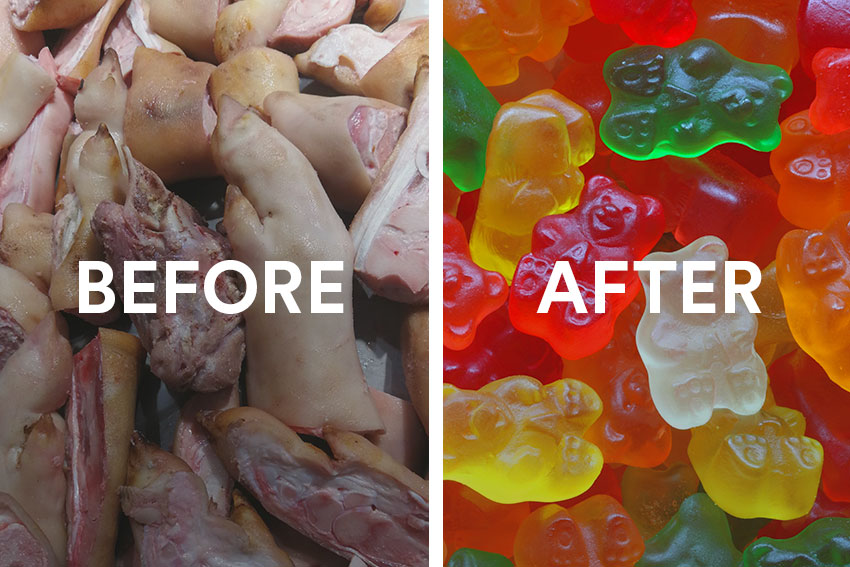
Many people are unaware that gummies are often made with pork. Gummy candy usually contains gelatin, which comes from animal collagen, most commonly from pork. This can be a problem for people whose religious or cultural beliefs restrict pork, such as Muslims and vegetarians. However, many gummy brands do not clearly state how their products are made or what ingredients they use. This makes it harder for some people to know whether they can eat these candies, so clear labeling is important when brands manufacture gummies that contain pork to meet different dietary, religious, and ethical needs.
-
https://www.freshplaza.com/north-america/article/9764968/ecuadorian-plantains-lose-ground-in-the-u-s
There are fewer fresh bananas and plantains being exported from Ecuador and earning less money for those that are being exported. The reason for the decrease exportation is the quality of the Products, crop diseases, and lower productivity of the crops. Other countries are gaining from this decrease and taking leaving Ecuador behind. While the crop itself is decreasing with time, processed plantains are helping and however this is just for the moment and will change with time. If the fresh produce exportation decrease so will the materials needed to make these processed foods. While this issue is localized in Ecuador at the moment, it can lead to works in these processing factories to lose their jobs to make up the loss of production. Seeing how processed foods is a big part of Americans income, fewer exportation from Ecuador can lead to long term risk of manufacturing facilities not being able to sustain growth and laying a lot of workers off. Farming is crucial for manufacturing and processing.
Question: How does farming and manufacturing shape and connect with job stability of food service workers? How might competing countries like Guatemala add more pressure to Ecuador’s agriculture?
-
Hotbreqd Kitchen is a positive light on food manufacturing in nyc. Per its website “ Hot Bread Kitchen creates economic opportunity through culinary job skills training, food entrepreneurship, and an ecosystem of support for individuals who face barriers to meaningful careers.”
Can this model be replicated in other food areas?
-
HOW industrial APPLE JUICE is MADE🍎 | How APPLE JUICE is PRODUCED in FACTORIES | Production Process
I was researching some juices I enjoy drinking and came across this interesting video that covers the apple juices; That start in “harvesting process”- (“from september to october)” from the trees using a machine, to the factories. In this video it talks about “800 millions litters of apple juices” are produced every years. Also said the importance “fresh of the fruits” when coming to the company. In the video explain the steps that are; “inspection, cleaning,” separate the good apple to the one that is in bad condition. Then “sorting process” also when they finish with that they move the apple to a container to control the “temperature, fresh”. Moving out the do “quality analyze” measures the “sugar and acidity”. Then pass the machine to clean. Moving on to the machines that peel the apple. After that, it proceeds to the “crushing stage” to extract the pulp; subsequently, another process begins involving the use of tanks. They use the peel of the apple and convert it into energy. Next step are “quality control and treatment” then when the process is done the do “pasteurization” and finely move to “homogenization and packaging”
QK- Did you know the process and time of what your favorite juices, the chemical they use to drink, lasts longer?
What is the importance of the machinery used—whether for manual or mechanical harvesting—to collect fruit for making purees or juices, and the regulations that must be followed to juice your drink right now?Food and Society (SOC 325)
-
I remember watching this video a long time ago and it was interesting to see how the use of ice changed. Usually ice comes in bags or you can easily make it yourself at home but in the video it seems more meticulous. The ice being produced is specifically for bars, since ice can affect cocktails. Ice is a universal item so it’s interesting to see how they add so much detail into making ice and how they make it a profitable business, especially in NYC.
Question-
How do high end restaurants change regular items into high end products ? How did turning a basic product (ice) into a “premium” product change its value? Who are the consumers most likely to be ?
-
Link to Article: https://www.mashed.com/1535944/startling-secrets-food-industry
The article posted above by Mashed, written by Samantha Jacobs lists out twelve “secrets” about the food industry, such as store-bought orange juice being more processed than you might think it is, the fake grill marks on your fast food burgers, and the wood pulp being used in shredded cheese to prevent clumping. Personally, I didn’t know that cellulose was basically flour mixed with sawdust. Although some of these facts might have already been exposed or obvious to other consumers, it’s still sociologically impactful. The fact that companies are willing to cut back quality on their products for their capitalistic greed is saddening. Additionally, this shows how the food industry has successfully “constructed” our perception of what “freshness” and “quality” is. To conclude, the misleading labels, the hidden labor, and the deception of the overall product is the food industry’s way of making more money with “only” the risk of our health.
Question: If other countries such as Japan, France, Korea, and more can prioritize the standards of quality in the manufacturing of their food products, why can’t the U.S.A. do the same?
-
https://www.instagram.com/reel/DWh7m3PiaNi/?igsh=MWxsbnR6Zms3ZnJocg%3D%3D
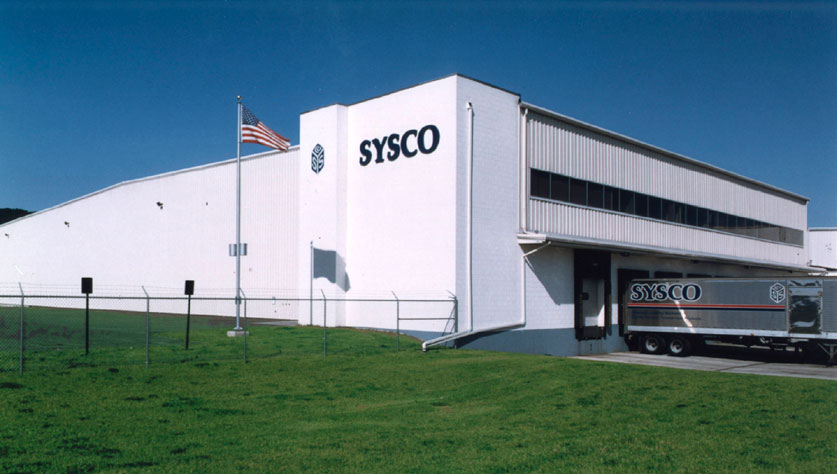
This Instagram reel is a deep dive on how Sysco, a giant in food manufacturing and distribution has taken over the U.S. market and has made it so that food around the country all tastes the same. Restaurant foods, specifically fried foods, are so monopolized by cheap and easy manufacturing from Sysco, that wherever you may be in the U.S., chicken tenders or mozzarella sticks all look and taste the same. This is upsetting both for local restaurants, customers and also farmers and small or local food manufacturing businesses. Further, it poses a huge health problem as food is no longer fresh or homemade, but even the foods we pay a premium for are made in factories– all while costs are rising.
Question: Have you seen or noticed this phenomenon in NYC? With what foods? What does this mean for locally owned businesses? How could the government intervene in this monopolized market?
-
Google Maps Foodscape: https://www.google.com/maps/d/u/0/edit?mid=1fbrOb40u0wp9tLZA8JIEH3GXfXLAumE&usp=sharing
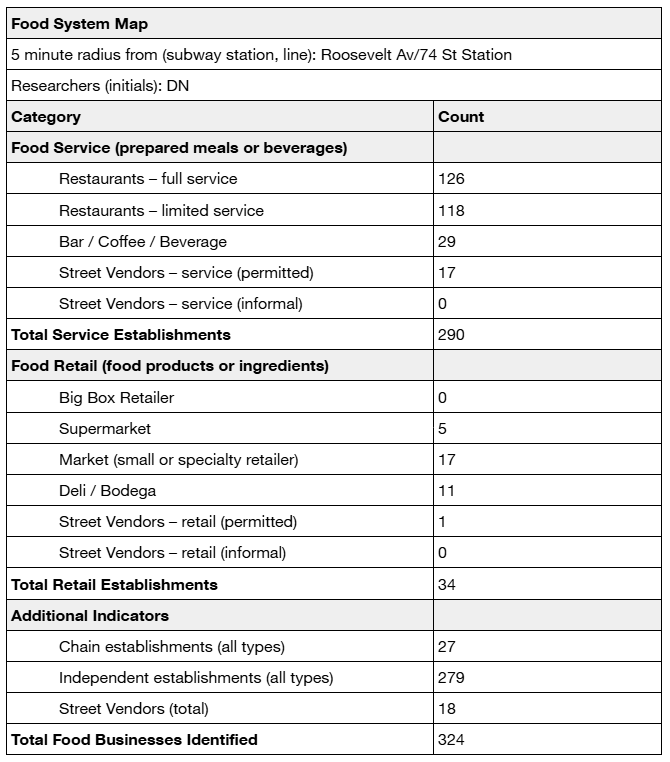
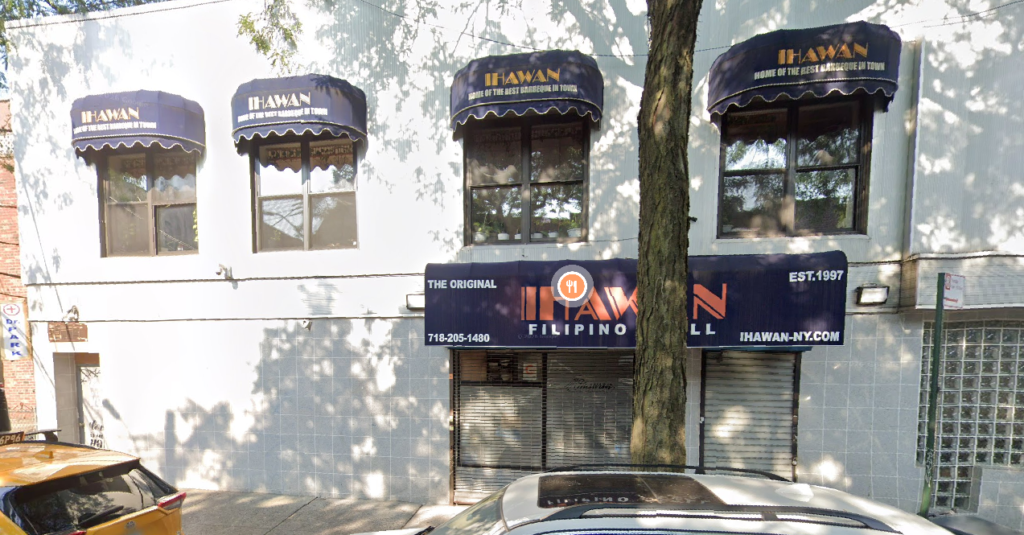
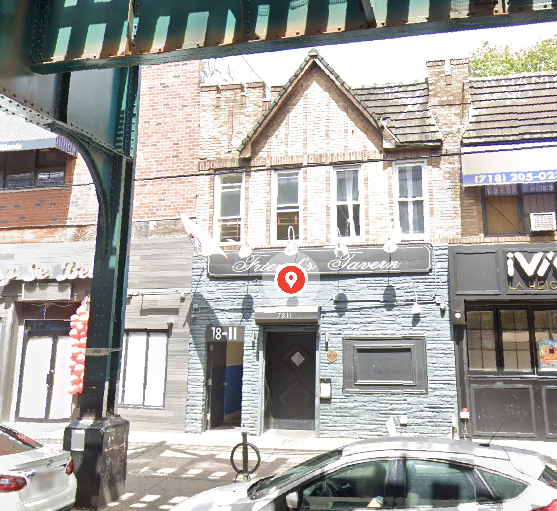
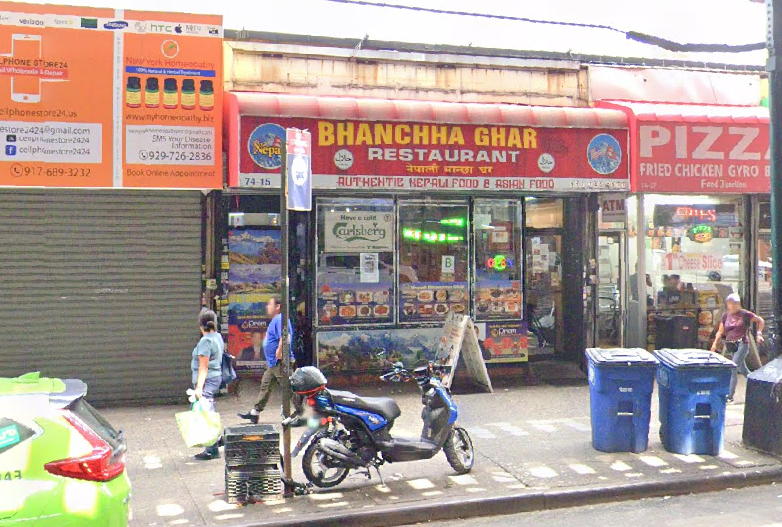
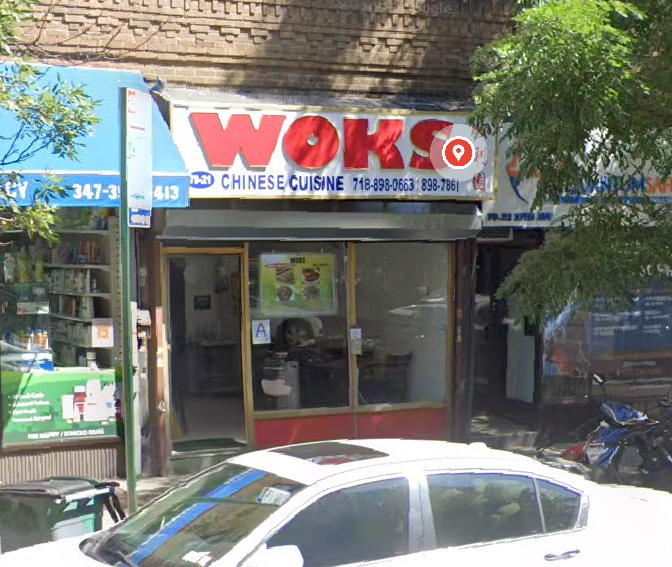
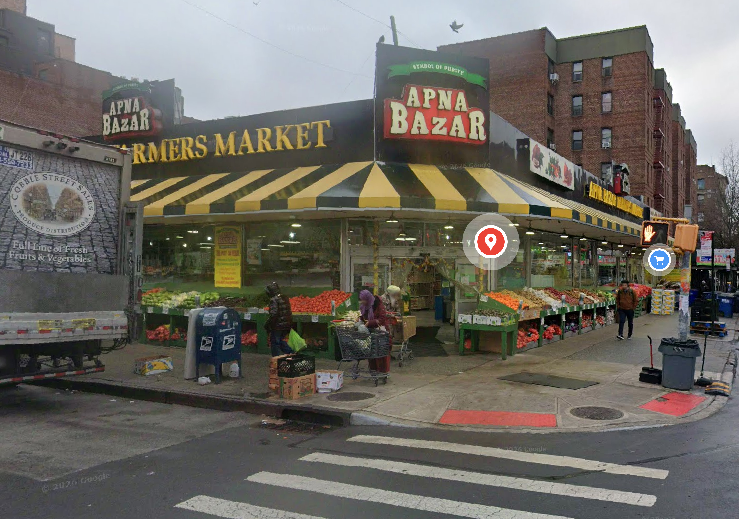
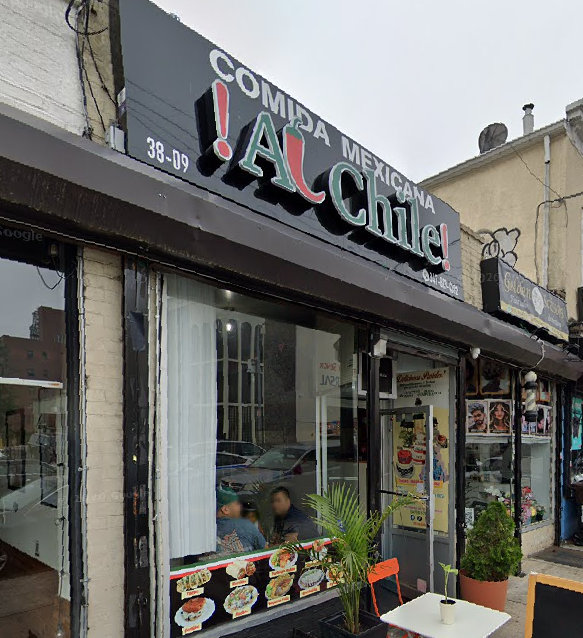
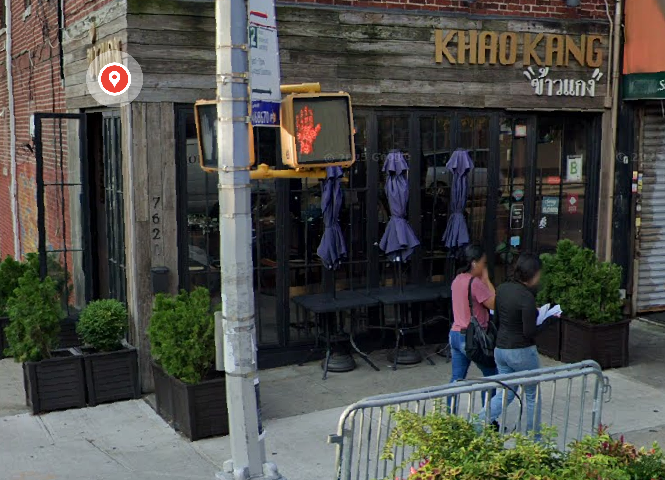
The food scene around the Jackson Heights/Roosevelt Av-74th St subway stop is an unlikely combination of Latin American cuisines, South Asian cuisines, Southeast Asian cuisines, and American staples. Most of the Filipino restaurants are concentrated around 69th St. Most of the Thai restaurants are near Woodside Avenue and 77th St. Most restaurants are located along Roosevelt Avenue. Roosevelt Avenue is a mix of Himalayan food, bodegas, and Latin American restaurants, bars, and bakeries. Most of the Latin American establishments are Colombian, Ecuadorian, and Mexican. 37th Avenue from 73rd Street to 76 Street is packed with Indian, Bangladeshi, and Pakistani grocery stores, food carts, and grocery stores. Some of Manhattan’s staples, such as bubble tea and the “slop bowl”, are largely absent. Regardless, pizza is as present here as it is in the rest of the city. Many international chains, especially Dunkin’ Donuts, are spread throughout the area. Lots of the trucks and carts serving food are Tibetan and Nepali, specializing in momos. Most of the Himalayan momo street vendors are concentrated around the Roosevelt Avenue subway station, while the brick and mortar Himalayan restaurants are more spread out throughout the area. Authentic Chinese food is largely absent from the area, while American Chinese and Chinese South Asian fusion restaurants are relatively common. Many of the grocery store chains in the area are smaller chains of South and East Asian markets, rather than the usual American grocery titans. Aside from the chains, there is a large number of smaller specialty food markets. The area is so densely packed with food businesses that so many cultural food enclaves can exist within such a small space.
-
1955 Swanson TV Dinner Commercial
In the mid-1950s, the Swanson TV Dinner was marketed not just as a meal, but as a revolutionary solution to “liberate” the housewife from the kitchen while simultaneously accommodating the modern husband’s unpredictable schedule. By packaging a full meal in a compartmentalized aluminum tray, manufacturers physically institutionalized the shift from the family dinner table to the living room, effectively tethering the domestic experience to the rise of mass media. This transition highlights how food manufacturing serves as a primary driver of social change, transforming deeply embedded cultural rituals like the shared family meal into efficient, industrialized moments of consumption.
Sociological Question: While industrial food manufacturing like the TV dinner offered a way to alleviate the burden of time-consuming domestic labor, how did the shift from the home kitchen to the factory fundamentally alter the way we value care work and communal social life?
-
Foodscape Description: The foodscape within a 10-minute radius of the 161st Street – Yankee Stadium station is dense and split into two distinct food environments that rarely overlap. The blocks immediately surrounding the stadium are saturated with sports bars, nearly all of which operate primarily on game days, creating a corridor of fan-oriented food and drink that functions as an extension of the stadium rather than a neighborhood amenity. Inside the stadium itself, corporate concessions capture visitor spending entirely before it reaches the surrounding streets.
Moving away from the stadium, the foodscape becomes markedly more independent and community rooted. Full-service restaurants, breakfast counters, and bodegas open as early as 5 am serve a predominantly Dominican, Caribbean, and West African residential population. Spanish dominates signage and conversation. Menus reflect the cuisines of the diaspora communities that live here, plantains, oxtail, jerk chicken, jollof rice, at prices calibrated for working-class budgets. Several small delis operate on delivery platforms under different names than their storefronts, suggesting an informal integration into the app economy that is largely invisible from the street.
Retail food access is uneven. The neighborhood’s primary full-service supermarket sits inside a commercial mall rather than at street level, and the closest standalone grocery to the station has drawn consistent complaints from residents about inflated prices. Bodegas fill the gap for daily staples. Street vendors, primarily informal, appear throughout the corridor and represent a precarious but visible layer of the food economy, subject to enforcement that the stadium’s own movable concession stands do not face.
The dominant pattern is one of coexistence without exchange, two food worlds sharing a zip code but serving entirely different populations.Foodscape Counts Table:
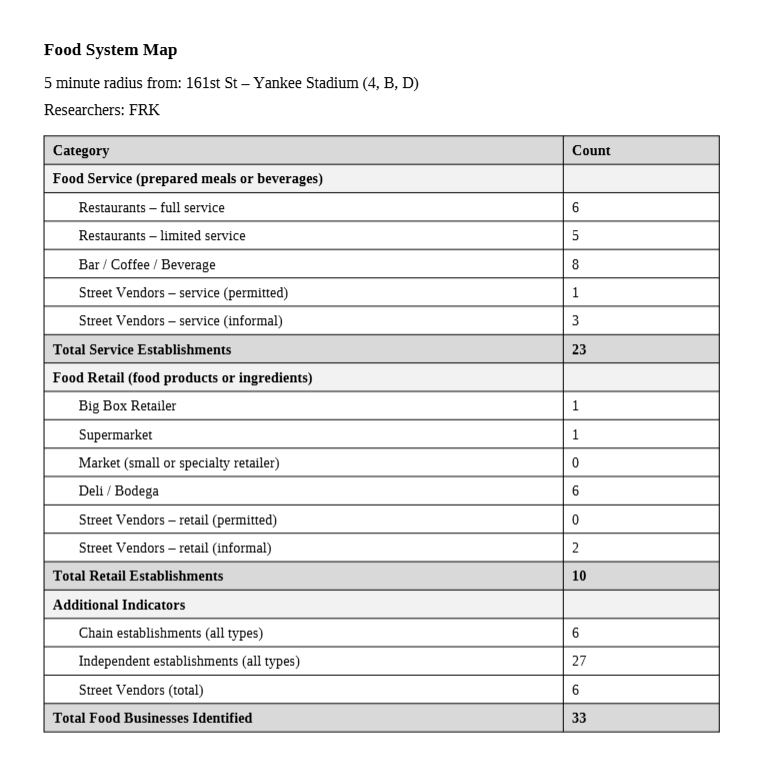
Yankee Stadium: Serves as the primary corporate food and beverage operator for the area, characterized by centralized management and branded concession concepts.
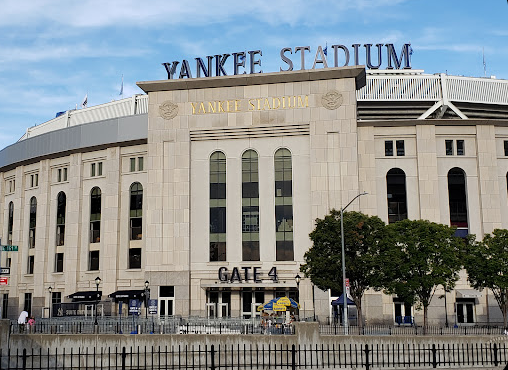
Stan’s Sports Bar: Located in the immediate vicinity of the stadium, this establishment operates primarily as a beverage-focused social space during scheduled game-day events.
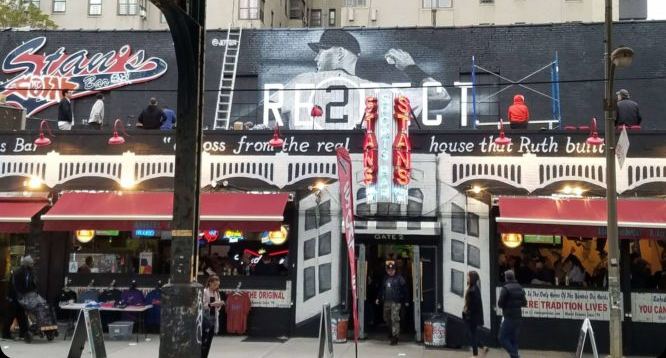
Bronx Terminal Market: This large-scale commercial development houses national retail chains, representing the area’s transition toward centralized, corporate-managed food and retail distribution.
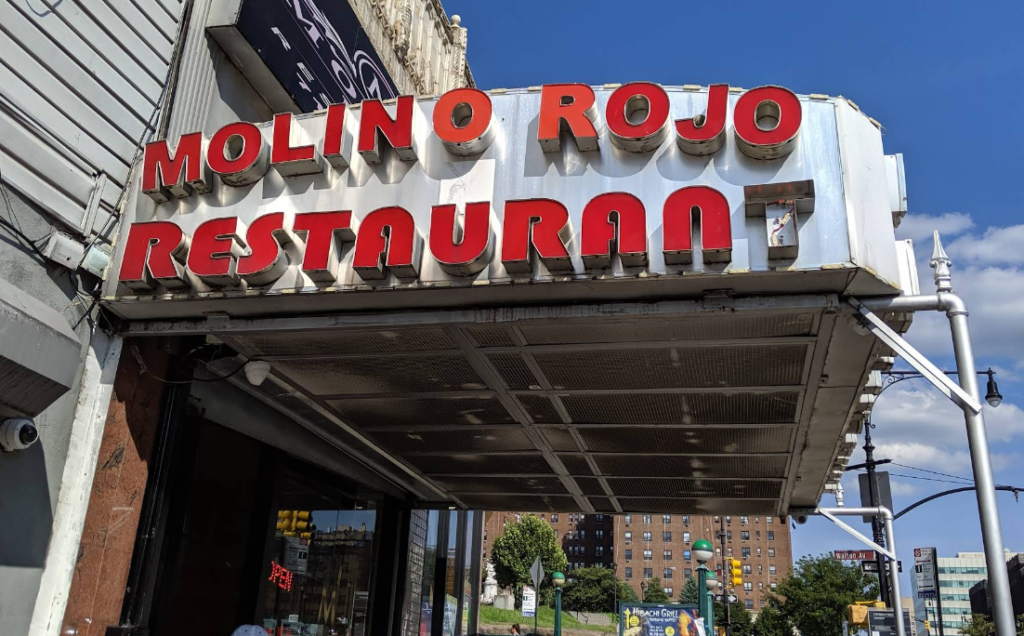
Molino Rojo Restaurant: This establishment functions as a full-service restaurant, providing prepared Dominican meals through a business model structured around direct staff-customer interaction.
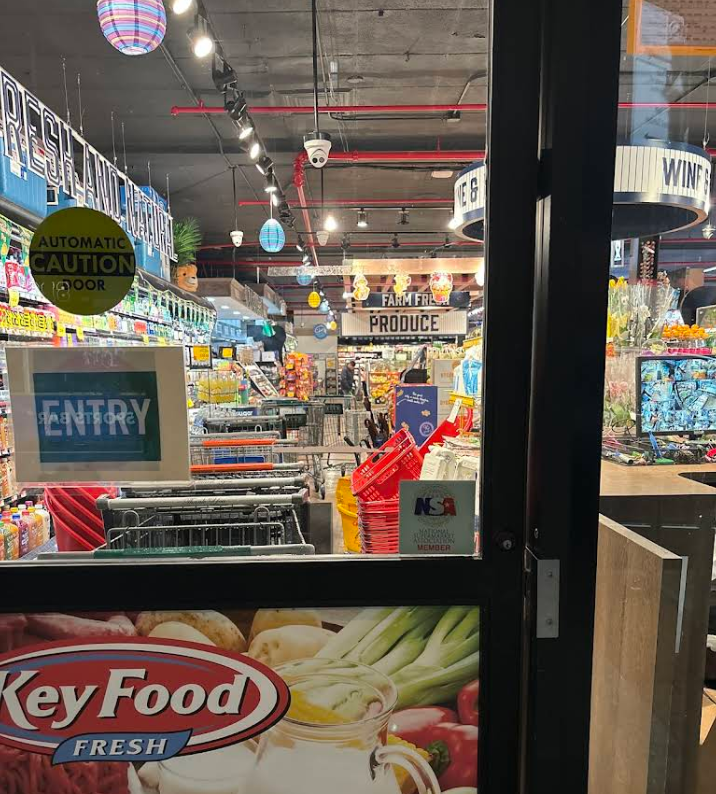
Key Food Supermarket: This location operates as a standard retail supermarket, providing a range of food products to serve the daily grocery needs of the surrounding population. “Yankee’s supermarket.”
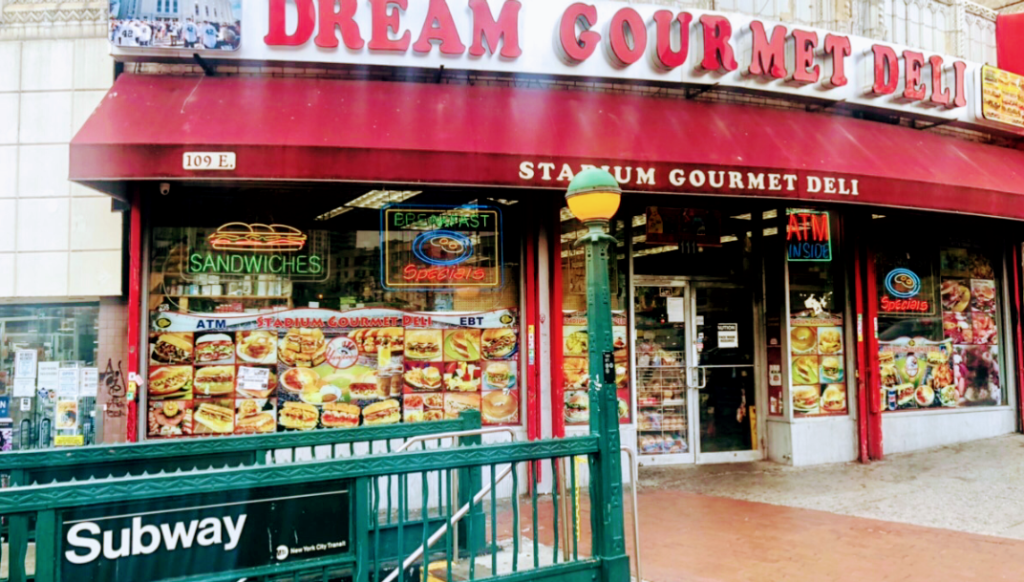
Dream Gourmet Deli: This 24-hour bodega provides prepared food services and is integrated into digital delivery platforms for localized neighborhood access.
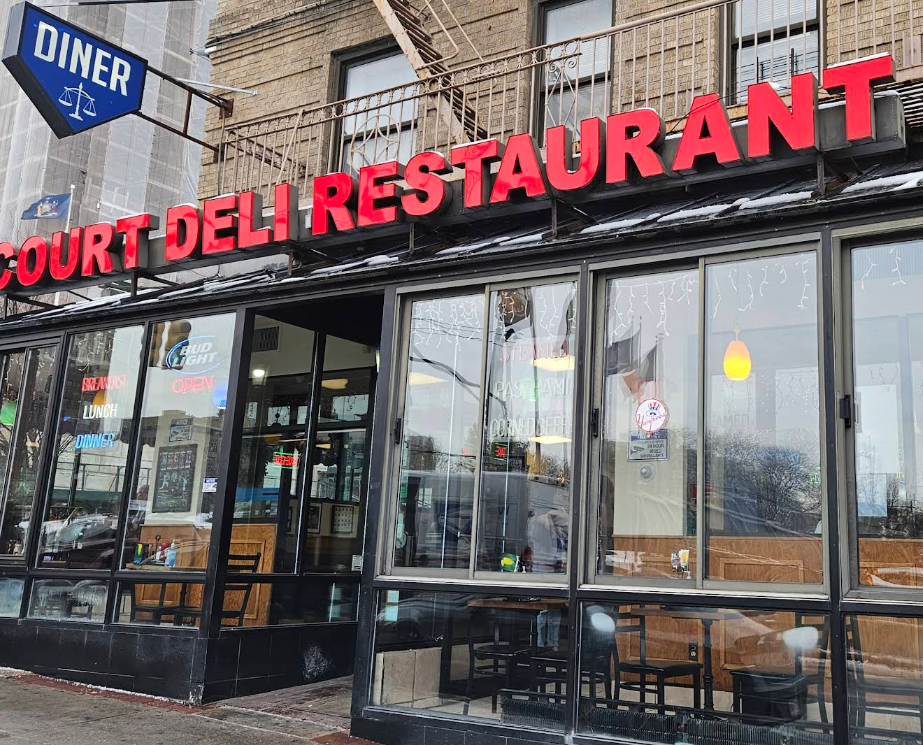
Court Deli: Established in 1936, this site functions as a full-service deli and diner, maintaining operations that align with the schedules of nearby civic institutions.
-
Food System Map 5 minute radius from (subway station, line): Yonkers Railroad Researchers (initials): KG Category Count Food Service (prepared meals or beverages) Restaurants – full service 22 Restaurants – limited service 4 Bar / Coffee / Beverage 0 Street Vendors – service (permitted) 0 Street Vendors – service (informal) 0 Total Service Establishments 34 Food Retail (food products or ingredients) Big Box Retailer 0 Supermarket 3 Market (small or specialty retailer) 22 Deli / Bodega 24 Street Vendors – retail (permitted) 0 Street Vendors – retail (informal) 0 Total Retail Establishments 66 Additional Indicators Chain establishments (all types) 0 Independent establishments (all types) 70 Street Vendors (total) 0 Total Food Businesses Identified 70 Foodscape Description:
Within this Food System Map, all of the food service and food retail establishments are a part of the entirety of Getty Square which is a massive area encompassing multiple streets. The boundaries of Getty Square is from the Hudson River Waterfront to Warburton Ave, and North Broadway on the west going eastward. Ashburton Ave lies on the north and at the southern edge is Prospect Street and Nepperhan Ave. Geographically, Getty Square is a big area and observing it all would’ve taken extremely long and wouldn’t have been realistic connecting it to the Yonkers Railroad, so I chose to observe it’s shopping district which is along Palisade Ave, North Broadway, Main and New Main Street, and Warburton Ave. Many of the stores within the shopping district are ethnic and multi-cultural and are locally owned. There were restaurants ranging from Jamaican to Mexican to Italian to even Japanese and Chinese, so there were clearly many different cuisines. Walking around I also saw a good diversity of people from young to old, white to black. More patterns I’ve observed when walking around is that there are many small shops that are right next to each other in proximity with larger stores being lesser known retailers. Most of the environment at the shopping district feels jam packed and in warmer temperatures and busier days there are many people roaming around.
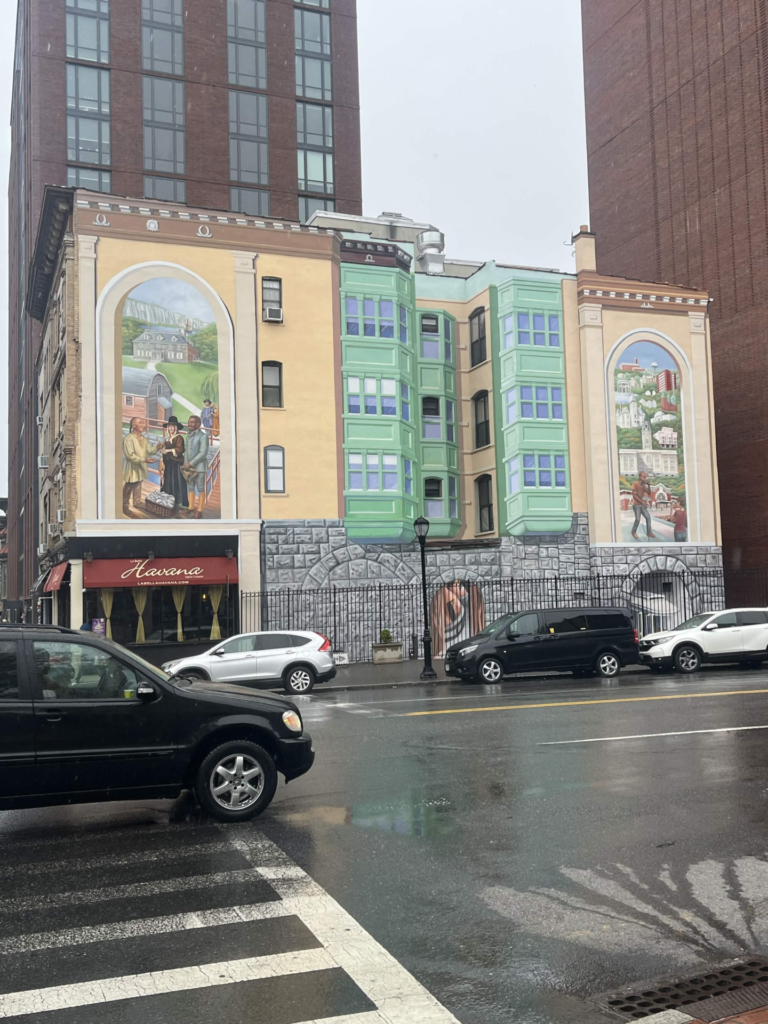
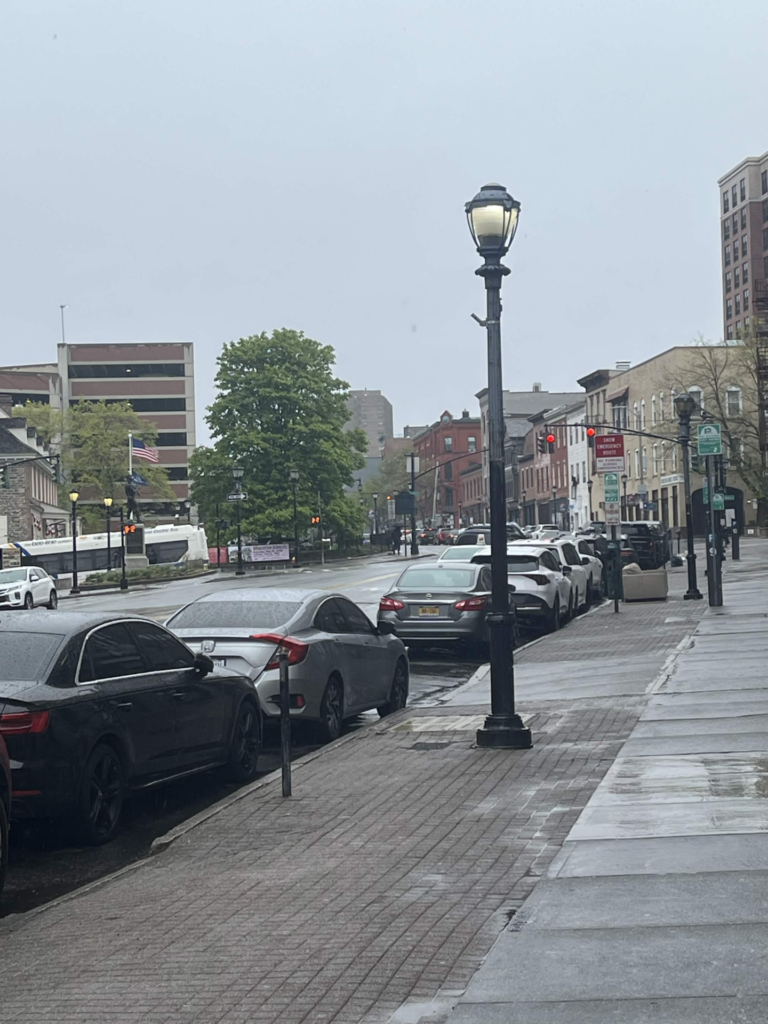
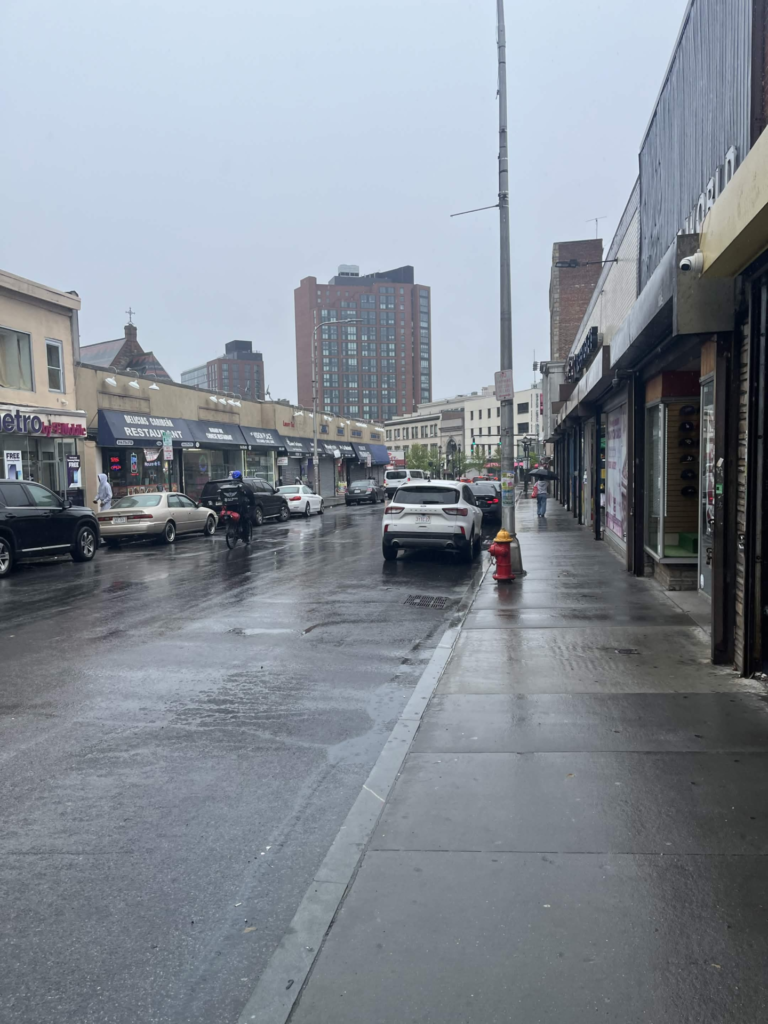
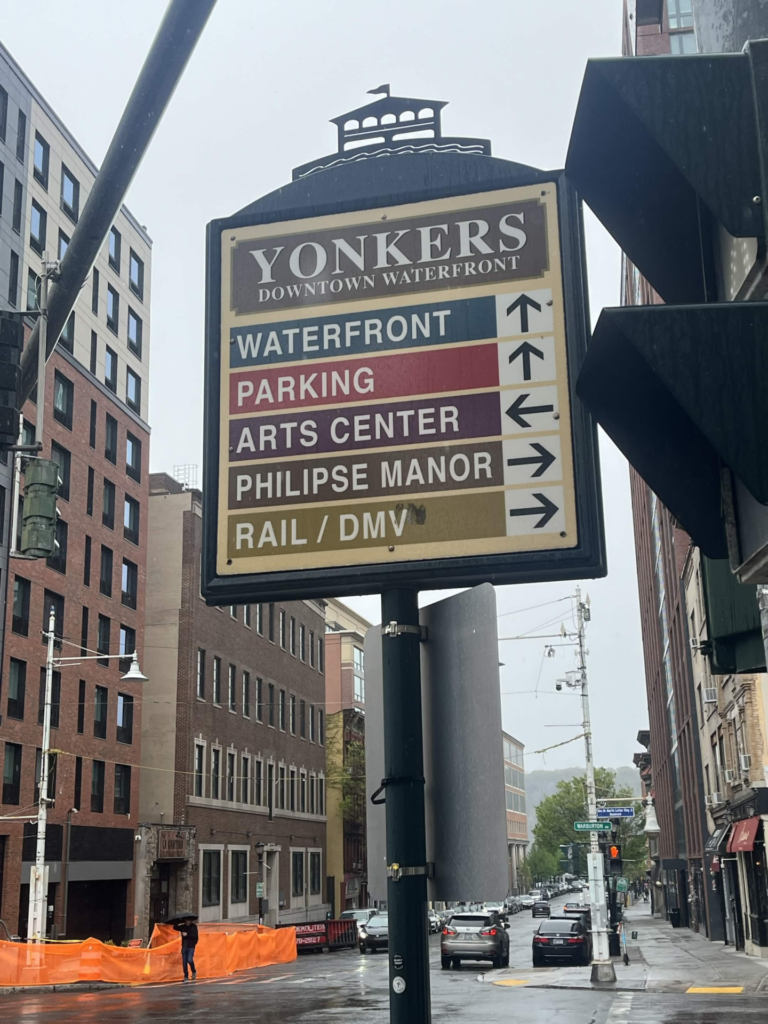
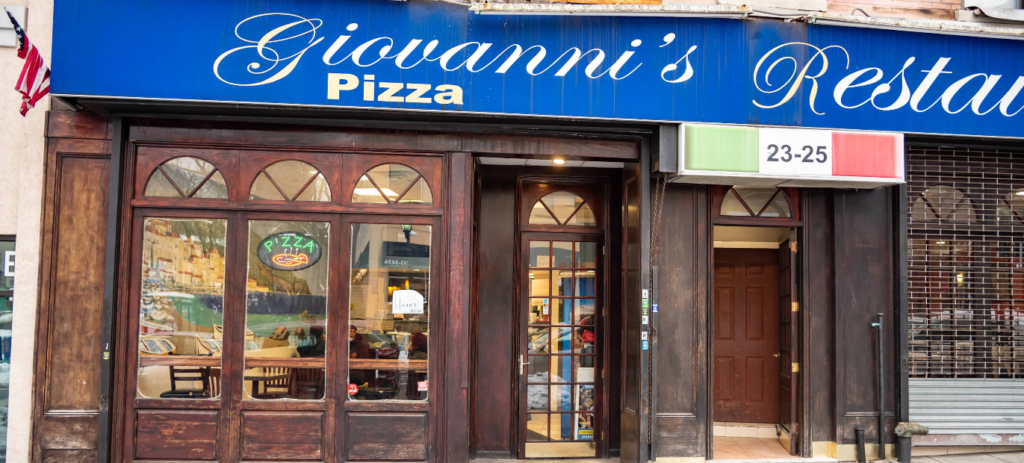
The place I chose to eat at was yes, a pizza place how original. However, I chose this place because it resonated with me with how the restaurant looked and it had an easygoing and friendly environment. Business was slow but the owner another customer, most likely well known were talking with each other and at other points more friends or people who know the owner came in to eat or even give him a package. It was because of this that I got the impression that a lot of these small businesses have interactions like this and I enjoyed the peace that came with it, just casually eating a slice or two of pizza while hearing the background interactions.
-
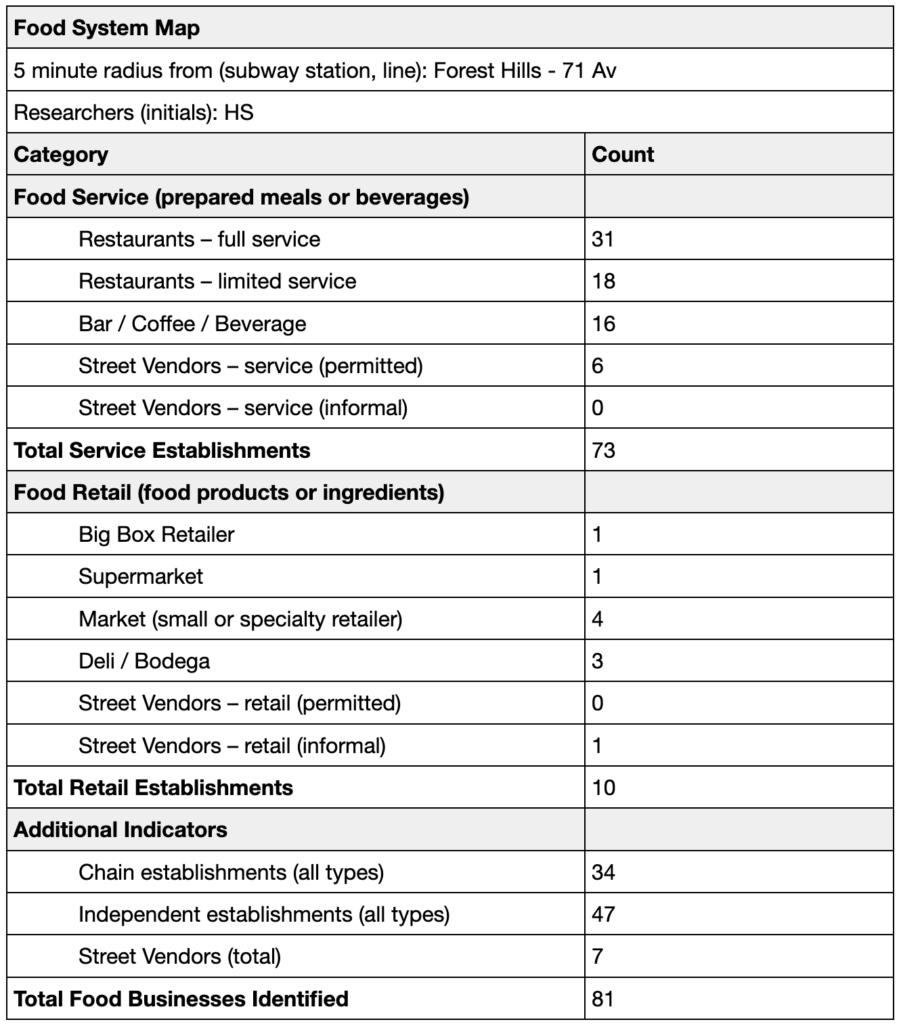
Foodscape Description: I observed that there is an extremely high density of food businesses within a 3-4 block radius of Forest Hills-71Av station. The dominant types of food spaces are food service (88%) over food retail (12%). Although there is a high number of chain establishments such as Starbucks and Target being 34/81 (42%), the number of independent establishments outweigh the chain establishments with 47/81 (58%). English is the primary language used for most of the signs and menus when you walk into a restaurant or supermarket. However, there are second languages used when you walk into ethnic food places such as Fay Da Bakery using Mandarin, or Agora Taverna using Greek imagery and text. It’s evident that there is a dominant presence of Asian fusion cuisine, specifically East Asian comfort food, such as Korean fried chicken, Korean corn dogs, ramen, bubble tea, etc. Customer and worker interactions are transactional, fast, and formal when you walk into restaurant limited-service spots such as 7th Street Burger or Austin Street Pizza. However, at street vendors such as The Halal Guys or King Souvlaki, the interaction is brief but friendly. It’s like running into a neighbor and asking how their day was (street vendors) vs. running late for work and needing a coffee to-go as there is a long line building behind you (limited-service). Almost all of the establishments have an online platform or presence. Even the smallest delis or large chain have stickers in the front of their stores for DoorDash, UberEats, or Grubhub. Additionally, Wonder is a unique example for having an app platform as that’s their entire concept where they function as a physical space that helps facilitate app-based food delivery from multiple restaurants. There is an unusual food cluster along Austin Street. When you walk a couple of blocks around the area, you come across a cluster of Bakeries and Cafes like Martha’s Country Bakery, Paris Baguette, Tous Les Jours, and Fay Da Bakery. What I found surprising about the local food environment is the lack of “informal” street vendors compared to when you are in another Queens neighborhood like Jackson Heights. Almost all of the vendors in Forest Hills have permits and roughly food trucks/carts. This indicates that Forest Hills has a high-income status with a strict regulation on street vendors/commercialization.
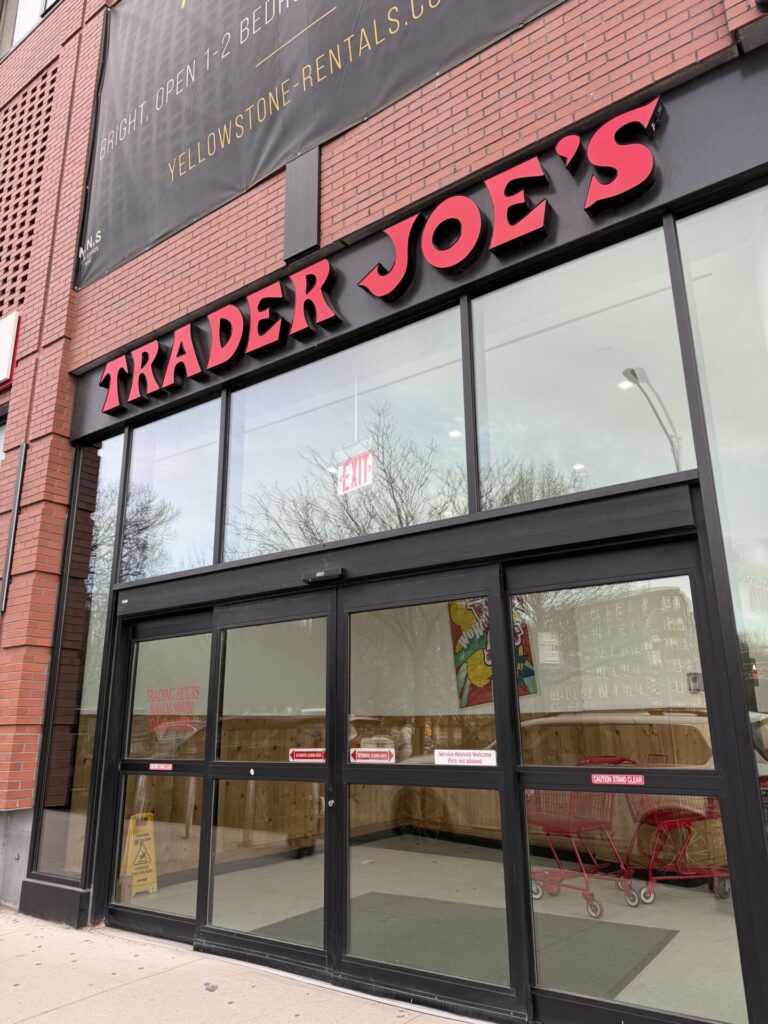
Trader Joe’s: Popular supermarket with multiple locations across New York City. Convenient, pretty affordable, and has become a status indicator if you have their mini tote bag or limited edition regular sized tote bags. This location opened in 2023.
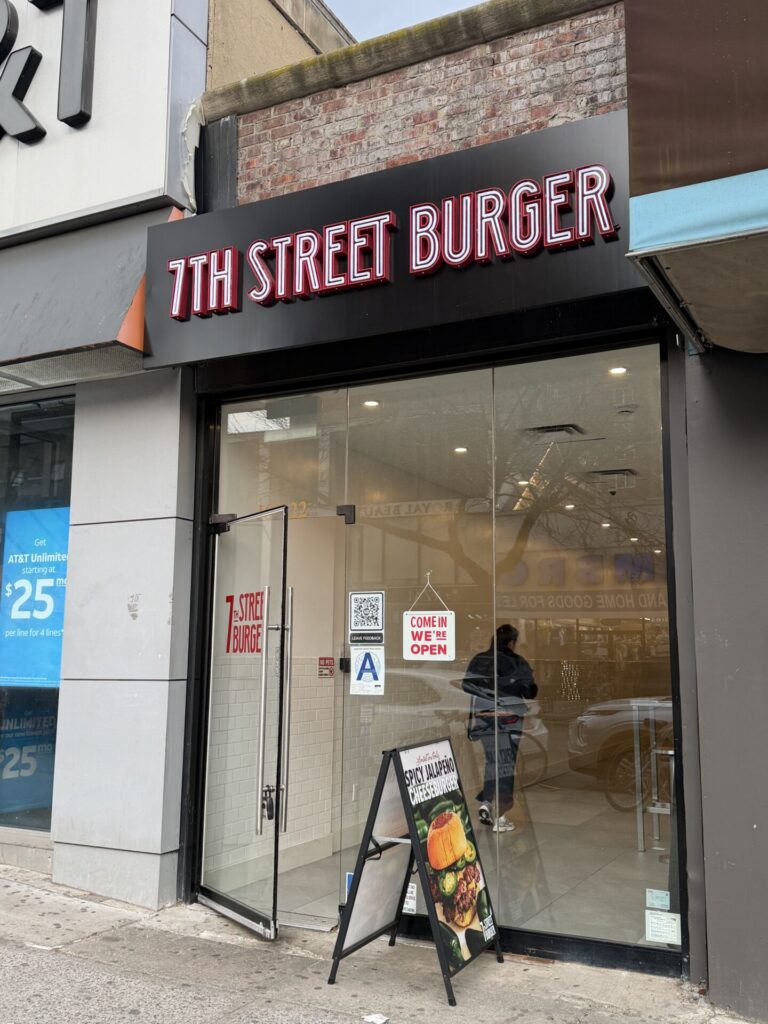
7th Street Burger: Specializes in smash burgers and fries. Has multiple locations across New York City. Their burgers are great and their fries are crispy. This location in Forest Hills just opened almost a year ago.
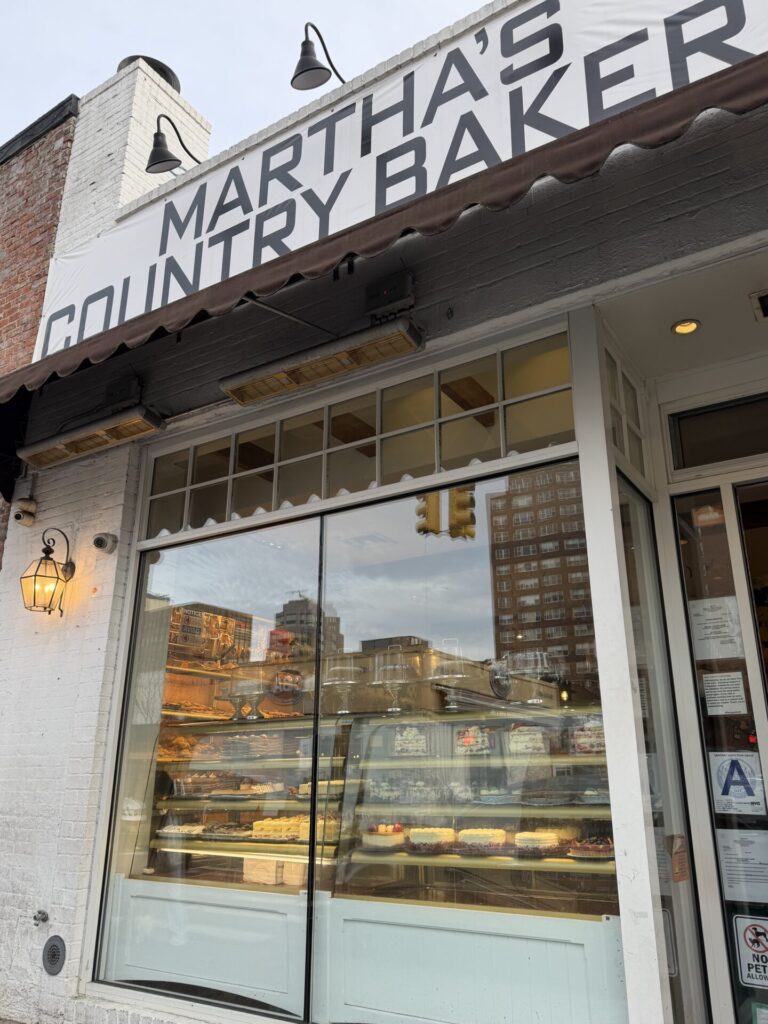
Martha’s Country Bakery: Local bakery that has a few locations around New York City. They sell AMAZING berry napoleons. Cute place to hang out and eat dessert. However, ordering the desserts to go can be a bit hectic when it gets crowded as you have to move quickly or else your turn to order will be passed to the person behind you on line. If you check Google map images of this location, this bakery has been around since 2007 and has expanded since then.
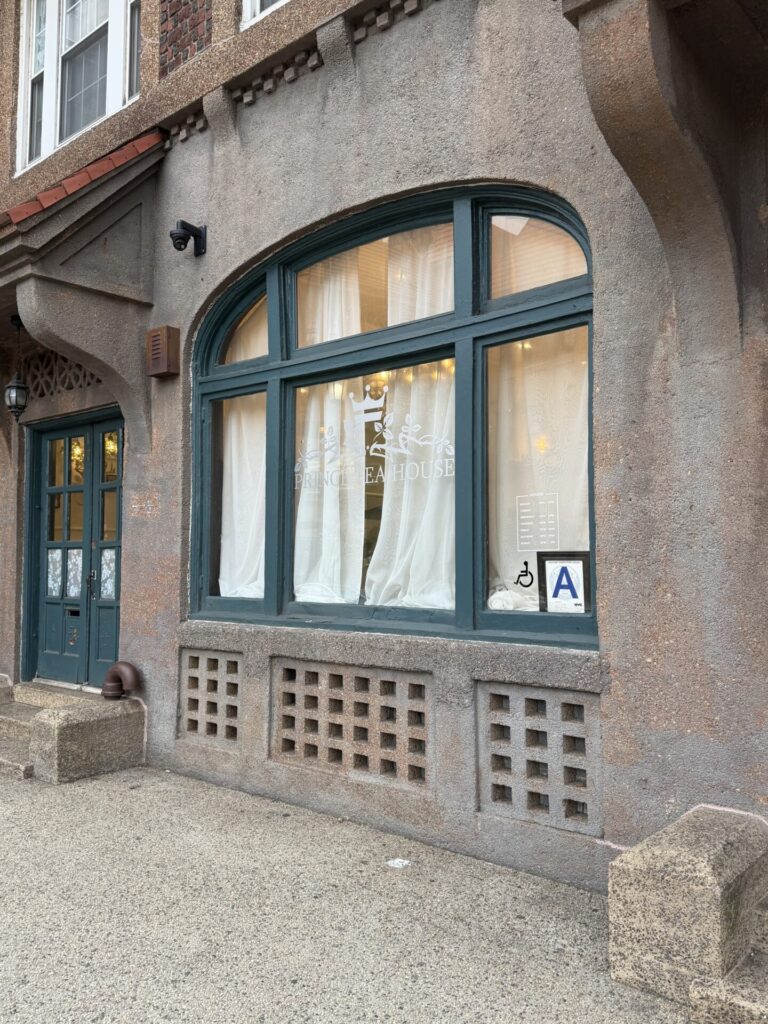
Prince Tea House: Asian fusion tea house. Aesthetically pleasing interior and also a great place to hang out with friends or family with great food and drinks. It gets busy around afternoon. They have a variety of locations around NYC.
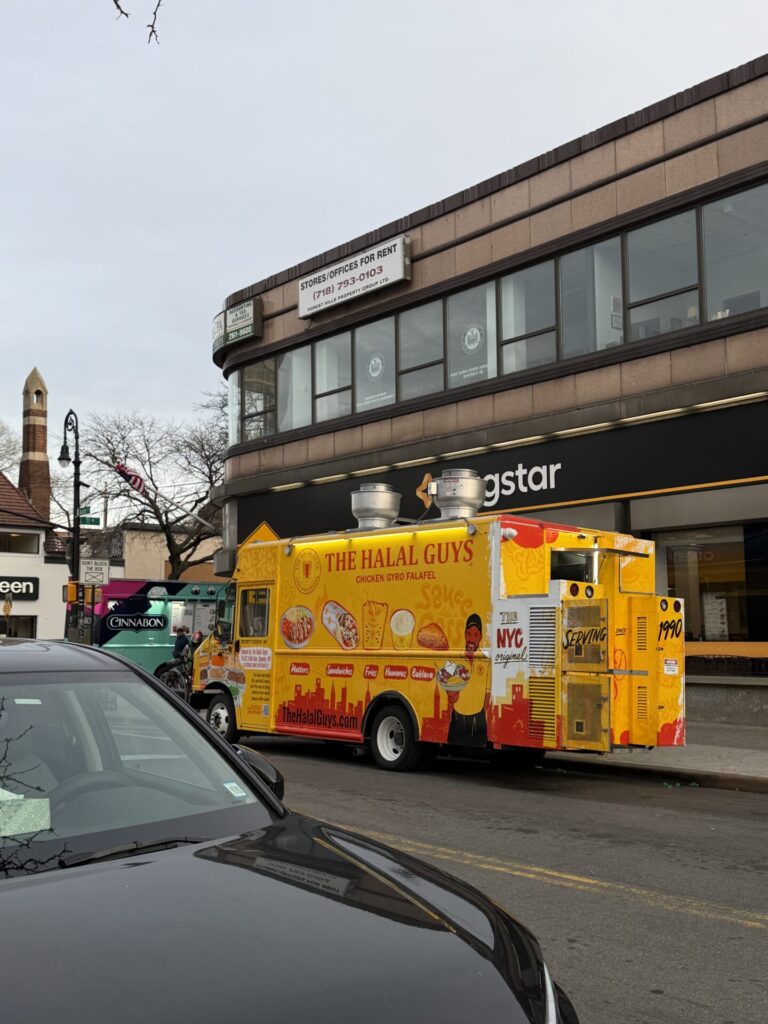
The Halal Guys: Food truck serving iconic halal food that many tourists search for in Manhattan (original location). They have multiple locations across NYC. They mainly sell platters and gyros. The workers are friendly and there are small lines at this food truck sometimes. They recently showed up about a few months ago in Forest Hills.
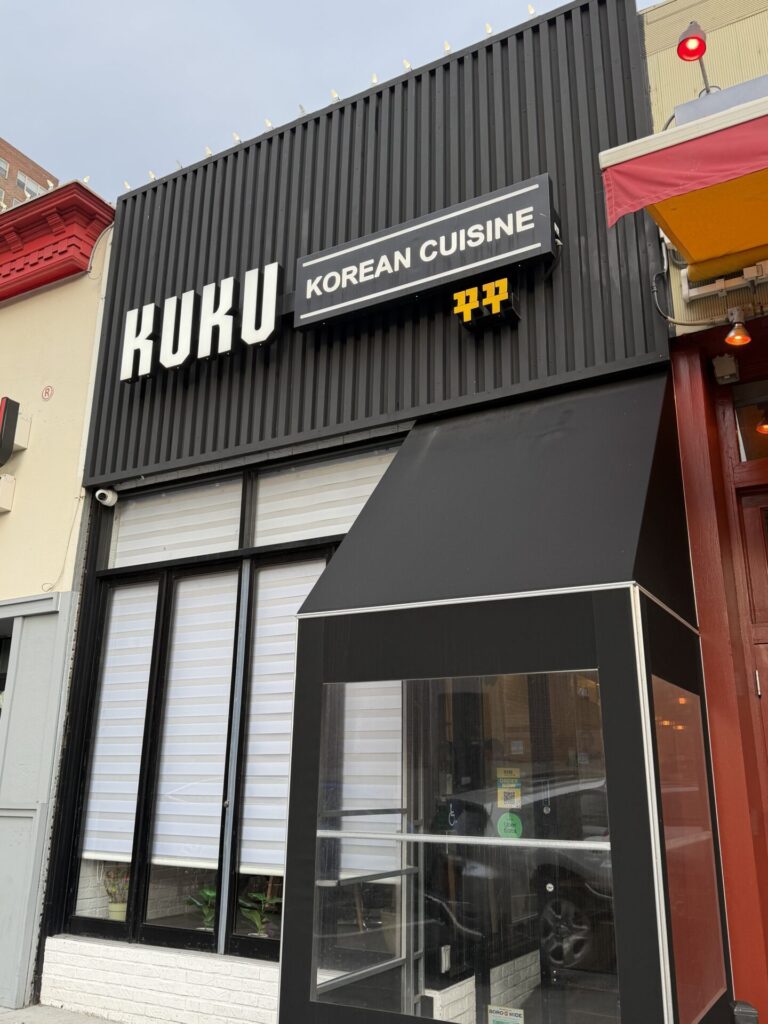
Kuku Korean Cuisine: An independent full-service restaurant with no other locations in NYC. They sell Korean dishes like: Korean fried chicken (specialty), bibimbap, Galbi tang, seafood pajeon, etc. Personally, I love this restaurant. The customer service is friendly and quick. Their Korean fried chicken is better than any other places I’ve been to. It’s a comforting restaurant that I enjoy going to. Kuku is a cozy and inviting restaurant that allows customers to sit down and enjoy a delicious meal either alone or with company.
-
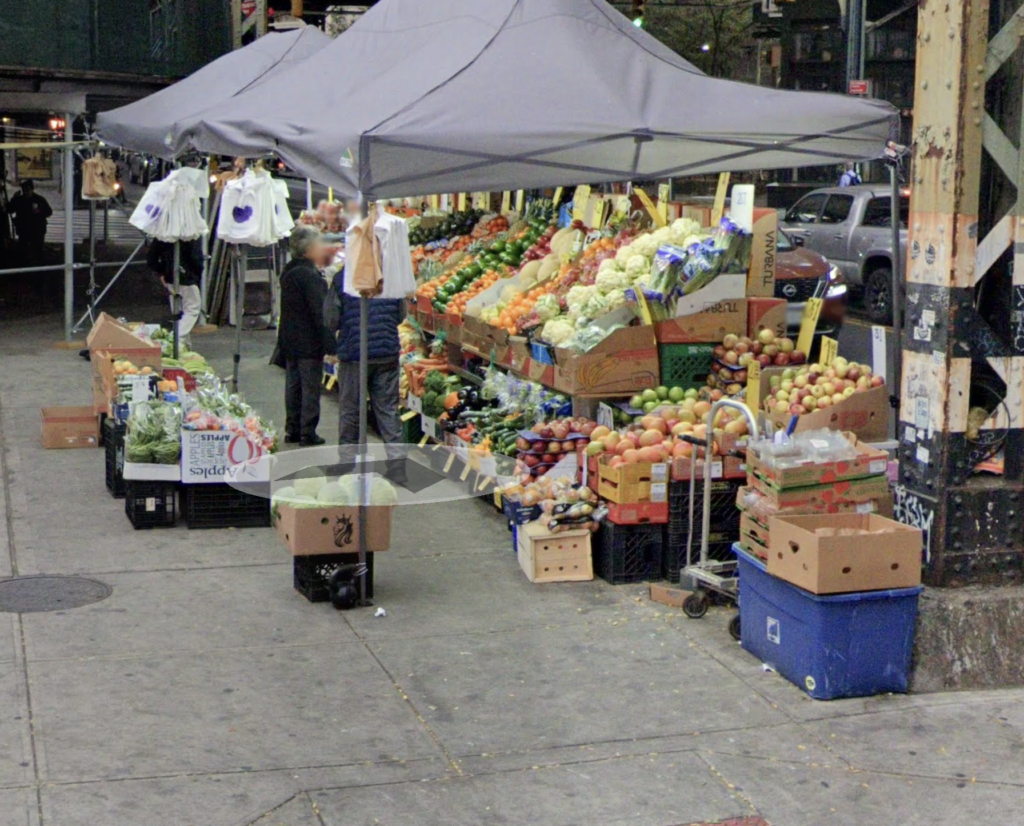
This is an image of a local street vendor who sells fruits and vegetables.
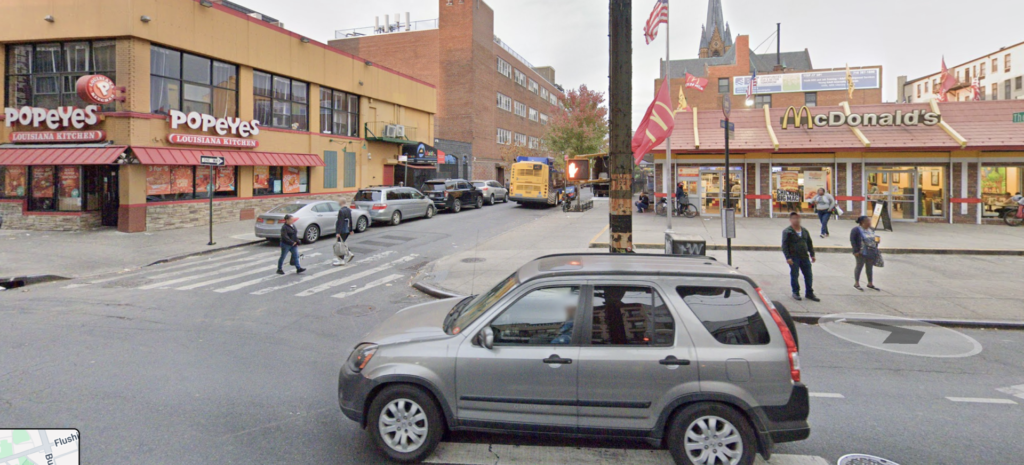
This is an image of two different fast food chains that are near each other. They are going to add a Buffalo Wild Wings near the Popeyes and Wendy’s is across the street from these two. Also, the fast food establishments are located on the main avenue.
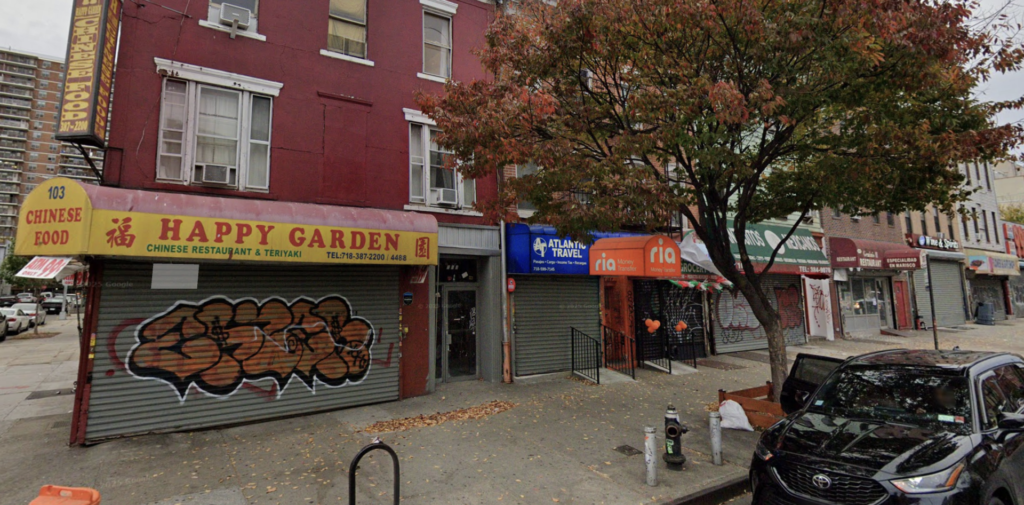
This is a good image to show three of the prominent cuisines present in the foodspace next to each other. Happy Garden represents Asian cuisine, specifically Chinese cuisine. Antojitos (green) represents Mexican cuisine and Gemini’s II (brown-ish/right next to Antojitos)represents Dominican cuisine.
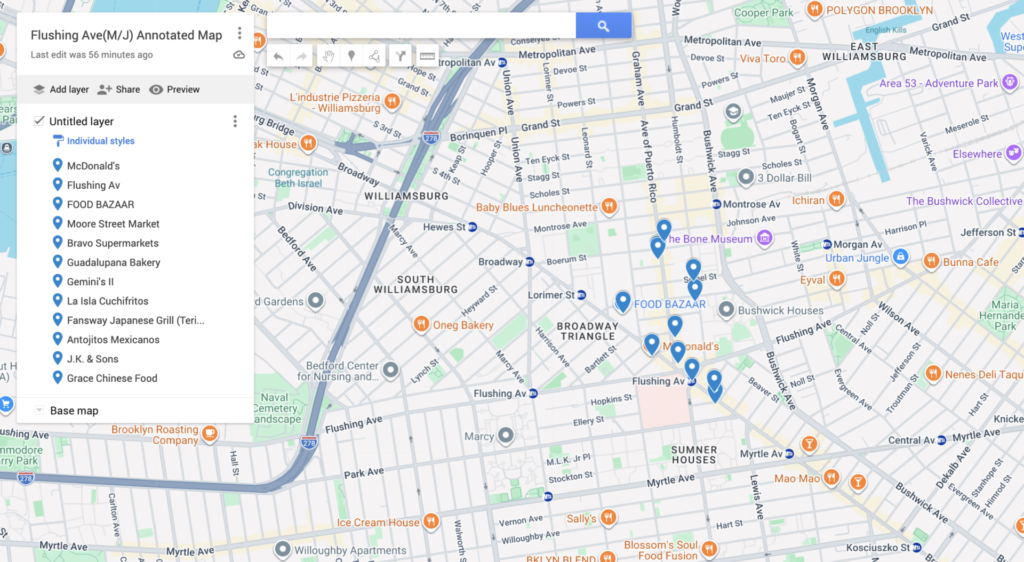
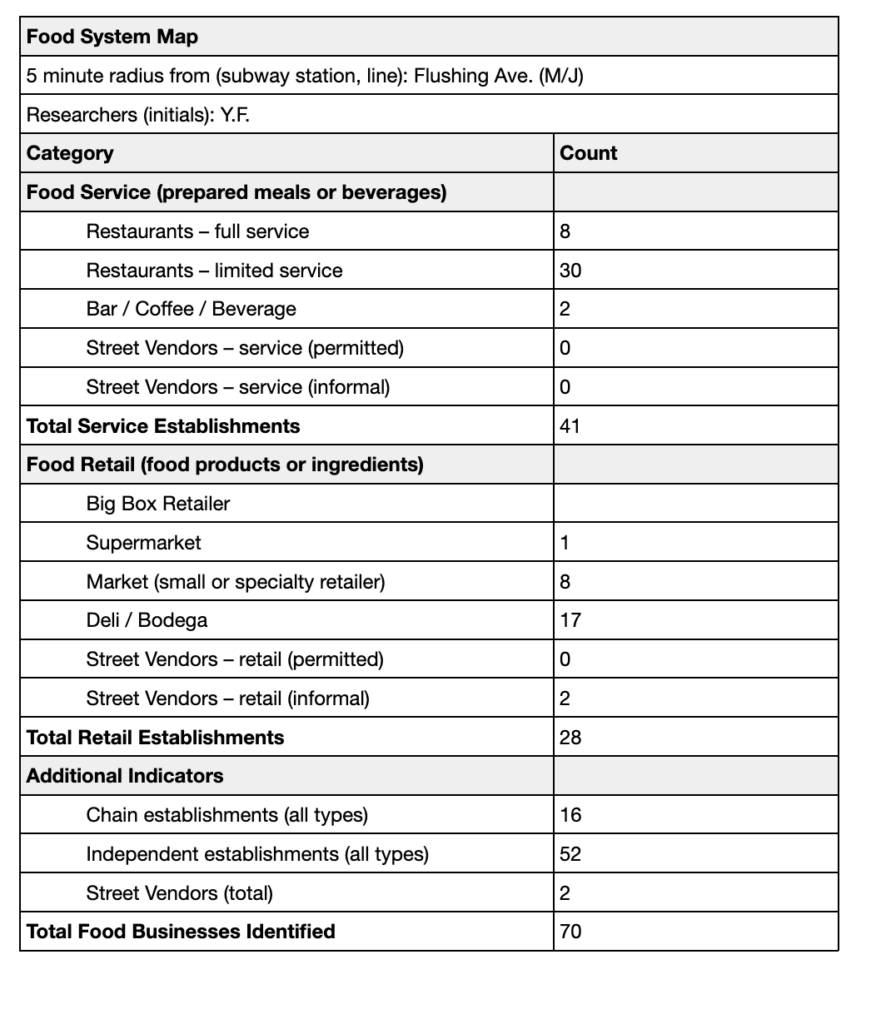
Foodscape description-
Some of the patterns observed in the foodscape is that most of the cuisine present in the neighborhood usually ranges through 3 different types: Hispanic, American and Asian. Furthermore, just like the video we watched in class there are so many deli’s around the area, usually some being around the block or at the end of the block. Also, there are many fast food establishments concentrated in one specific area of the radius. There are 16 chain establishments in the area so during times like lunch hour places like Chipotle would be packed with delivery riders who are trying to get their orders or you just see many delivery drivers coming to the chain establishments throughout the day. Surprisingly there were only 2 street vendors who were selling food products at the time of my observation. Usually when the weather is a bit nicer you see individuals selling ice cream from their cart, others who are selling sliced fruits, and people in food truck carts selling a variety of different foods. Many of the delis and food establishments were usually in the main avenues/ street, they weren’t spread out. This is interesting to note because most of the foot traffic would pass through these main streets therefore attracting more individuals/customers. Additionally, I feel it’s important to note that area and the types of stores that can potentially bring individuals to the foodscape. For example, in the area Woodhull Hospital is located right under the train stop. The hospital brings individuals into the foodscape through patients having to go to their appointments but at the same time you have the workers who are working in the hospital. The Guadalupana Bakery was once mentioned in a New York Times article regarding Pan de Muerto, which is bread individuals get for the day of the dead.
-
Annotated Google Map Link: https://www.google.com/maps/d/u/0/edit?mid=1y4LiwBBPhWsU6NlgXmLTCfdI5AMGXoc&usp=sharing
Food System Map 5 minute radius from (subway station, line): Researchers (initials): MF Category Count Food Service (prepared meals or beverages) Restaurants – full service 1 Restaurants – limited service 4 Bar / Coffee / Beverage 1 Street Vendors – service (permitted) 1 Street Vendors – service (informal) 0 Total Service Establishments 7 Food Retail (food products or ingredients) Big Box Retailer 0 Supermarket 0 Market (small or specialty retailer) 2 Deli / Bodega 2 Street Vendors – retail (permitted) 0 Street Vendors – retail (informal) 0 Total Retail Establishments 4 Additional Indicators Chain establishments (all types) 4 Independent establishments (all types) 7 Street Vendors (total) 1 Total Food Businesses Identified 11 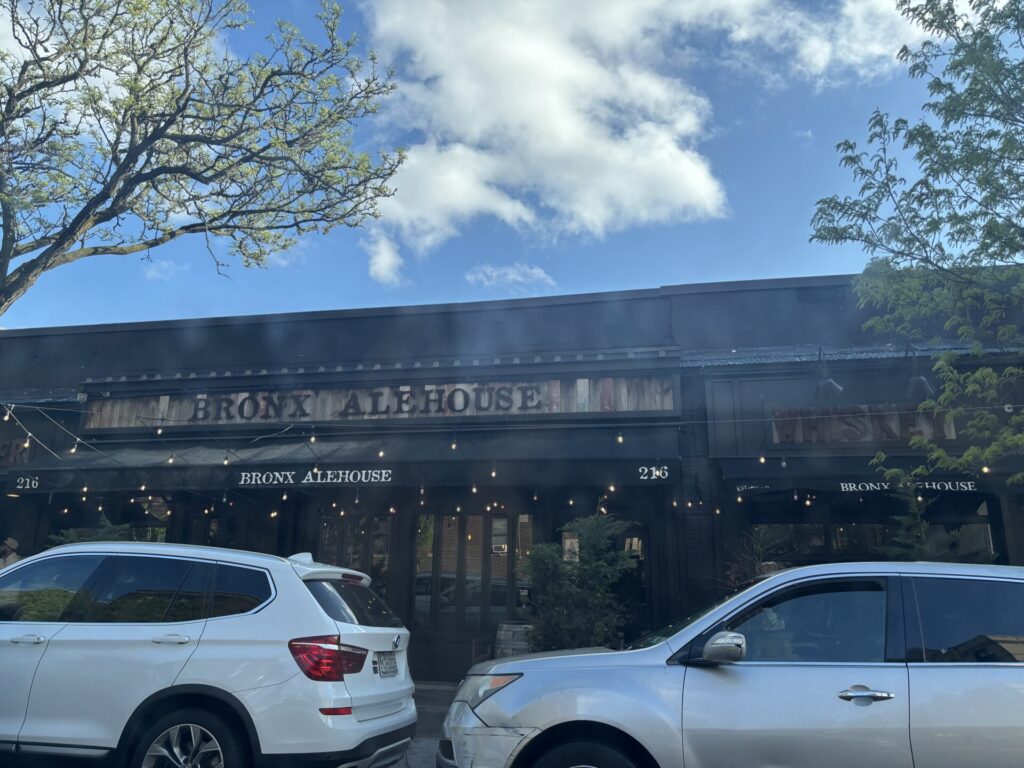
Bronx Alehouse is a casual neighborhood bar and grill that serves classic American comfort food in a relaxed, sports-bar-style setting. It offers a full bar with draft beers, cocktails, and rotating specials, along with menu items like burgers, wings, sandwiches, and appetizers. It’s a sit-down spot where people go to watch games, hang out with friends, or grab a hearty meal in a laid-back atmosphere.
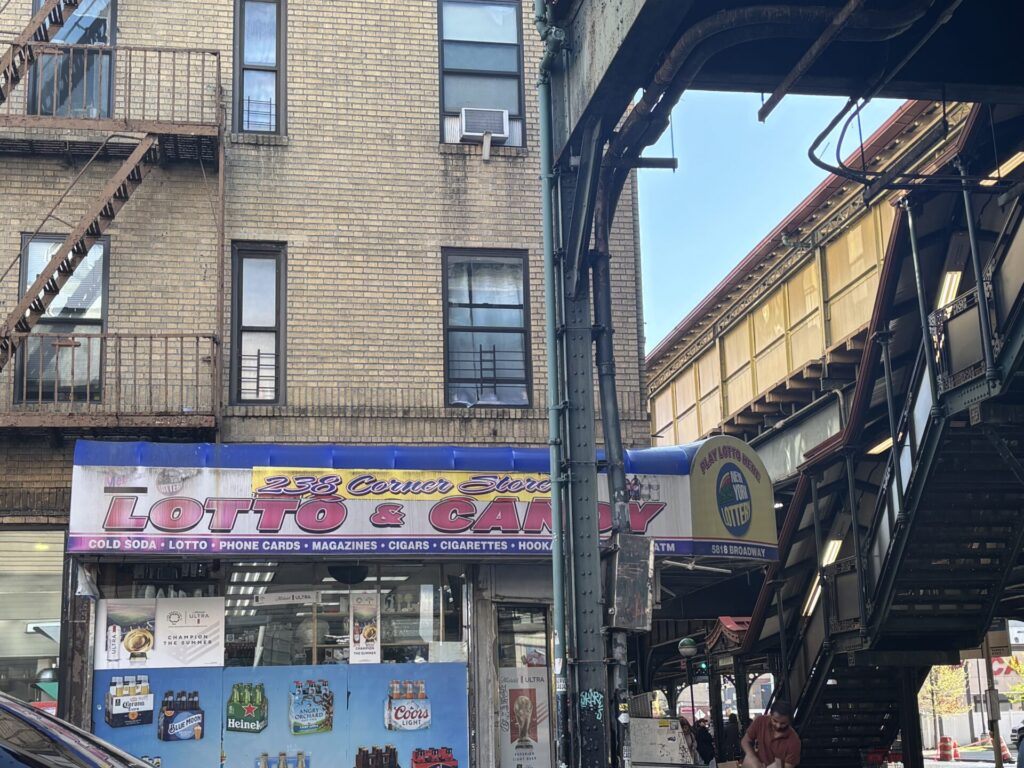
Lotto & Candy is a small neighborhood convenience store that mainly focuses on quick, everyday items. It sells packaged snacks, candy, soft drinks, and basic grab-and-go goods, along with lottery tickets and other small essentials. It serves as a quick stop for people in the area looking for inexpensive food or a fast purchase, rather than a full grocery experience, especially since it is located right near the train station.
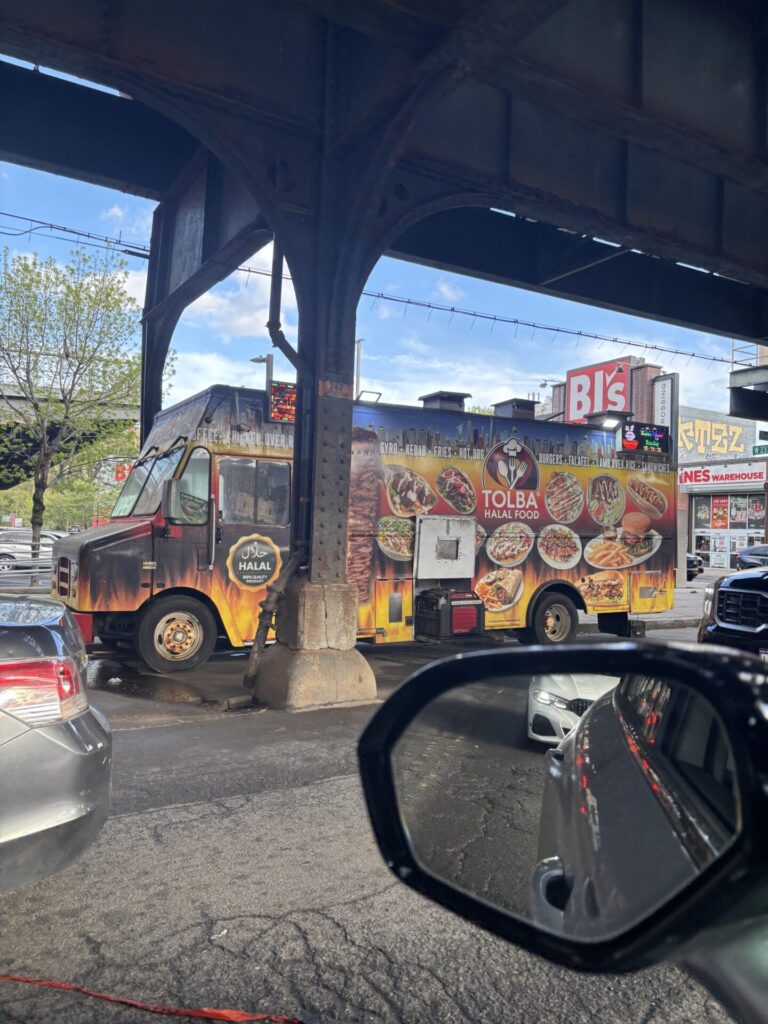
Tolba Halal Food is a street food cart that offers quick, made-to-order halal meals, typically centered on rice platters with options such as chicken, lamb, or mixed meats. It’s a fast-service spot where food is prepared and served with toppings such as salad and signature sauces. The cart caters to people looking for an affordable, filling meal on the go.
Foodscape description:
The foodscape around the 238th Street–Broadway station is largely dominated by quick and accessible food options, especially limited-service restaurants. Chains like Wendy’s, Chipotle, Smashburger, and Dunkin make up a significant portion of the area, showing how corporate fast food plays a major role in shaping what people eat in this neighborhood. These places emphasize convenience, affordability, and speed, which suggests that many people in the area rely on takeout or quick meals rather than sit-down dining.
There are very few full-service restaurants, with Bronx Alehouse standing out as one of the only spaces designed for a longer, more social dining experience. In contrast, the high number of limited-service spots and the presence of a halal food cart highlight how the neighborhood prioritizes fast, ready-to-eat meals. The halal vendor also demonstrates how street food contributes to the local food environment by offering affordable, culturally diverse options.
On the retail side, there are fewer options overall, mostly small-scale delis, bodegas, and markets rather than large supermarkets. This suggests limited access to a wide variety of fresh or bulk grocery items. Instead, residents may depend on smaller stores for everyday needs, which often carry more processed or convenience foods.
Overall, the neighborhood’s foodscape reflects a strong focus on convenience and fast food, with fewer opportunities for full grocery shopping or sit-down meals. -
Annotated Google Map Link: https://www.google.com/maps/d/u/0/edit?mid=17zc7THj5R82NumMnTnD47B0y3WyCcaQ&usp=sharing (Detailed description of each place observed)
Food System Map
5 minute radius from (subway station, line): Junction Blvd (7 Train), QueensResearchers (initials): Ashley Alonzo Category Count Food Service (prepared meals or beverages) Restaurants – full service 3 Restaurants – limited service 6 Bar / Coffee / Beverage 1 Street Vendors – service (permitted) 6 Street Vendors – service (informal) 8 Total Service Establishments 24 Food Retail (food products or ingredients) Big Box Retailer 1 Supermarket 2 Market (small or specialty retailer) 1 Deli / Bodega 2 Street Vendors – retail (permitted) 3 Street Vendors – retail (informal) 4 Total Retail Establishments 13 Additional Indicators Chain establishments (all types) 7 Independent establishments (all types) 4 Street Vendors (total) 21 Total Food Businesses Identified 32 Observed Food spaces: Restaurants, vendors, and Retail Locations
Places: Mr.Ceba’s, C Town supermarket, FOOD BAZAAR, La Abundancia, Starbucks Coffee company, Chipotle Mexican Grill, Mi Esquinita Deli/market, and Local vendors
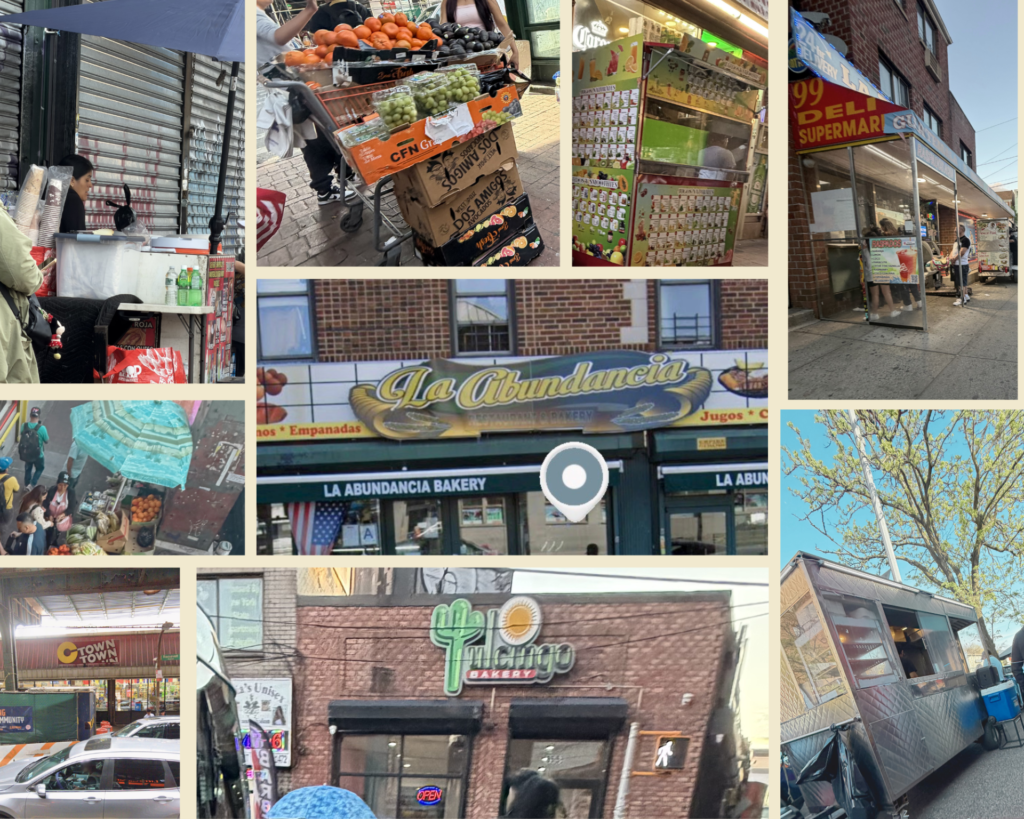
Significant further observations:
Mr. Ceba’s further observation:
The space is small and mostly used for quick meals, with many customers coming in, ordering, and leaving after a small amount of time. Most customers appeared to be local, working-class residents, and many interactions were in Spanish, showing the strong Latino presence in the neighborhood. The workers had a flexible division of labor, one focused on taking orders while another prepared food, but they switched when it got busy. The ordering system is simple: customers order at the counter if they want something quick or take out, or sit at a table if they want something more like a meal. The menu seems affordable and designed for everyday meals. There was noticeable takeout activity, with people quickly picking up food and leaving. The pace of the space changes throughout the day, with quiet periods followed by short busy moments. Interactions between workers and customers were brief but friendly, suggesting many repeat customers. Overall, Mr. Ceba’s reflects a neighborhood-focused food space that prioritizes affordability, speed, and cultural familiarity, serving the daily needs of the local community.
Deli (Mi Esquina) further observation:
The space is small and functions mainly as a quick stop for food and everyday items, with customers constantly coming in and out. Most customers seemed to be local residents, many stopping by briefly to buy snacks, drinks, or simple meals like sandwiches. The workers had overlapping roles, they prepared food, handled the register, and restocked items at the same time, showing a fast-paced and flexible work environment. The ordering system is informal and efficient. Customers either grab items directly or order at the counter, and service is quick. Prices appeared relatively affordable, making it accessible for regular, everyday use. Spanish was commonly spoken, along with some English, reflecting the neighborhood’s cultural makeup. There was a steady rhythm of activity, with no long lines but constant movement of people. Finally, what stood out to me is that it’s basically a “3 in 1” space. It works as a deli/small supermarket inside, but outside there’s also a Mexican food truck and a raspado (shaved ice) stand, all connected to the same spot.
Foodscape description: The area around the Junction Boulevard 7 train stop gives a clear image of how food, immigration, labor, and neighborhood life all come together in Corona. This part of Queens is not organized around upscale dining or heavily branded commercial chains. Instead, the food environment seems to be shaped mainly by small independent businesses, informal vending, takeout culture, and foods that reflect the immigrant communities who live and work in the area. Corona is known as one of the most immigrant-heavy neighborhoods in Queens, especially with strong Latin American communities, and that is visible in the kinds of restaurants, bakeries, bodegas, produce stores, and mobile vendors that appear along Roosevelt Avenue and the surrounding streets.
What stands out most in this foodscape is density and variety within a relatively small walking radius. There are places selling prepared meals, grab-and-go snacks, groceries, juices, baked goods, and street food all close together, which suggests that food here is tied to everyday survival and convenience as much as culture. The area also appears to be built around movement: people coming off the train, workers on break, parents shopping, students passing through, and delivery workers picking up orders. Nearby Corona Plaza and the Roosevelt Avenue corridor have also been associated with a large street-vendor presence, showing that food in this neighborhood is not limited to formal storefront businesses. Overall, the Junction Boulevard foodscape reflects a working-class, immigrant neighborhood where food is social, practical, and deeply tied to community life.
-
https://www.google.com/maps/d/edit?mid=1EWOZ5kOIAJV62EovPA2y34tOyIYwMbM&usp=sharing
Food System Map 5 minute radius from (subway station, line): J/Z Researchers (initials): AC Category Count Food Service (prepared meals or beverages) Restaurants – full service 6 Restaurants – limited service 10 Bar / Coffee / Beverage 3 Street Vendors – service (permitted) 3 Street Vendors – service (informal) 4 Total Service Establishments 26 Food Retail (food products or ingredients) Big Box Retailer 1 Supermarket 3 Market (small or specialty retailer) 7 Deli / Bodega 6 Street Vendors – retail (permitted) 0 Street Vendors – retail (informal) 2 Total Retail Establishments 19 Additional Indicators Chain establishments (all types) 5 Independent establishments (all types) 0 Street Vendors (total) 1 Total Food Businesses Identified 6 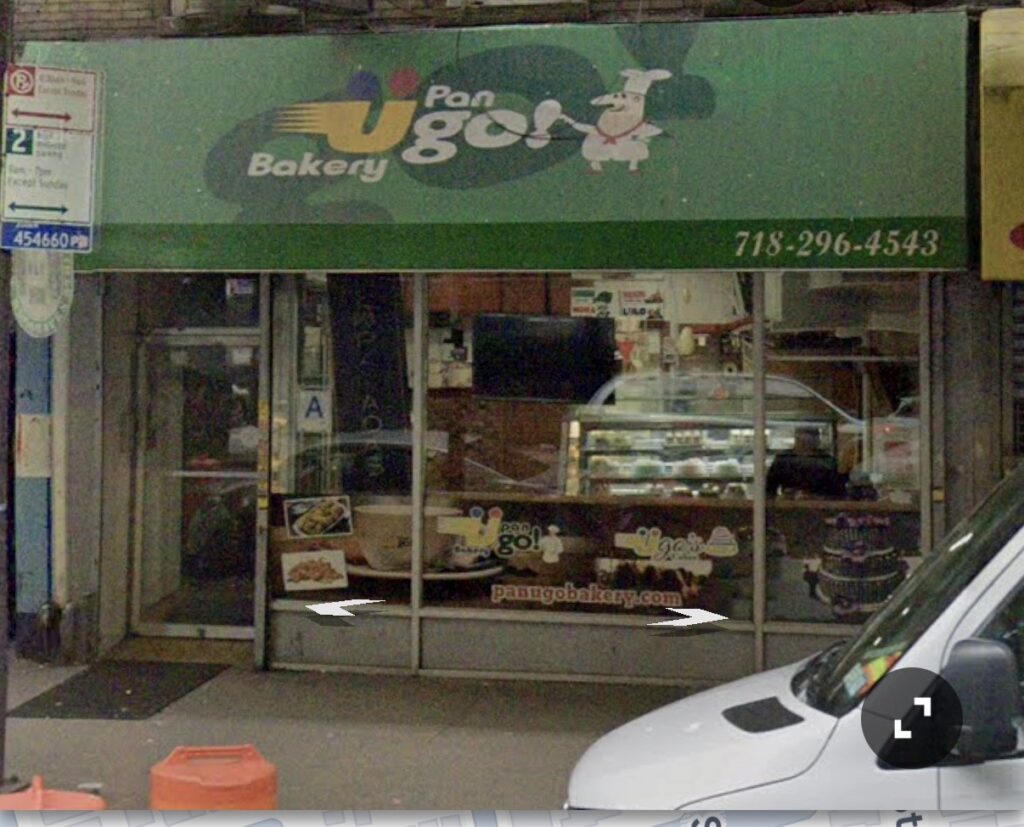
Spanish bakery located on the same block as the train station. Every morning it is busy with people buying coffee and bread. 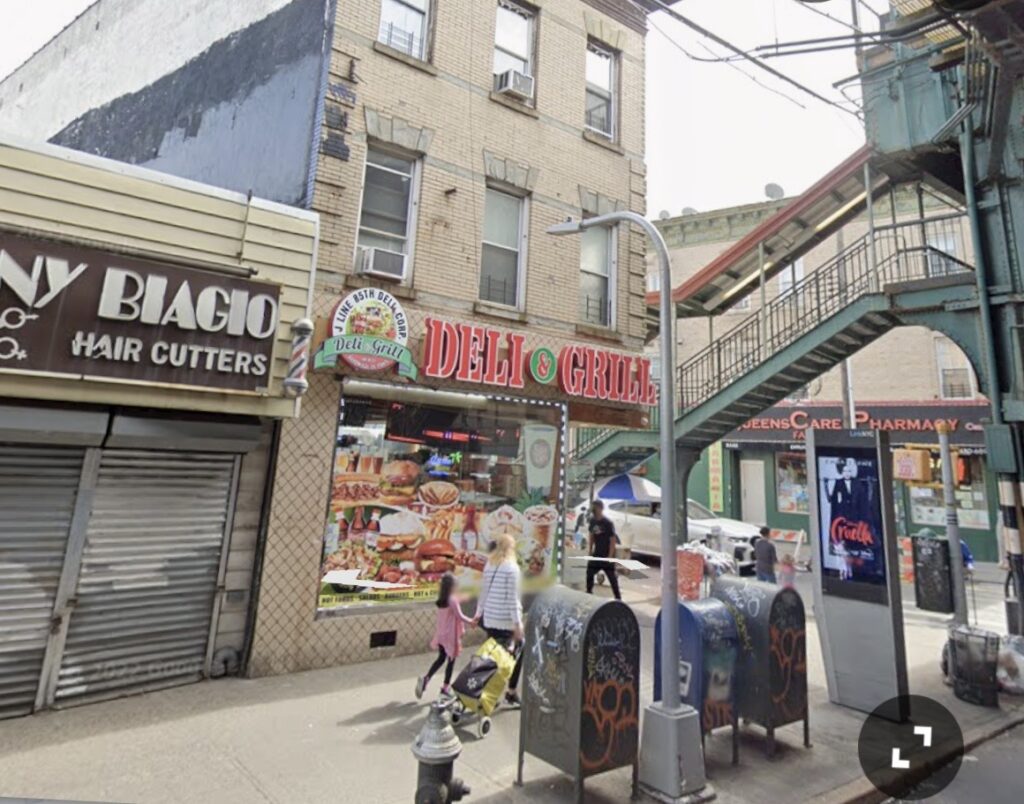
Deli that makes hot and cold sandwches. It is on the same block as the train station. 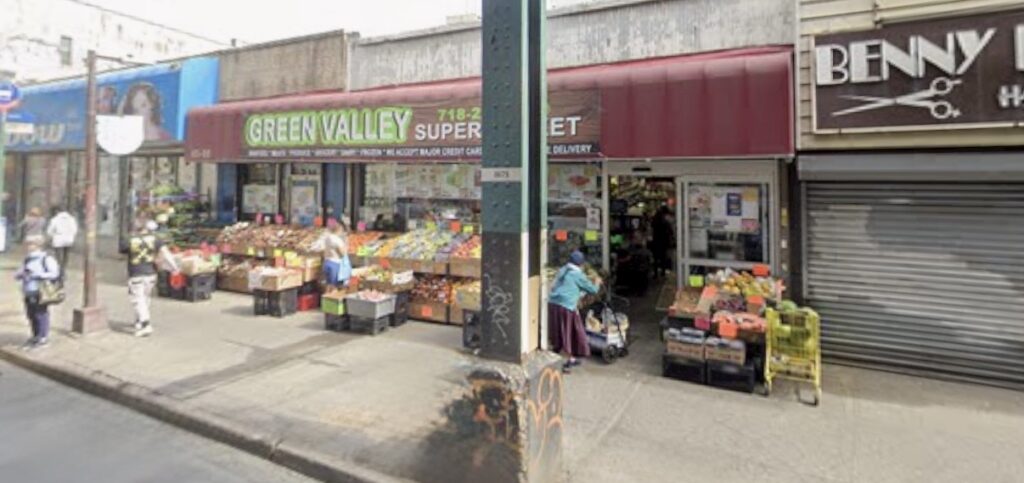
This is the produce market and supermarket thats right next to the deli. Locals and regulars are all spanish speakers. 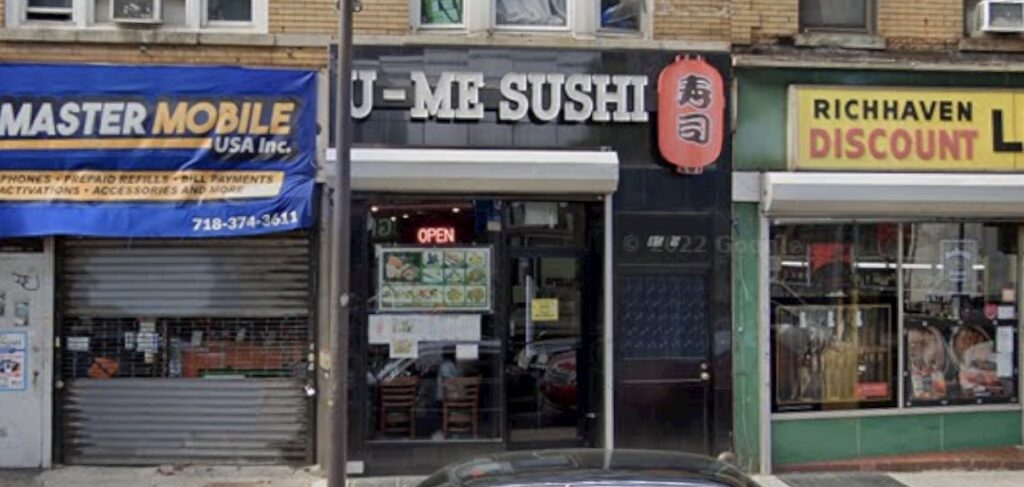
Small sushi and japanese spot. Alot of people tend to order over the phone to get it delivered to their house. 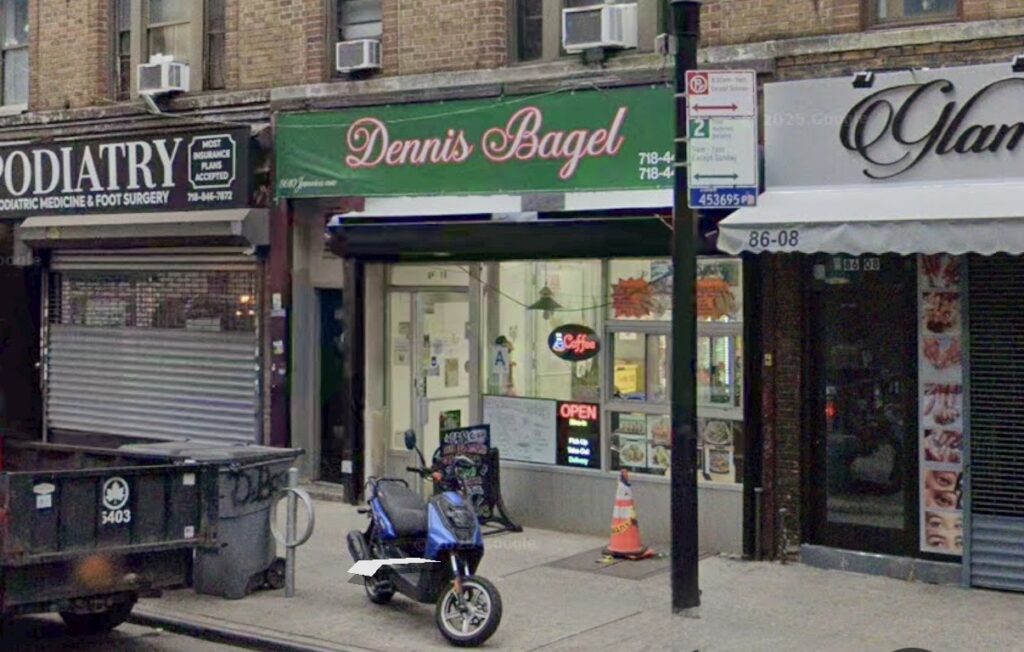
This was recently changed into Dennis bagel but before it was called the Bagel Bin and they sell breakfast meals and drinks. 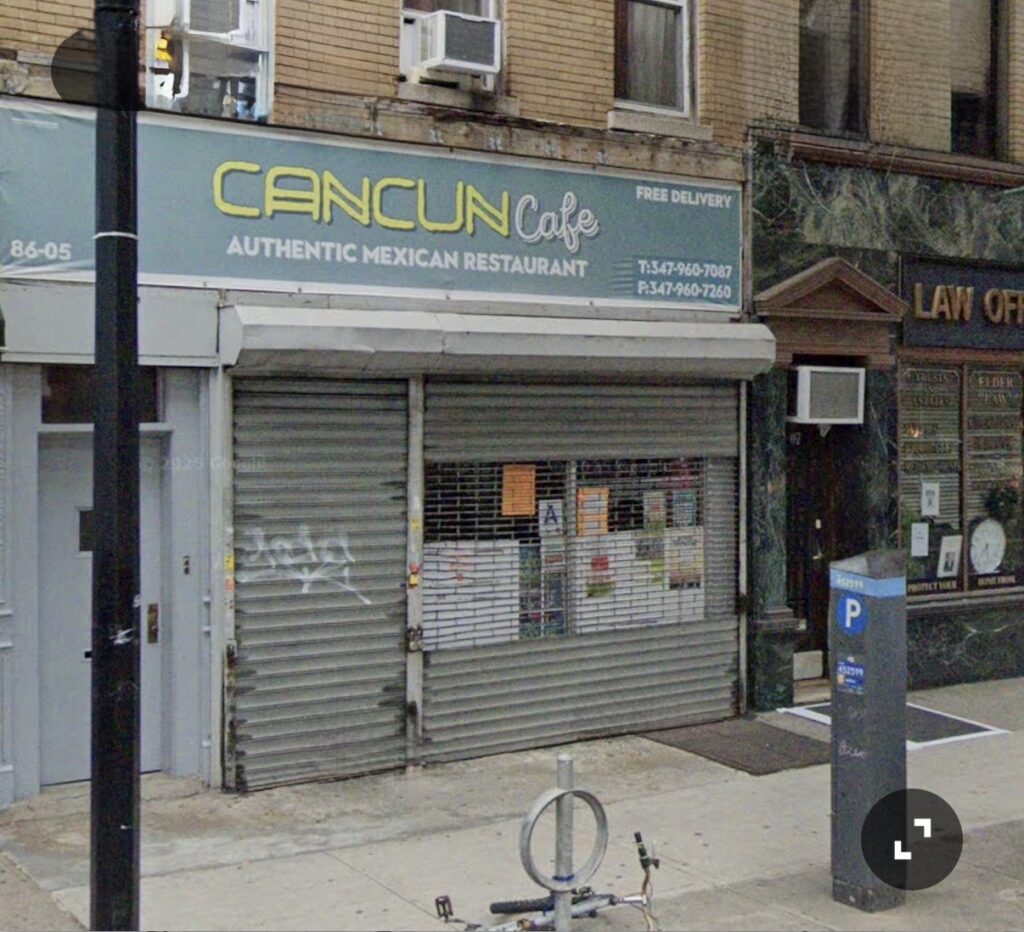
Another good Mexican spot that sells authentic Mexican food, it is a small establishment but inside they have tables to sit and eat once you have ordered inside. 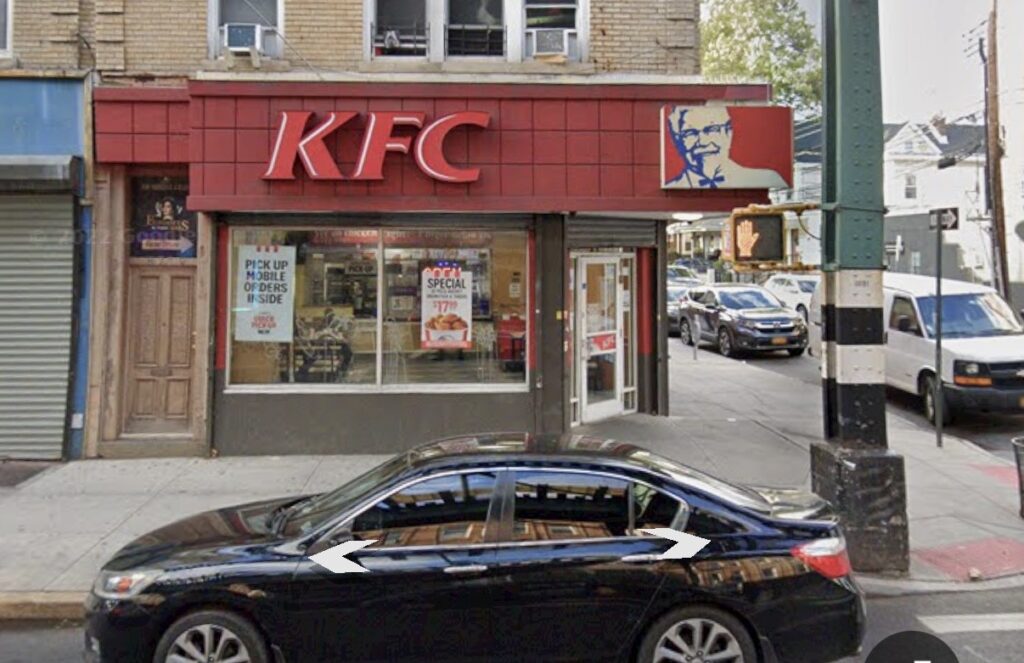
One of the bigger chain fast food restaurant, they have remodeled recently. -
my annotated google map: https://www.google.com/maps/d/edit?hl=en&mid=1Zpw-VJGMmcQkrfzeMNKI_0_s-d5RgWk&ll=40.642494592567004%2C-74.0765545188399&z=18
my food scape table:
Food System Map 5 minute radius from (subway station, line): St George, Staten Island Railroad Researchers (initials): Arianna Duran Category Count Food Service (prepared meals or beverages) Restaurants – full service ~ 8 Restaurants – limited service ~ 14 Bar / Coffee / Beverage ~ 6 Street Vendors – service (permitted) ~ 1 Street Vendors – service (informal) 0 Total Service Establishments 29 Food Retail (food products or ingredients) Big Box Retailer 0 Supermarket ~ 1 Market (small or specialty retailer) ~ 3 Deli / Bodega ~ 5 Street Vendors – retail (permitted) 0 Street Vendors – retail (informal) 0 Total Retail Establishments 9 Additional Indicators Chain establishments (all types) ~ 9 Independent establishments (all types) ~ 30 Street Vendors (total) ~ 2 Total Food Businesses Identified 42 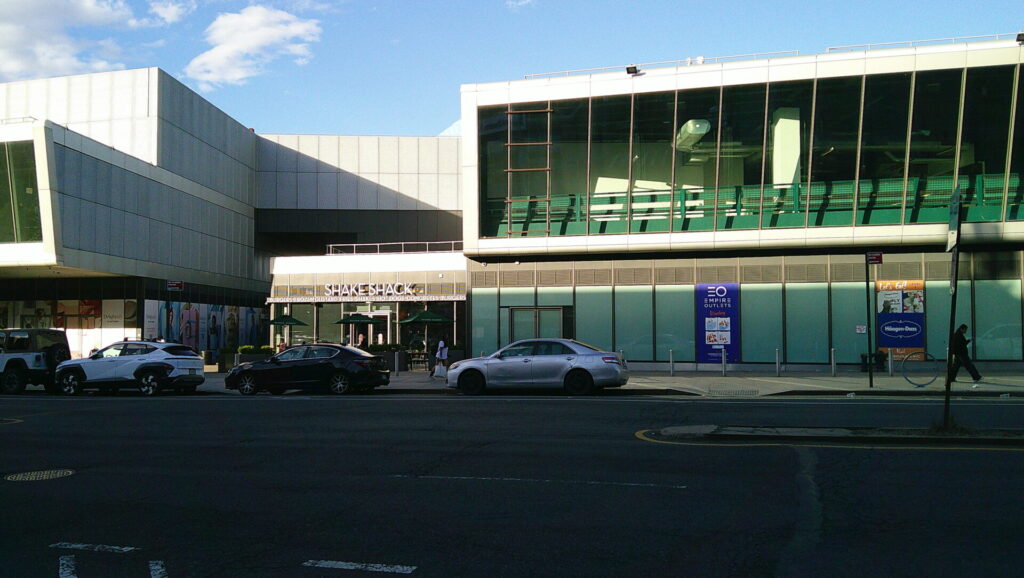
They’re advertising a Haagan Däz aswell but its a bit hard to see, also a starbucks but I accidently cut it off 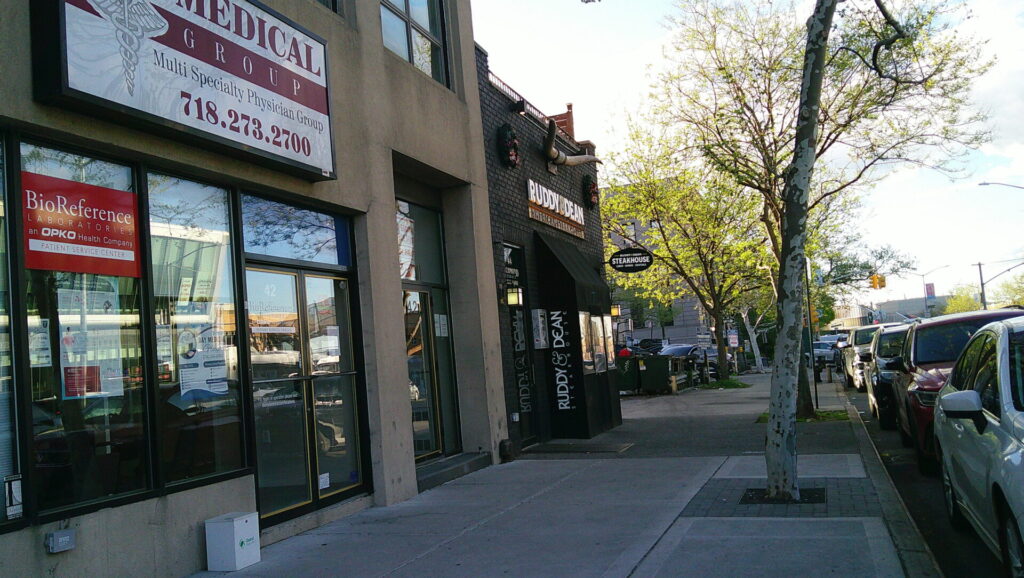
Buddy & Dean is a steak house, the angle is a bit hard to see 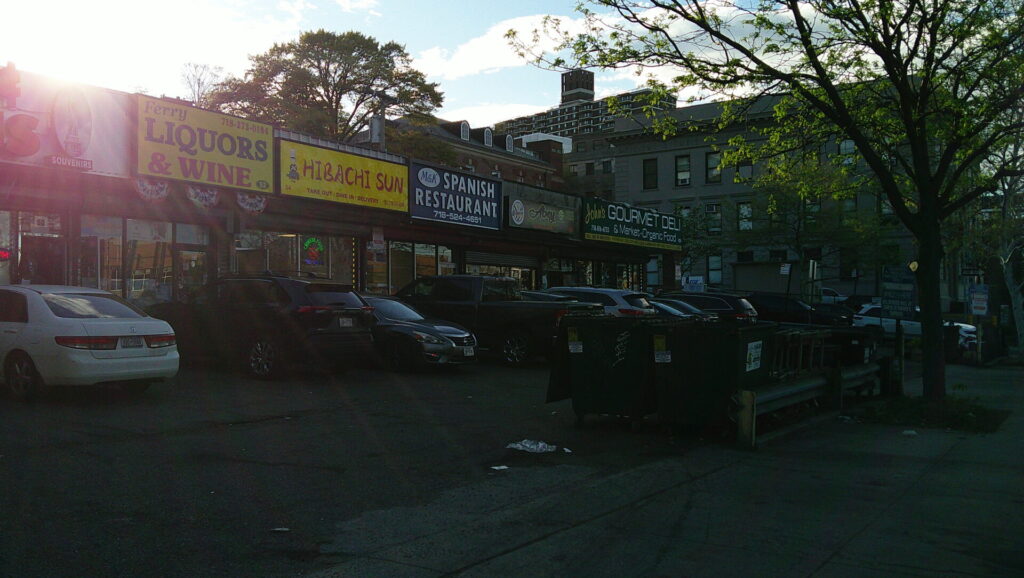
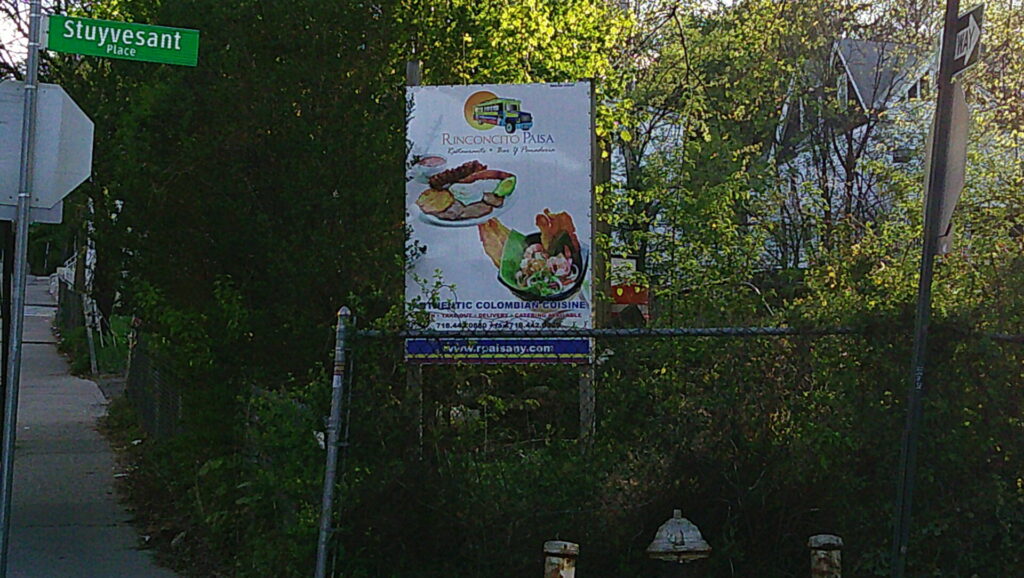
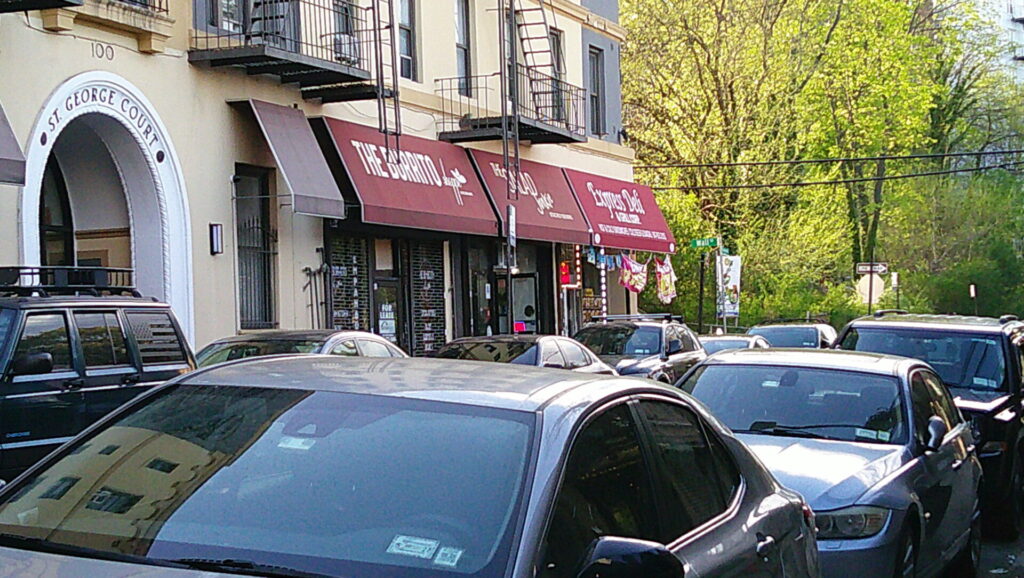
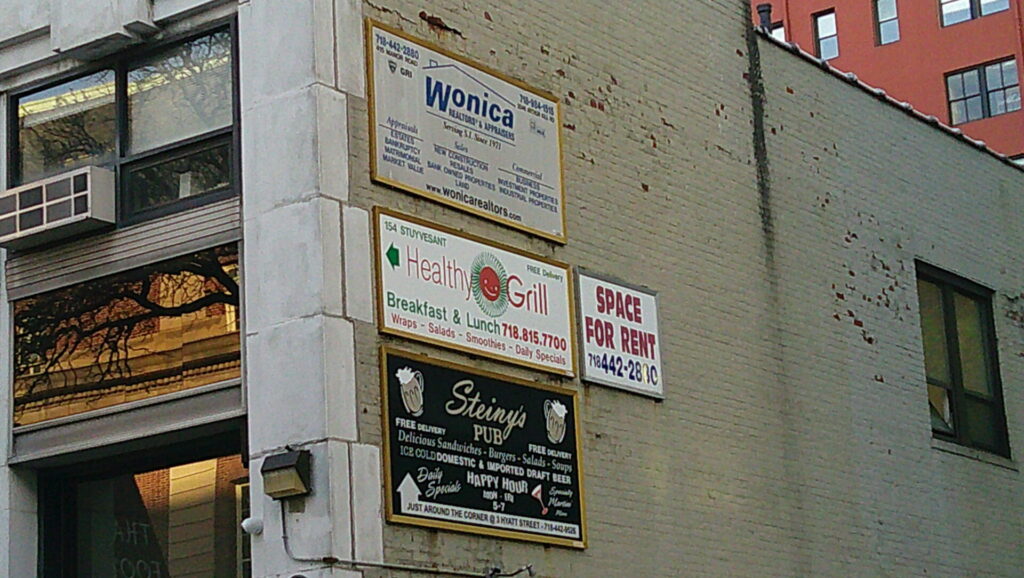
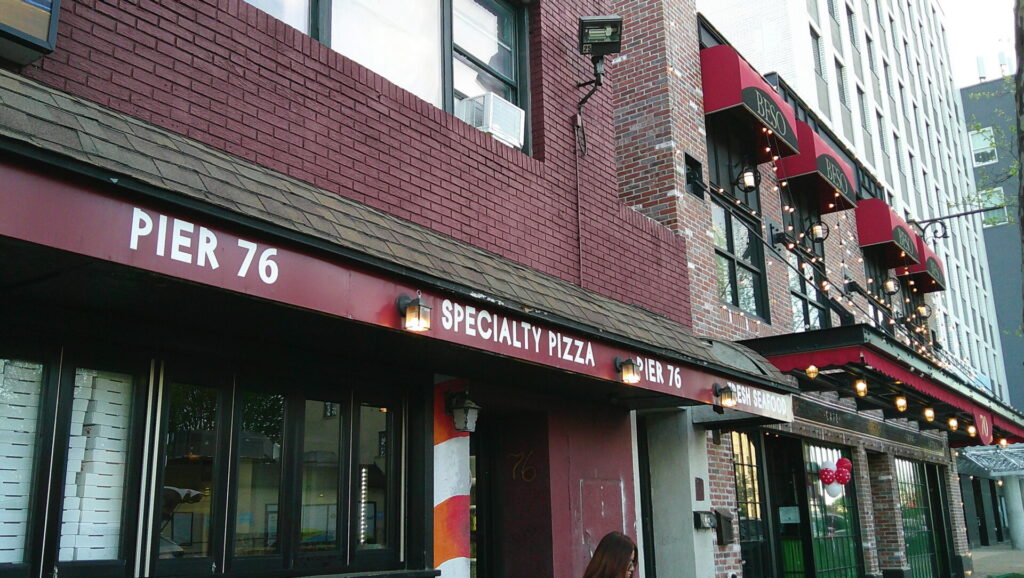
Next to this Pizzeria is a Spanish restaurant called Besos, again the angle makes it a bit hard to see 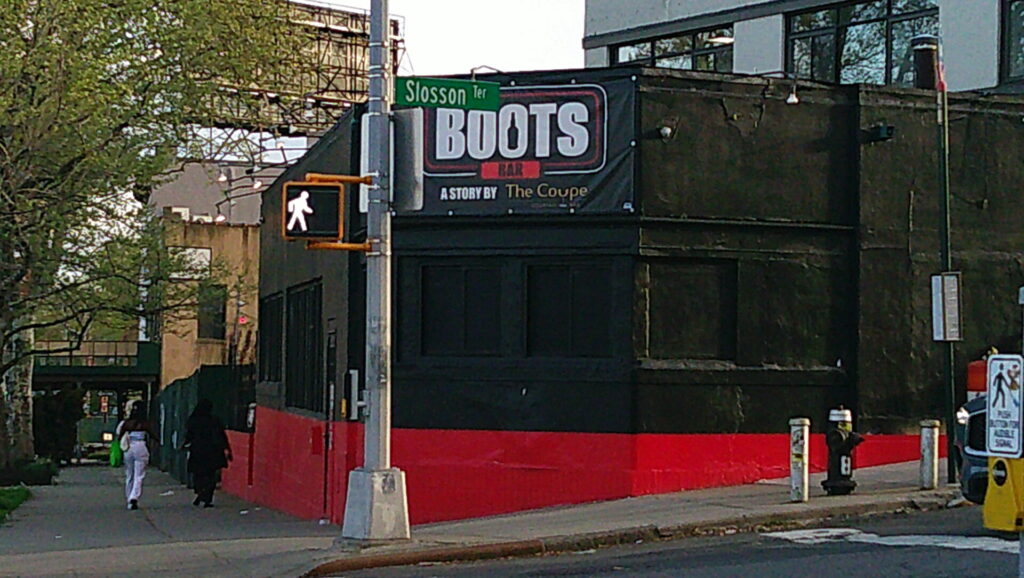
Foodscape description:
The foodscape surrounding the St. George train stop reflects its role as a major transportation hub and point of constant movement. The moment you get off the train stop, you are already inside the ferry terminal. The number of food establishments and the types of food establishments are heavily influenced by commuter traffic from the Staten Island Ferry, the bus platforms, and the railroad. These businesses prioritize speed, convenience, and relatively low prices, which align with the needs of commuters who are eating on the go instead of sitting down for an entrée. However, once you’re out of the terminal and in the neighborhood within a 5–10 minute walking radius from the train stop, we are able to see some more culture. A clear pattern in the neighborhood is the clustering of chain establishments near the ferry terminal and main streets like Richmond Terrace and Bay Street. Food chains like Starbucks, Dunkin, and Subway succeed because they are highly visible and consistently meet customer expectations, appealing to commuters, native Staten Islanders, and tourists. At the same time, independent restaurants are slightly more scattered among the streets, where rents may be lower and there is less pressure to compete directly with these popular food franchises. These independent food spots usually offer Mexican, Thai, Turkish, Caribbean and African cuisine, reflecting the broader diversity of Staten Island and the active presence of immigrant communities. Another pattern is the relatively small number of full-service restaurants compared to quick-service establishments. This shows that St. George is a fast-paced, transit-oriented space. Food retail options like delis and bodegas are present and heavy and serve local workers and residents. When it comes to super markets and food retail, the numbers are very limited, indicating that the immediate area is less residential and more commercial. Overall, the neighborhood’s foodscape is organized around accessibility, convenience, and flow of people, demonstrating how urban food environments are directly shaped by transportation infrastructure and daily mobility patterns.


1 response
To reply, click:
Plants to Patties