I was researching some juices I enjoy drinking and came across this interesting video that covers the apple juices; That start in “harvesting process”- (“from september to october)” from the trees using a machine, to the factories. In this video it talks about “800 millions litters of apple juices” are produced every years. Also said the importance “fresh of the fruits” when coming to the company. In the video explain the steps that are; “inspection, cleaning,” separate the good apple to the one that is in bad condition. Then “sorting process” also when they finish with that they move the apple to a container to control the “temperature, fresh”. Moving out the do “quality analyze” measures the “sugar and acidity”. Then pass the machine to clean. Moving on to the machines that peel the apple. After that, it proceeds to the “crushing stage” to extract the pulp; subsequently, another process begins involving the use of tanks. They use the peel of the apple and convert it into energy. Next step are “quality control and treatment” then when the process is done the do “pasteurization” and finely move to “homogenization and packaging”
QK- Did you know the process and time of what your favorite juices, the chemical they use to drink, lasts longer?
What is the importance of the machinery used—whether for manual or mechanical harvesting—to collect fruit for making purees or juices, and the regulations that must be followed to juice your drink right now?Food and Society (SOC 325)
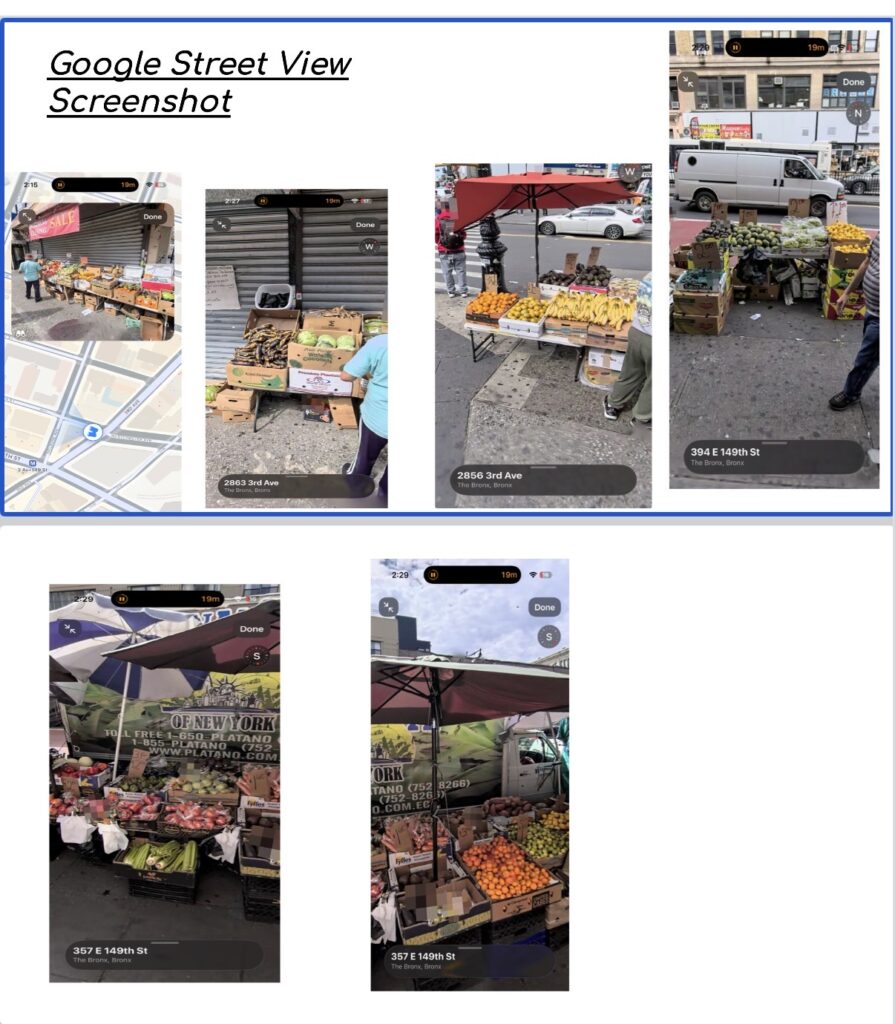
Whenever I go out to college or my home. Which is close to 2 or 5 trains on 3rd Avenue in the Bronx. As you can see in the photos, there are several street vendors on the corners of the street selling various fruits and vegetables at lower prices than those found in supermarkets. As shown in the photos, the prices vary from $1, $2, $3, etc. Notice that you can see the quality of the fruit and vegetables. I have purchased many times and talked to them; in the photos, you can see the accurate address of the vendors. Observing this worker, we can see the idea they talk about in class, “We are what we eat,” because some workers don’t receive government assistance, and what they earn is enough to pay for necessities and buy food at a low price. It represents different immigrants of various income levels, races, religions, and cultural values.
In the article “Protecting Street Vendors is Protecting NYCs Immigration Soul” by David R. Jones talked about politics and immigration related to street vendors and the importance that are in the community that are hard working long hours talk about the “permission” needed to sell food. Also said that, “Street vending is an essential economic engine and a vital means of survival for thousands of New Yorkers. According to the Street Vendor Project, more than 20,000 street vendors operate in NYC, and the vast majority, around 90 percent, are immigrants who speak limited English and face barriers to traditional employment. These workers sell food, art, flowers, clothing, and more, often standing on their feet for 10 to 14 hours a day, simply to make ends meet. Many of them are immigrants from Latin America who have come to our city with the dream of forging a better future for their families.Street vending is not only about individual survival. It’s also about economic impact. The Urban Justice Center estimates that NYC street vendors contribute more than $293 million annually to the city’s economy. Their businesses create jobs, draw foot traffic to struggling retail corridors, and provide affordable, diverse food options to working-class neighborhoods. They are, quite literally, feeding our city in more ways than one.” “…….In today’s climate, with federal threats looming and anti-immigrant rhetoric rising, NYC must go further to protect its street vendors. That means accelerating the pace of permit releases, cutting red tape, and creating pathways to permanent business ownership. It also means shielding vendors from NYPD over-policing and ensuring city agencies treat vendors as small business owners, not criminals.” (by David R. Jones)
This article is a good example of the struggle the immigrant suffers every day with different weather. They come to work to give the children better opportunities .They spend 10 to 14 hours on their feet just to meet their daily sales targets that are set for them, internet videos surfaced showing these immigrants being detained by the police; when subjected to violence and mistreatment, some would flee to avoid deportation.
QK:
How can we, as a community, unite to help street vendors?
Who suffers discrimination and mistreatment in these immigration cases?
Where are their stalls destroyed and their merchandise confiscated?
citations
Protecting Street Vendors Is Protecting NYC’s Immigrant Soul. (2025, June 19). Cssny.org. https://www.cssny.org/news/entry/protecting-street-vendors-is-protecting-nycs-immigrant-soul
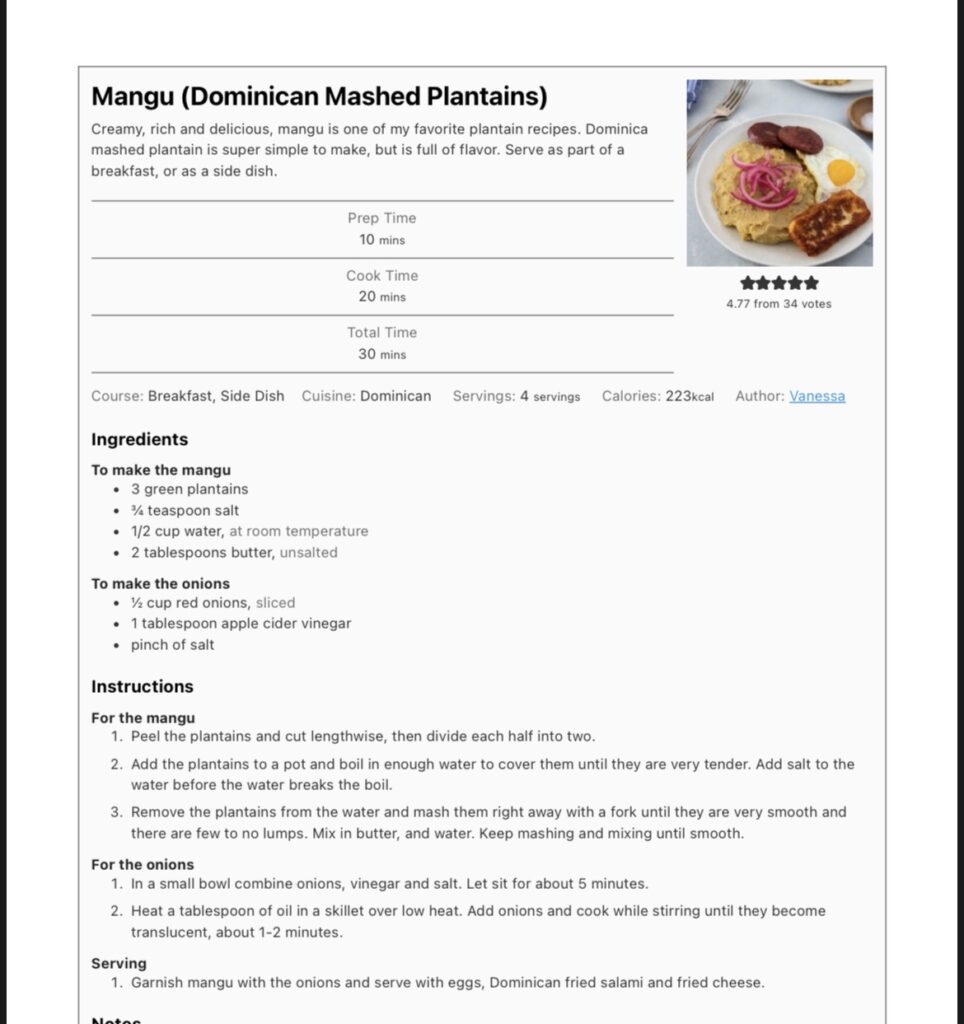
Cooking food from my culture is my passion, and representing myself is a delicious and easy way to reconnect with my childhood memories of learning from my mother the proper way to cut onions, cheese, salami, and plantains. Food like Mangu can be eaten at “breakfast, lunch, and dinner.” I found an interesting article named “Mangu (Dominican Mashed Plantains )” by Vanessa, that talks about the nutrition the
Mangu gives, that is “potassium, vitamin C, magnesium ect.”
The background of plantains which was “influenced by the Congo of Africa.” It was brought during the “slave trade” in the 1500s. This article talks about the word mangu, which is a similar African word to “mangusi”- “comes from west Africa.” All spices we use for cooking, and every vegetable and fruit, has a story that influences us every day. Every culture and the relationships we cook can create desserts and meals that make us feel at home. It’s important to understand the origin and history of each dish, how it was brought to our territory, and how it became ingrained in our culture.
CQ-Before reading this post, did you know the origin of the plantains and how they were brought here, and how it still influences us today?
What dish takes you back to your childhood?
How does it make you feel?
How have certain dishes become part of your culture and influenced your life?
When plantains arrived in the Dominican Republic, how did they affect people’s lives? What do you think their reaction was?
P.S. I’ll leave the recipe for Mangu that the article offers if you want to make it.Food and Society (SOC 325)
I found the article named “Eating Out Increases Daily Calorie Intake” by Jessica E. Todd and Lisa Mancino from (6/1/2010).
This article is a clear example and explains that in 2010, the U.S. people spent 40% of their wages on eating out. This article compares the percentage of wages spent on food purchased outside the home (restaurants, grocery stores, etc.) with 1970, when 25% of their wages were spent eating out. We see a 15% eat out increase in eating out over 40 years.
They also show that when people eat out at restaurants, they choose foods with more “calories, saturated fats, and fried foods” than “meals prepared at home.” This causes a big difference in the “daily diet”.
Eating out, the type of food you order, and the number of calories it contains affect your daily “calorie intake compared to” meals prepared at home, by increasing fat and sugar.” Also, talk about the weight and height of the adult that are consumed food.
Critical Q:
-What do you think about how much the U.S. people spend 40% in 201l of their earnings eating out compared to 25% in 1970? Did you have any idea why?
-Do you think the percentage of money people spend eating out has increased or decreased in the 16 years since this article was published? What could be the cause of this, and how can we improve our calorie intake? What solution would you suggest?Food and Society (SOC 325)
In the article “Bad eating habits: When, what, and how often you eat matters” by UC Davis Health dietitian intern Korrie Tugal( June 22, 2023).
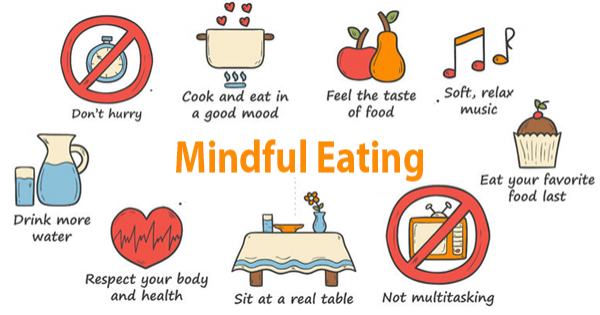
This article explains that everyone has eating habits. It matters sociologically because people from different cultures eat at different times, and how it affects the function of the body, and the importance of eating on time. This article illustrates how some people “eat three meals a day” while others “snack throughout the day”. It gives examples of how everyday situations affect our lives and health, such as work and family, ect, and how each day can be different from the last. The authors explain how these situations can lead to “unhealthy habits,” like “skipping meals”, or “stress eating” fast eating, and “mindless eating,” and give some clear examples of consequences that affect your sleep patterns and reduce your sleep duration. Another way that affect your body are “weight gain, increased blood pressure, and increased risk of heart disease, indigestion, heart burn, and diabetes”. In the mental health affect are; “dizzy and irritable, and overeating” because you’ll be thinking about satisfying that urge to eat. And can lead to consuming more “processed foods” with “excessive levels of sugar, sodium, and fats,” which can cause the diseases already mentioned in this post.
Improving these habits are tips: “eat 2 or 3 hours” before bed time, plan your food for the week, add vegetables and fruit. “Meditation, exercise and managing stress levels”. It is important to eat with people around the table family and friends and the importance of drinking water.
CQ- Which situation in your daily life affects your eating habits or your health? Have you noticed? Have you ever skipped a meal? And how do you think your body reacts?
After reading this post, have you identified any eating habits that might affect your mental and physical health? And how will you change them?Food and Society (SOC 325)
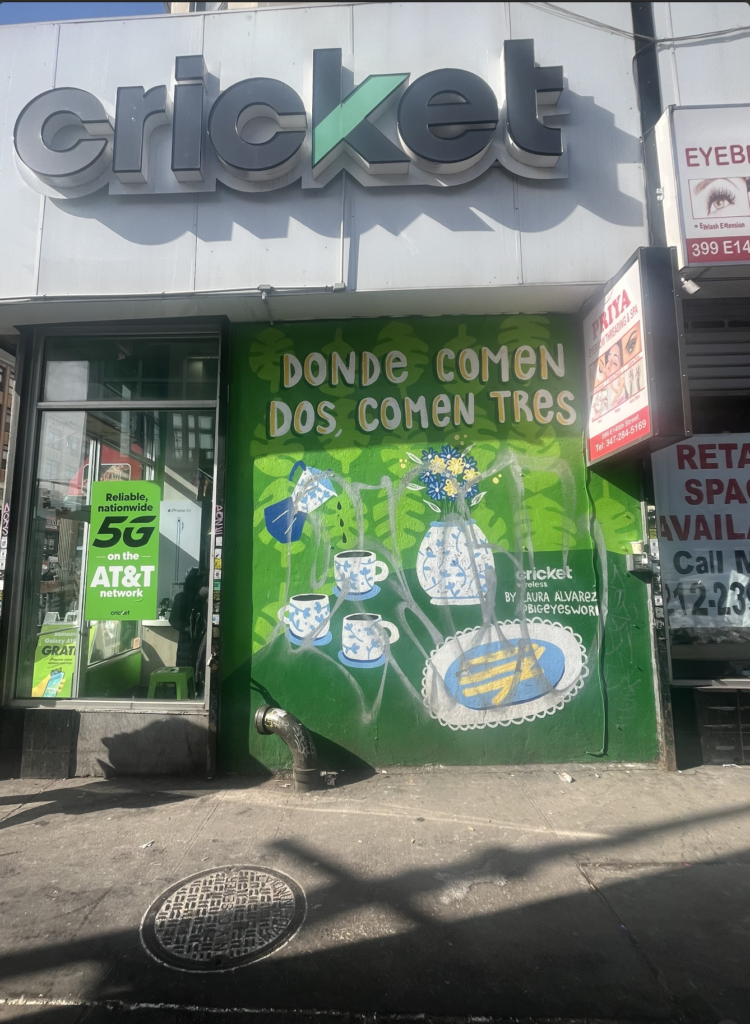
While I was walking to catch trains 2 and 5, located on Third Avenue in the south Bronx, I saw a mural created by Laura Alvarez with the saying “DONDE COMEN DOS, COMEN TRES” translated to English as “where two eat, three can eat to.” It matters sociology because it shows the “social structure” of “giving in the comunity”. Doing some research to find the author quote is Anonymous.
I found articles from Dominican Writing by Carolina Abreu that use the quote and show It describes a “social structure” of personal relationships where the children prepared the house by cleaning and helping their mother in the kitchen, and the children would steal fried plantains like pay to help clean. It also describes how their mother “cooked to feed the neighborhood” and how they set the tables for twelve people, but more always joined, sometimes up to “eighteen”. It also describes how their mother never refused to provide them with food at home, because, as the saying goes, “where two eat, three can eat to.” If the mother had enough food at home, she also had friends and family to eat at her table; this is linked to the culture, norms, and values that many people hold.Food and Society (SOC 325
Lisbeth (she///her)
Need help with the Commons?
Email us at [email protected] so we can respond to your questions and requests. Please email from your CUNY email address if possible. Or visit our help site for more information: