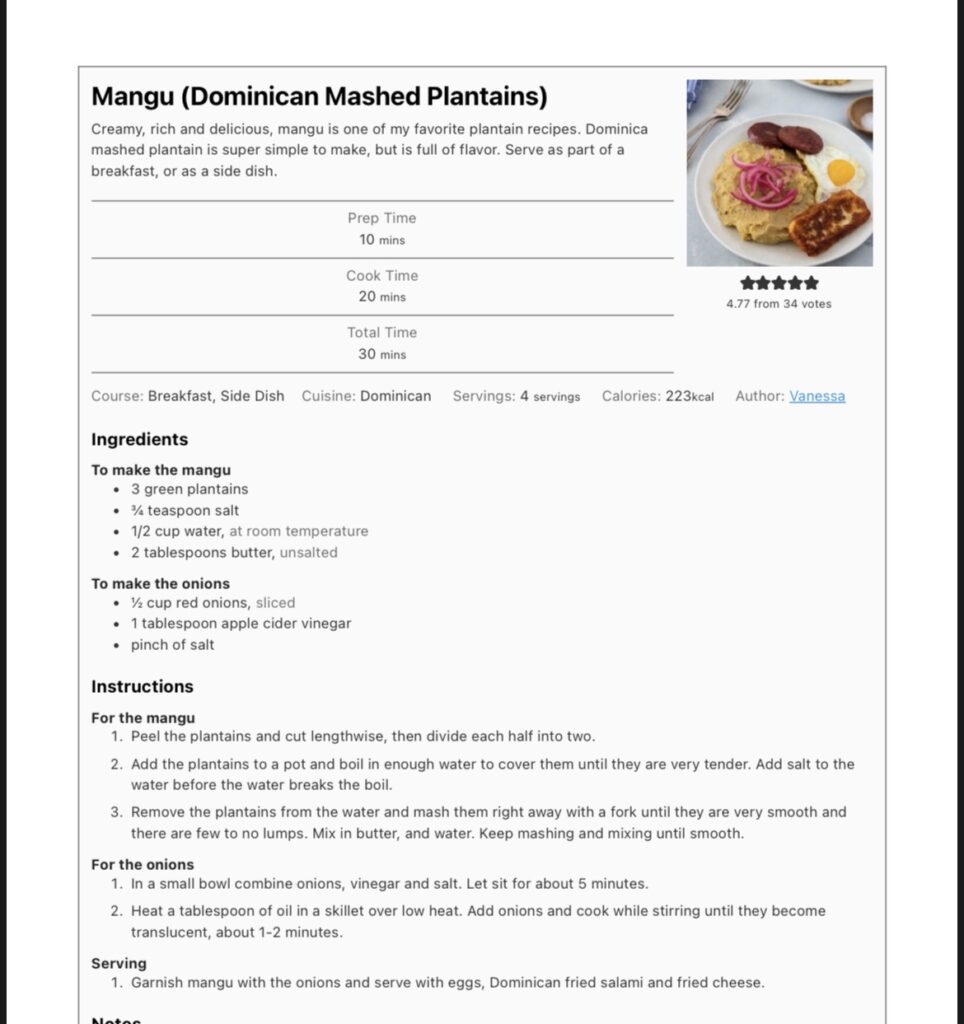
Cooking food from my culture is my passion, and representing myself is a delicious and easy way to reconnect with my childhood memories of learning from my mother the proper way to cut onions, cheese, salami, and plantains. Food like Mangu can be eaten at “breakfast, lunch, and dinner.” I found an interesting article named “Mangu (Dominican Mashed Plantains )” by Vanessa, that talks about the nutrition the
Mangu gives, that is “potassium, vitamin C, magnesium ect.”
The background of plantains which was “influenced by the Congo of Africa.” It was brought during the “slave trade” in the 1500s. This article talks about the word mangu, which is a similar African word to “mangusi”- “comes from west Africa.” All spices we use for cooking, and every vegetable and fruit, has a story that influences us every day. Every culture and the relationships we cook can create desserts and meals that make us feel at home. It’s important to understand the origin and history of each dish, how it was brought to our territory, and how it became ingrained in our culture.
CQ-Before reading this post, did you know the origin of the plantains and how they were brought here, and how it still influences us today?
What dish takes you back to your childhood?
How does it make you feel?
How have certain dishes become part of your culture and influenced your life?
When plantains arrived in the Dominican Republic, how did they affect people’s lives? What do you think their reaction was?
P.S. I’ll leave the recipe for Mangu that the article offers if you want to make it.Food and Society (SOC 325)


Leave a Reply
You must be logged in to post a comment.