The article posted above by Mashed, written by Samantha Jacobs lists out twelve “secrets” about the food industry, such as store-bought orange juice being more processed than you might think it is, the fake grill marks on your fast food burgers, and the wood pulp being used in shredded cheese to prevent clumping. Personally, I didn’t know that cellulose was basically flour mixed with sawdust. Although some of these facts might have already been exposed or obvious to other consumers, it’s still sociologically impactful. The fact that companies are willing to cut back quality on their products for their capitalistic greed is saddening. Additionally, this shows how the food industry has successfully “constructed” our perception of what “freshness” and “quality” is. To conclude, the misleading labels, the hidden labor, and the deception of the overall product is the food industry’s way of making more money with “only” the risk of our health.
Question: If other countries such as Japan, France, Korea, and more can prioritize the standards of quality in the manufacturing of their food products, why can’t the U.S.A. do the same?
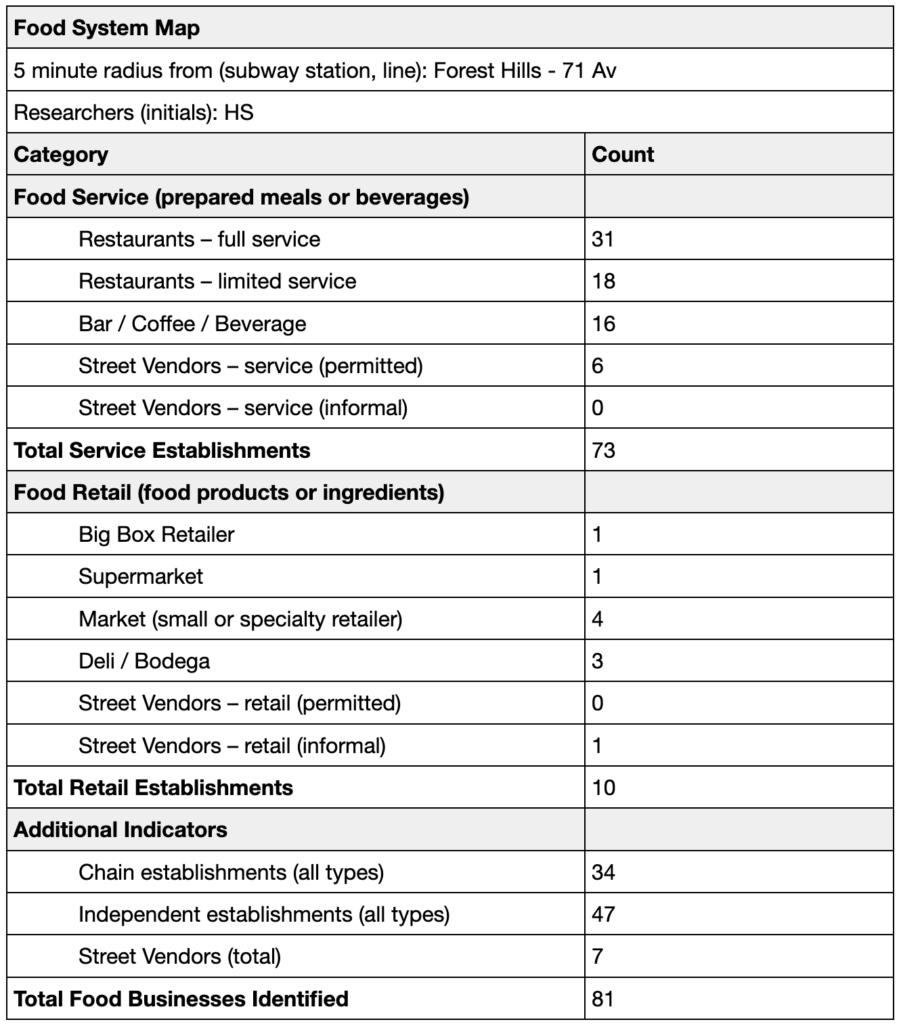
Foodscape Description: I observed that there is an extremely high density of food businesses within a 3-4 block radius of Forest Hills-71Av station. The dominant types of food spaces are food service (88%) over food retail (12%). Although there is a high number of chain establishments such as Starbucks and Target being 34/81 (42%), the number of independent establishments outweigh the chain establishments with 47/81 (58%). English is the primary language used for most of the signs and menus when you walk into a restaurant or supermarket. However, there are second languages used when you walk into ethnic food places such as Fay Da Bakery using Mandarin, or Agora Taverna using Greek imagery and text. It’s evident that there is a dominant presence of Asian fusion cuisine, specifically East Asian comfort food, such as Korean fried chicken, Korean corn dogs, ramen, bubble tea, etc. Customer and worker interactions are transactional, fast, and formal when you walk into restaurant limited-service spots such as 7th Street Burger or Austin Street Pizza. However, at street vendors such as The Halal Guys or King Souvlaki, the interaction is brief but friendly. It’s like running into a neighbor and asking how their day was (street vendors) vs. running late for work and needing a coffee to-go as there is a long line building behind you (limited-service). Almost all of the establishments have an online platform or presence. Even the smallest delis or large chain have stickers in the front of their stores for DoorDash, UberEats, or Grubhub. Additionally, Wonder is a unique example for having an app platform as that’s their entire concept where they function as a physical space that helps facilitate app-based food delivery from multiple restaurants. There is an unusual food cluster along Austin Street. When you walk a couple of blocks around the area, you come across a cluster of Bakeries and Cafes like Martha’s Country Bakery, Paris Baguette, Tous Les Jours, and Fay Da Bakery. What I found surprising about the local food environment is the lack of “informal” street vendors compared to when you are in another Queens neighborhood like Jackson Heights. Almost all of the vendors in Forest Hills have permits and roughly food trucks/carts. This indicates that Forest Hills has a high-income status with a strict regulation on street vendors/commercialization.
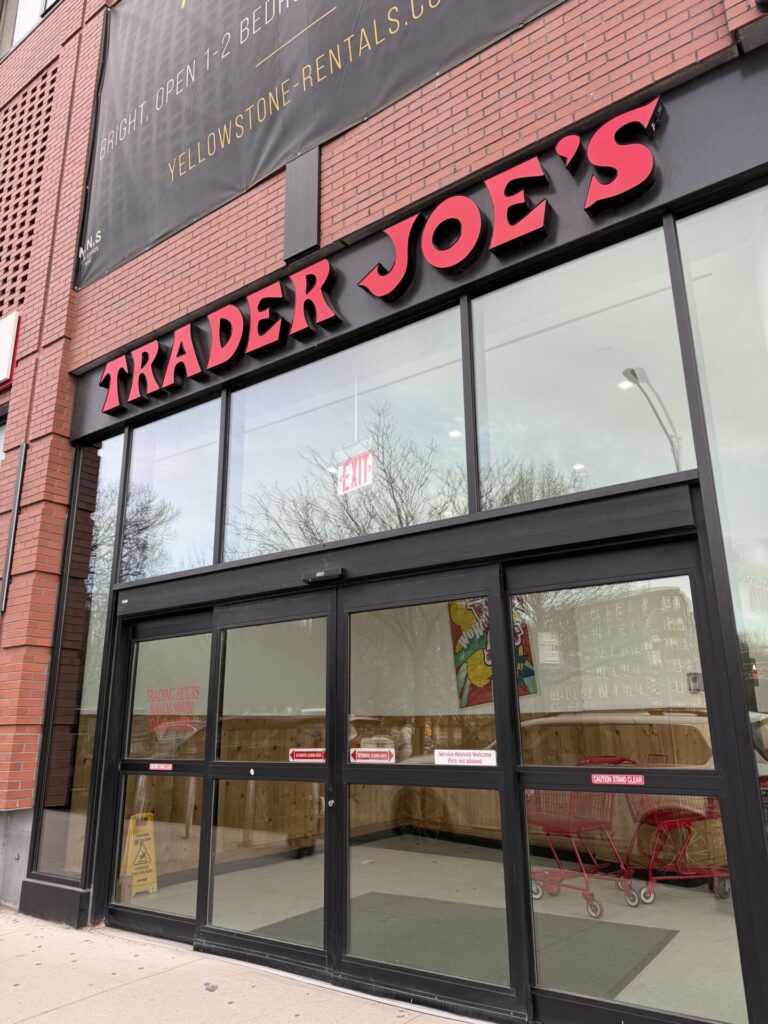
Trader Joe’s: Popular supermarket with multiple locations across New York City. Convenient, pretty affordable, and has become a status indicator if you have their mini tote bag or limited edition regular sized tote bags. This location opened in 2023.
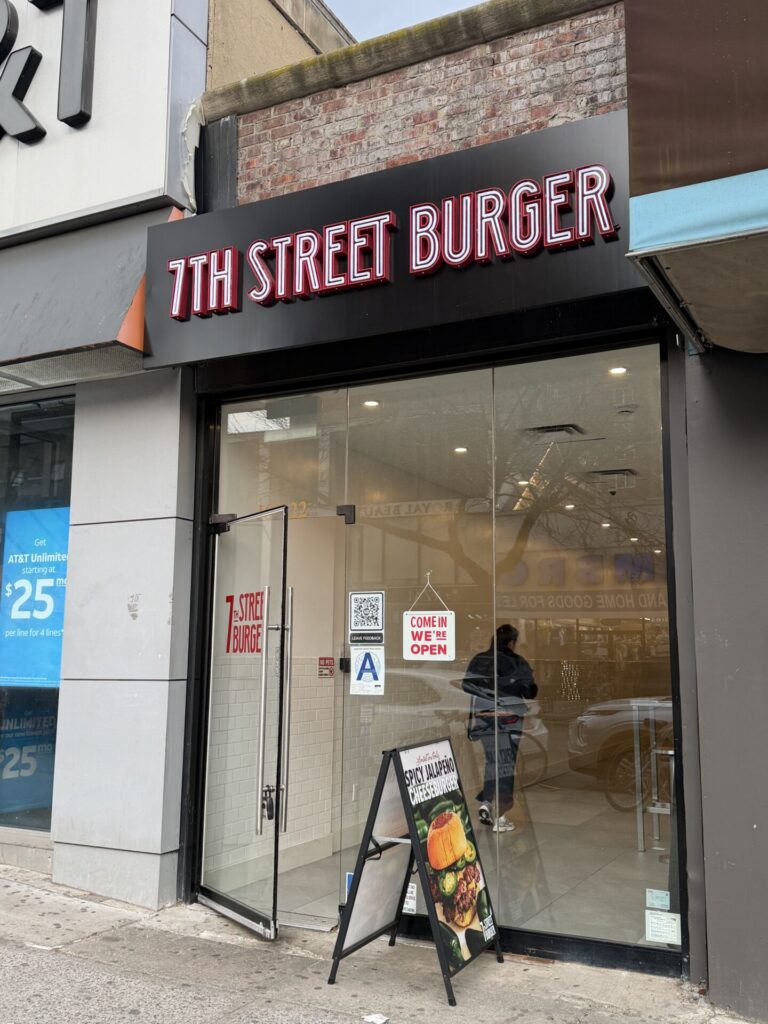
7th Street Burger: Specializes in smash burgers and fries. Has multiple locations across New York City. Their burgers are great and their fries are crispy. This location in Forest Hills just opened almost a year ago.
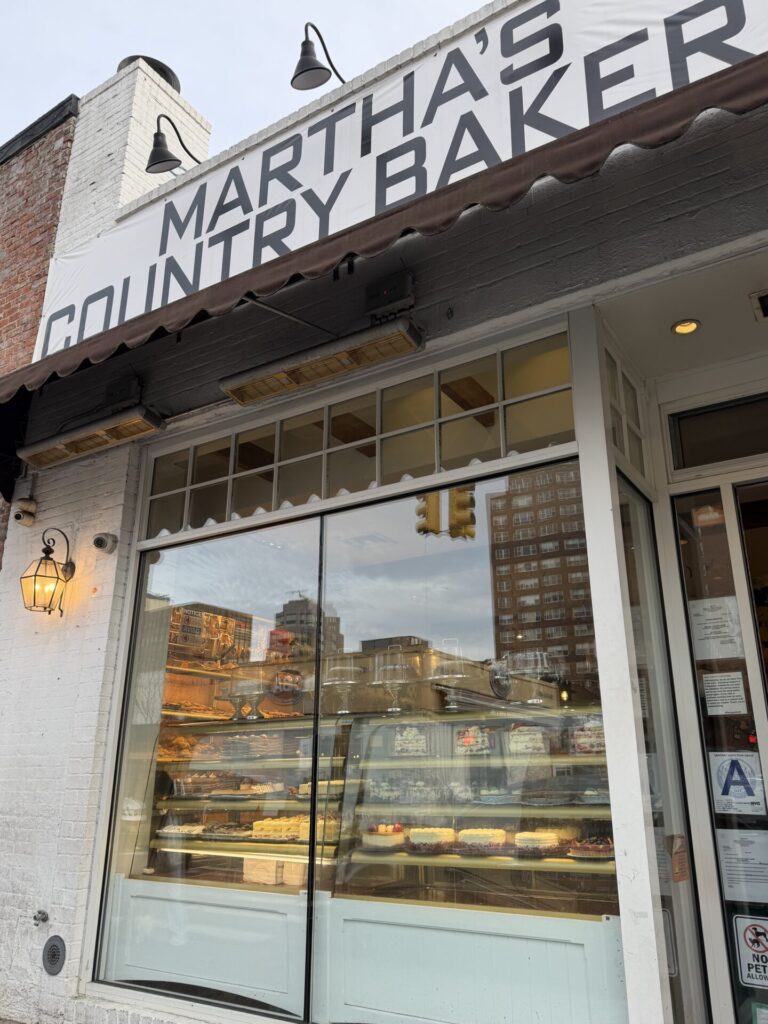
Martha’s Country Bakery: Local bakery that has a few locations around New York City. They sell AMAZING berry napoleons. Cute place to hang out and eat dessert. However, ordering the desserts to go can be a bit hectic when it gets crowded as you have to move quickly or else your turn to order will be passed to the person behind you on line. If you check Google map images of this location, this bakery has been around since 2007 and has expanded since then.
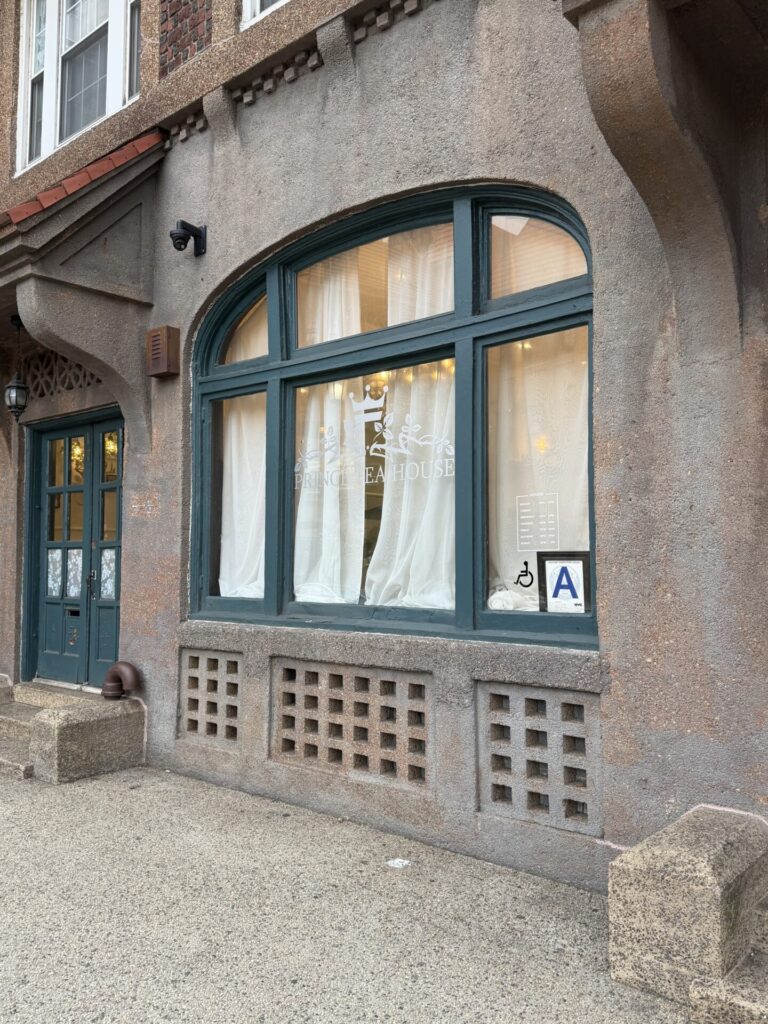
Prince Tea House: Asian fusion tea house. Aesthetically pleasing interior and also a great place to hang out with friends or family with great food and drinks. It gets busy around afternoon. They have a variety of locations around NYC.
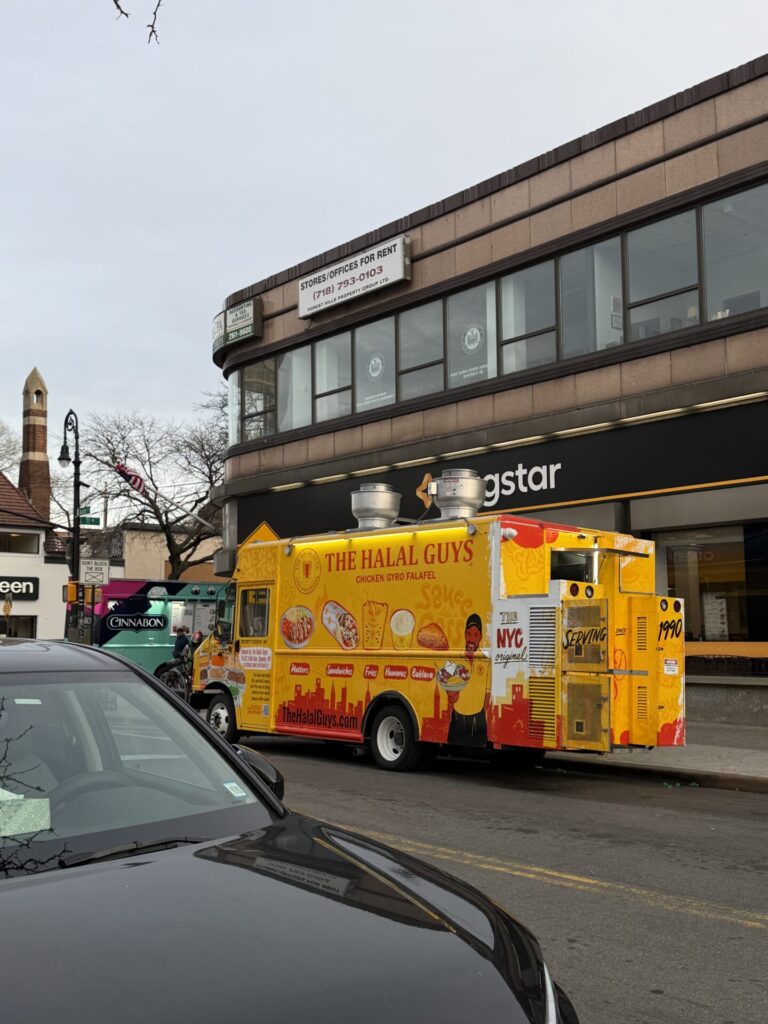
The Halal Guys: Food truck serving iconic halal food that many tourists search for in Manhattan (original location). They have multiple locations across NYC. They mainly sell platters and gyros. The workers are friendly and there are small lines at this food truck sometimes. They recently showed up about a few months ago in Forest Hills.
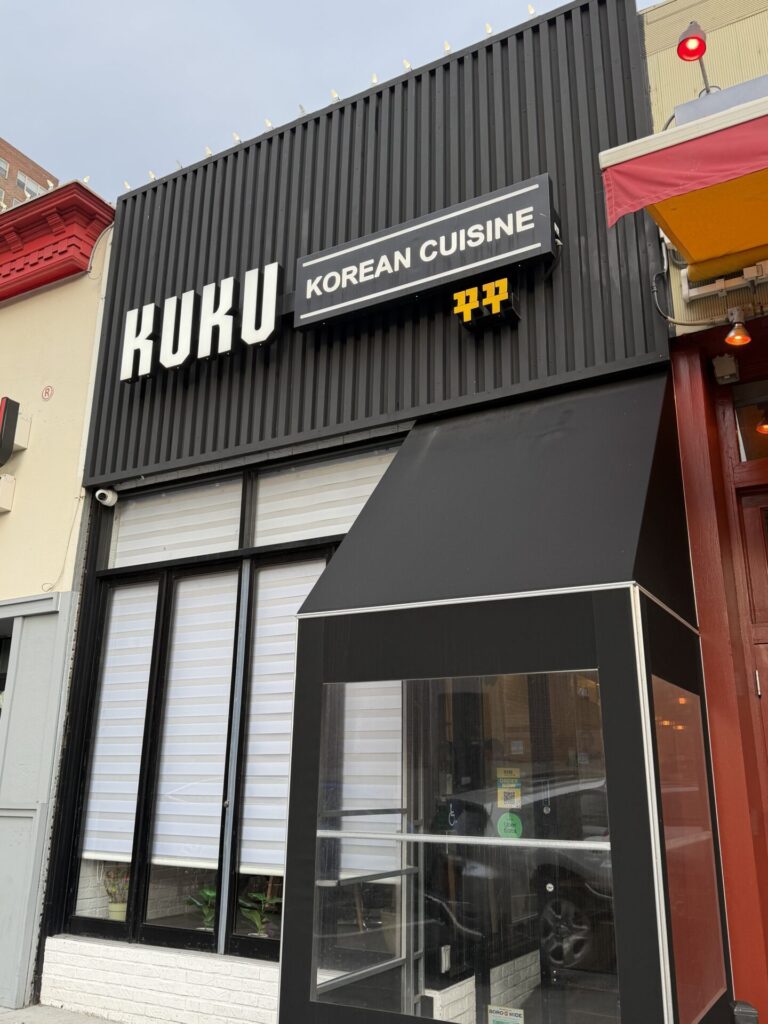
Kuku Korean Cuisine: An independent full-service restaurant with no other locations in NYC. They sell Korean dishes like: Korean fried chicken (specialty), bibimbap, Galbi tang, seafood pajeon, etc. Personally, I love this restaurant. The customer service is friendly and quick. Their Korean fried chicken is better than any other places I’ve been to. It’s a comforting restaurant that I enjoy going to. Kuku is a cozy and inviting restaurant that allows customers to sit down and enjoy a delicious meal either alone or with company.
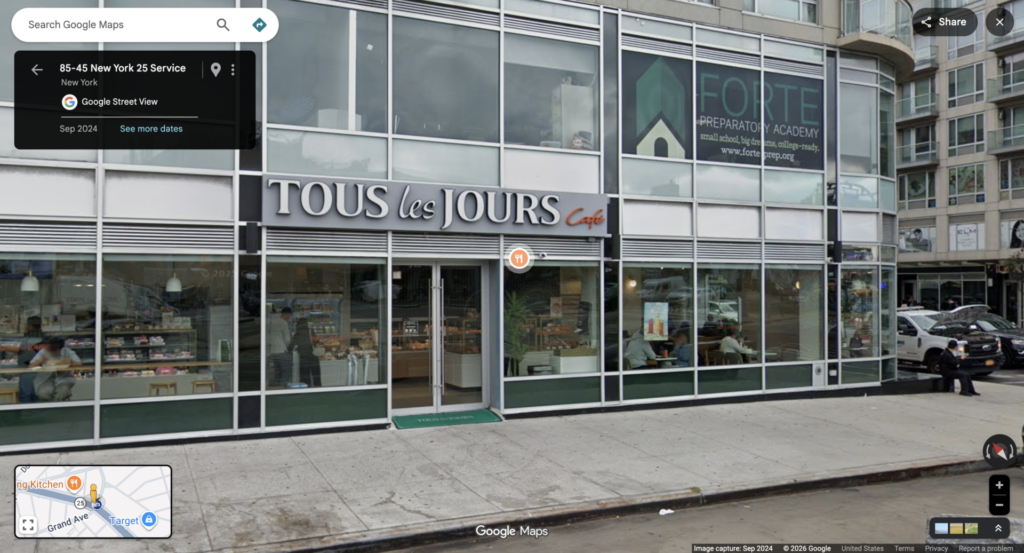
Just 10 years ago, this establishment used to be a large corner of nothing. No buildings, no projects, and no people. Back then, no one would even look this way when walking by this street. There was nothing significant or intriguing to look at. If you look at this same location back in 2020, this building was built and available to rent for retail. Now, this caught the attention of people. It once was an empty piece of land, but now, a modern property has been built to fill that unaesthetic void. Around the year 2023, signs were posted on the windows of this building: “Tous Les Jours, coming soon!”. My mom was excited, my friends were excited, my church was excited, and I was excited. Finally, a new cafe/bakery in the neighborhood was going to open. Once this establishment finally opened, the cafe was so popular and busy. Another thing to indicate before relating to the sociological idea of “we are how we eat,” is that Elmhurst is populated with mostly the Asian and Hispanic community. Thus, through my story of the empty plot becoming a hub for community, this retail space is actually beneficial to the neighborhood. As the Asian and Hispanic community are known for having a collectivist culture, this only drives people to participate more in community building and make Elmhurst a neighborhood for people to bond and socialize. Therefore, Tous Les Jours, a new retail store in Elmhurst is not just there to sell bread, but to provide a space for bringing the population closer together as a community. As we are how we eat, we eat where being together as a community is possible.
Question: How does the prevalence of cafes and/or bakeries shape the perspective and “friendliness” of a neighborhood? Does more bakeries/cafes mean a more “social” neighborhood?
The YouTube Short above by morocooks highlights cooking as a “time economy.” We often treat cooking as a personal choice, but in his perspective, cooking is tied to having “time capital.” For most people who work long shifts, or have a very demanding and stressful job, it would be nearly impossible to prepare a meal that would take about an hour or so. Thus, his point sociologically argues that cooking is not just about the cost of the ingredients, or a personal choice, but about having the luxury of time. Sometimes, a $5 rotisserie chicken isn’t being “lazy,” but just a survival tool to satisfy one’s hunger.
Question: Is the ability to cook homemade food from scratch a personal skill or a social privilege based on how much free time an individual has?
The Instagram Reel above shows a comical video of two friends who state that they’re “broke” (don’t have money), yet have the finances to cover for eating out. This sociologically highlights that individuals prioritize “eating out” in order to maintain a socially acceptable standard of living, even when their personal finances (bank accounts) are saying otherwise. Thus, this shows that eating out isn’t always solely for the food; but rather, a possible coping mechanism to provide comfort and normalcy despite going through financial stress, being “broke.”
Question: Is the normalcy of “eating out” influencing the financial instability of today’s society?
In the YouTube video, “$6 Vs. $25 Chicken Wings,” Andrew, Steven, and Adam, compares the contrasting price and quality of chicken wings to ultimately decide which chicken wing they ate was their favorite at the end of the video. This video is not them just doing a simple food review, but rather, how the food we eat can signal status. Through a sociological lens, the video illustrates how food is used to express one’s identity, maintain social status, and adapt in social spaces. The chicken isn’t being eaten to satisfy their hunger, it’s to display the status, the labor, and the craft.
Question: How does the price and quality of the food we eat shape our identity and lifestyle?
The YouTube video above shows an SNL (Saturday Night Live) parody of “Uber Eats Wrapped” inspired by “Spotify Wrapped.” The funny skit displays the uncomfortable truths about the characters’ consumption habits, such as an annual spending of $24,000 solely on ordering food, or their shameful eating habits/patterns. This compilation of data turns private consumption into a shareable identity. It sociologically highlights how we unconsciously trade our privacy for convenience, allow delivery apps to track our behavior, make extreme overspending choices, and unhealthy eating habits look like a funny “game,” all due to the comfort of having an easily accessible food service app, called UberEats.
Question: How does the extreme accessibility of food service apps such as “Uber Eats” influence how much Americans spend and consume on a daily basis?
Hillary Sujono
Need help with the Commons?
Email us at [email protected] so we can respond to your questions and requests. Please email from your CUNY email address if possible. Or visit our help site for more information: