This is an Instagram post discussing actress and Goop business owner, Gwyneth Paltrow’s new “restaurant chain” that she is opening in New York. Rather than opening up restaurants where people can sit, or even take out options, she is opening seven delivery-only locations around the city to order $20 dollar salads and sandwiches to your door directly. These almost function like ghost kitchens which we discuss earlier on in the semester. I find this really interesting because her entire brand is luxury, high-end health products, and I would assume (I guess incorrectly) that this would include a gourmet and expensive dining in option. This is a very smart business model as she does not need to pay rent for storefronts and only needs a kitchen and online ordering platform. This is a very real representation of what dining is like in our city and country nowadays, and even the most high-end brands cater to this on-demand shift. Further, it takes away a sense of community and belonging and continues to strip away the personality of restaurants and food in New York City.
Question: How does this Goop Kitchen reflect a greater shift in dining like we have discussed? How is this a more public facing example of these ghost kitchens and what does it mean for our city?
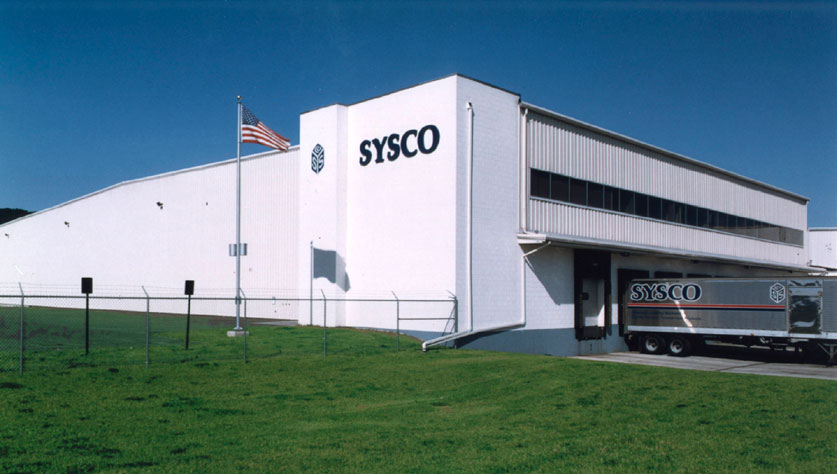
This Instagram reel is a deep dive on how Sysco, a giant in food manufacturing and distribution has taken over the U.S. market and has made it so that food around the country all tastes the same. Restaurant foods, specifically fried foods, are so monopolized by cheap and easy manufacturing from Sysco, that wherever you may be in the U.S., chicken tenders or mozzarella sticks all look and taste the same. This is upsetting both for local restaurants, customers and also farmers and small or local food manufacturing businesses. Further, it poses a huge health problem as food is no longer fresh or homemade, but even the foods we pay a premium for are made in factories– all while costs are rising.
Question: Have you seen or noticed this phenomenon in NYC? With what foods? What does this mean for locally owned businesses? How could the government intervene in this monopolized market?
10 minute radius from (subway station, line): W 4th Station, F / A / C / E line
Researchers (initials): Daya Cohen
Category
Count
Food Service (prepared meals or beverages)
Restaurants – full service
~ 350
Restaurants – limited service
~ 200
Bar / Coffee / Beverage
~ 175
Street Vendors – service (permitted)
~ 0
Street Vendors – service (informal)
~ 0
Total Service Establishments
~ 725
Food Retail (food products or ingredients)
Big Box Retailer
~ 7
Supermarket
~ 5
Market (small or specialty retailer)
~ 12
Deli / Bodega
~ 29
Street Vendors – retail (permitted)
~ 0
Street Vendors – retail (informal)
~ 0
Total Retail Establishments
~ 53
Additional Indicators
Chain establishments (all types)
~ 15
Independent establishments (all types)
~ 37
Street Vendors (total)
~ 0
Total Food Businesses Identified
~ 778
Visual Documentation:
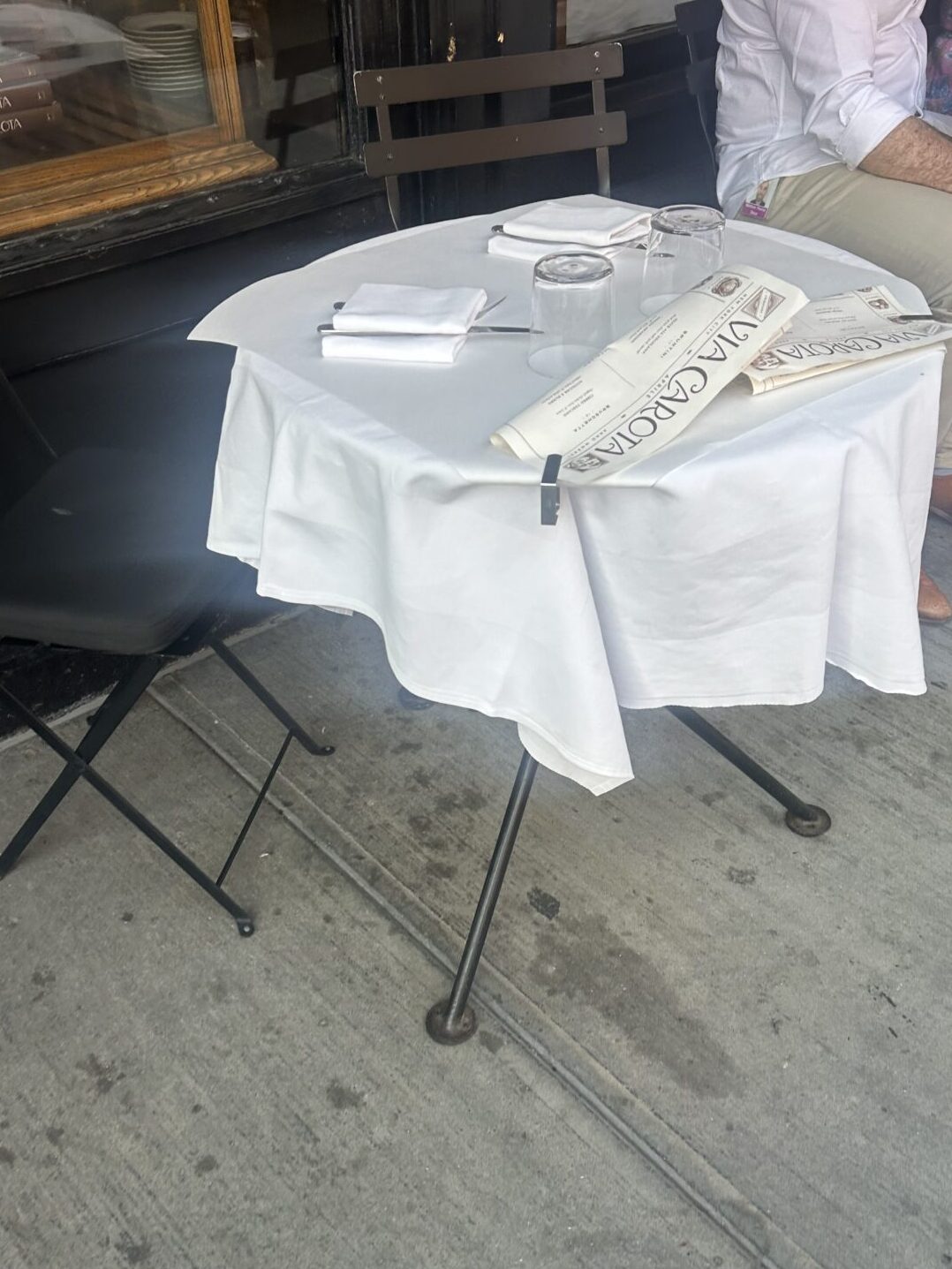
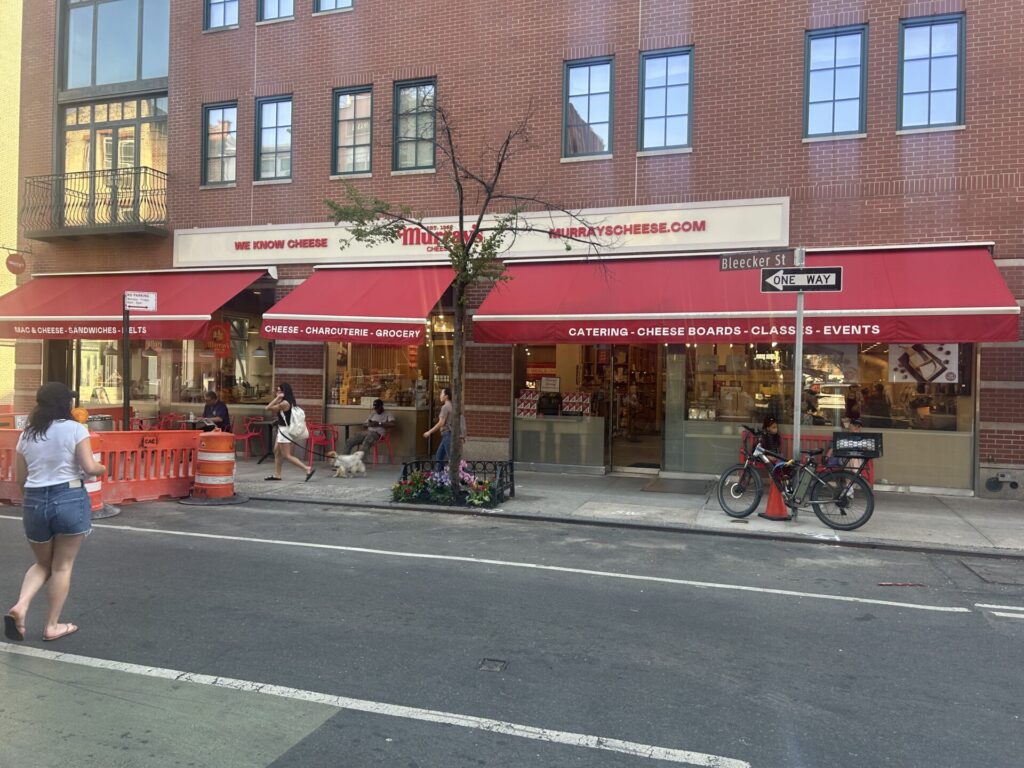
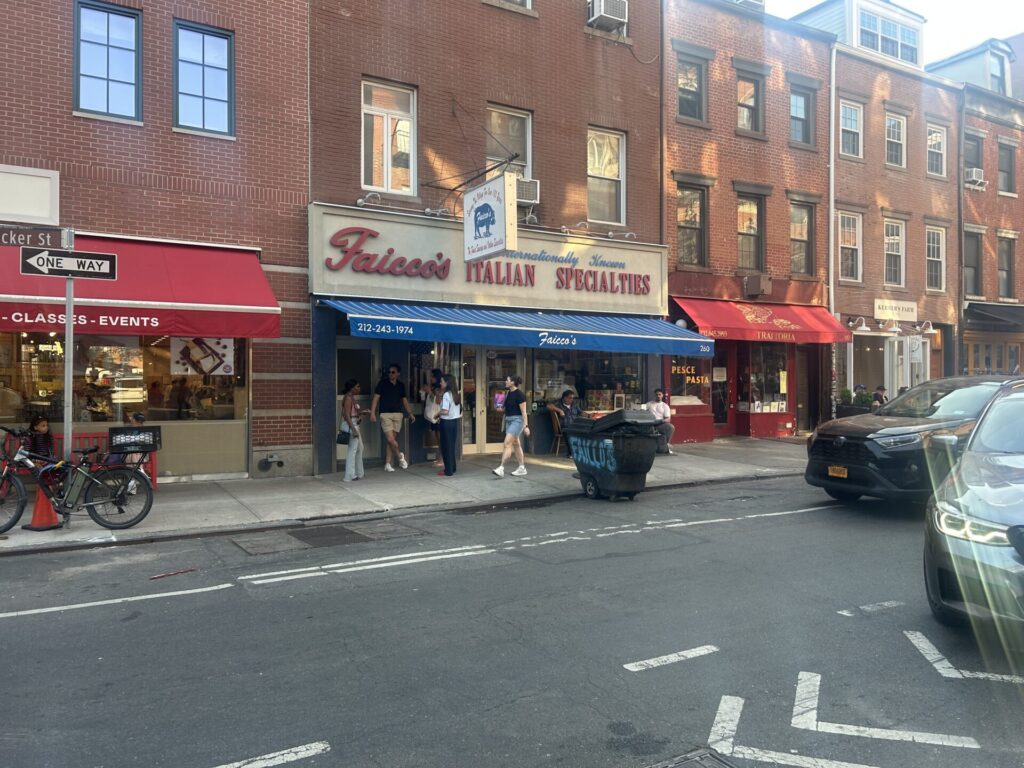
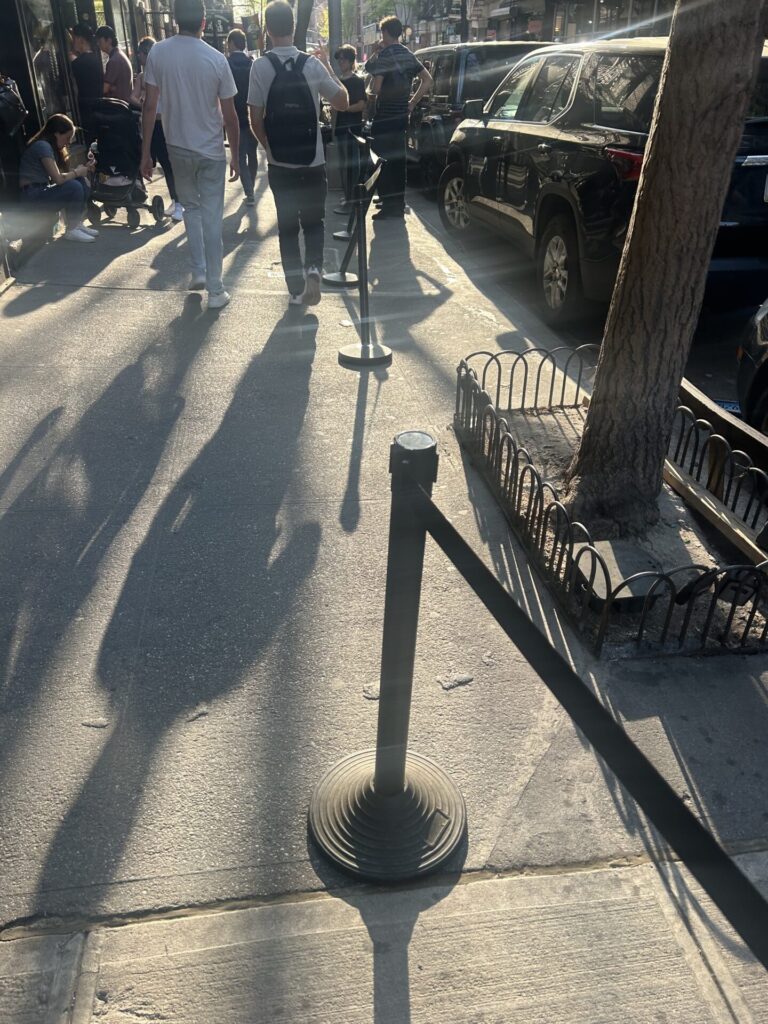
Caption: Upscale outdoor dining at Via Carota, a famous fine-dining Italian restaurant. Setups like these are seen throughout the neighborhood. Caption: An example of a specialty food retailer, Murray’s Cheese.Caption: Next door to Murray’s Cheese, an old-school Italian deli called Faicco’s sells Italian meats and sausages, as well as sandwiches and cheeses. It has been around since 1900. Caption: Seen across the neighborhood are these ropes or crowd control barriers outside of various restaurants and shops to control the amount of lines they get. This one is specifically outside of L’industrie Pizza, a famous slice shop.
Foodscape Description: The West Village neighborhood surrounding the W 4th Street A/C/E station is an incredibly densely populated foodscape predominantly made up of fine-dining and sit-down establishments. Most restaurants are full-service, with few limited-service or counter-service options – this reflects its positionality in the New York City food scene as a place people come to eat, as well as a tourist destination. I believe this also signals a sense of wealth and gentrification in the area, which is obvious from other metrics as well. The traffic in the West Village also seems to be driven by an online front, not via delivery platforms, but by social media and reservation apps like Resy and OpenTable. From research on many of the restaurants and cafes, many of which are sought after, hard to get into, with people paying excessive amounts of money simply for a reservation to dine there. Dining here is a status symbol. In terms of cuisines, the majority of establishments were Italian, ranging from slice shops to fine dining. There was also a significant number of Japanese restaurants, including omakase. Lastly, I also observed many French bistro or tavern-style dining sites, as well as many cafes, tea shops, and dessert places. Food retail also plays a central role in the area, with the majority of retail consisting of specialty shops and delis. Gourmet cheese and meat shops, especially Italian ones, as well as Japanese specialty stores, are at the forefront of retail here. Uniquely, many of these places also have a focus on prepared foods, with fewer supermarkets for cooking products and produce. There are also generally few food chains here, reflecting the neighborhood’s upper-class demographic, as grocery stores and dining out are both very expensive. In terms of customer and worker interactions, it seems that many workers in this foodscape are career industry workers and are predominantly Latino or workers of color, whereas the consumers are disproportionately white.
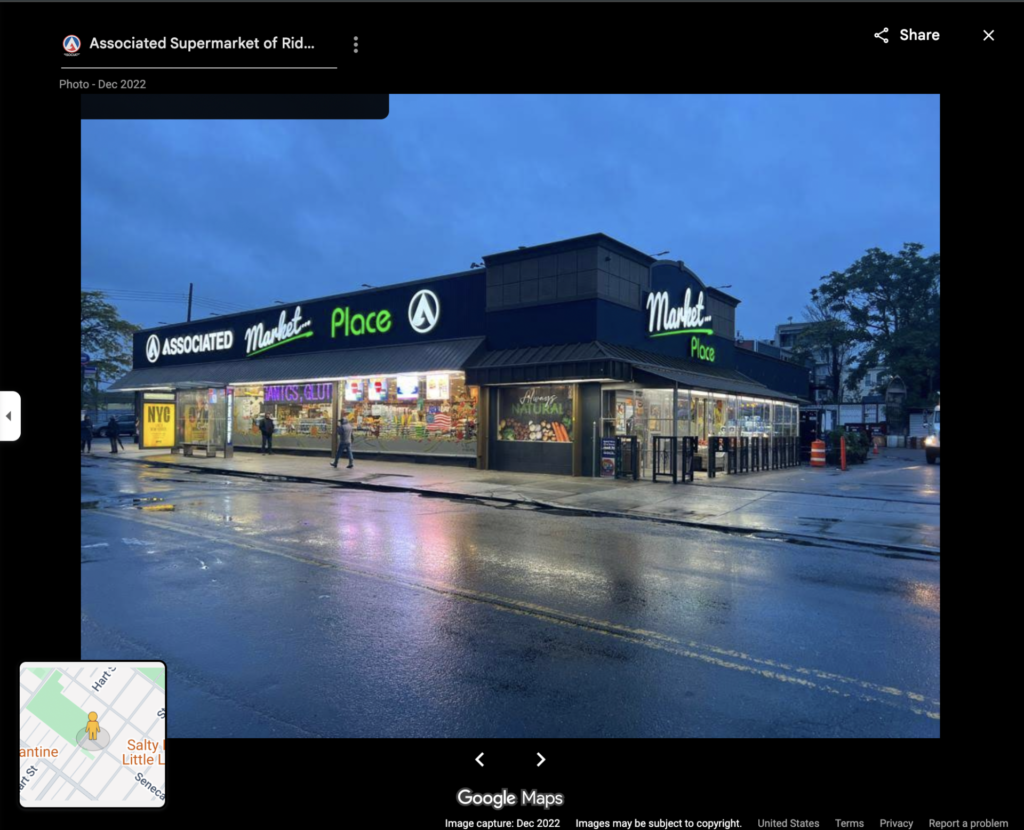
This supermarket is the closest one to my house in my neighborhood in Ridgewood, Queens. Despite there being multiple supermarkets within a 15-20 minute walk, the prices at this supermarket are exceedingly high for the quality of the food. I see this relates to how, in Will Work for Food, supermarkets replaced specialty grocers where you might find fresh, local produce, and replaced it with supermarkets like this one. I also feel like this connects to gentrification, as food prices have increased here despite the quality not being great. In another part of the neighborhood, it was just announced that a Whole Foods is opening. This is another shift towards bigger retailers to meet the demands of gentrification and new residents. I also have noticed it is impossible to find fresh meat or fish in my neighborhood, and very few grocers sell it. I think about how where you live and where you shop directly determines what you eat and thus your health. I am curious what might happen to the produce and prices here when Whole Foods opens next year.
Question: How does where you shop determine health outcomes? What factors are at play when retailers do not provide healthy options?
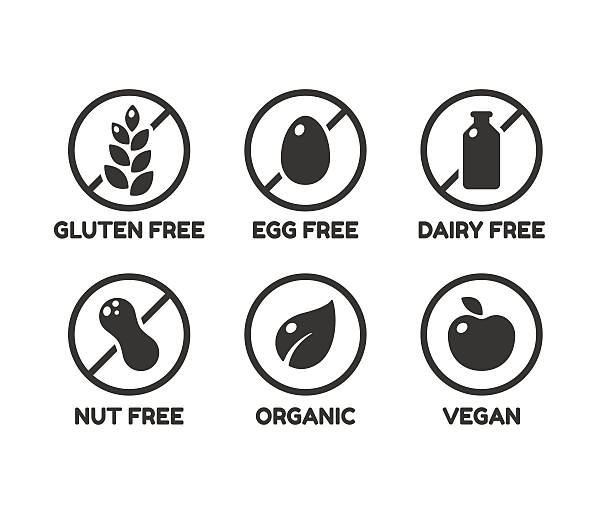
This article from Food Safety Magazine discusses a new bill passed in California which requires restaurants to label major allergens on menus. This only applies to restaurants which have 20 or more locations and require them to provide notices of the top 9 allergens: milk, eggs, fish, crustacean shellfish, tree nuts, wheat, peanuts, soybeans, and sesame. As someone with allergies this is great, and also makes me think of smaller restaurants doing the same. I also think about how many places do not allow or accomodate modifications.
Question: To what degree should restaurants notify customers of allergens? How much should they modify dishes to make them safe for customers?
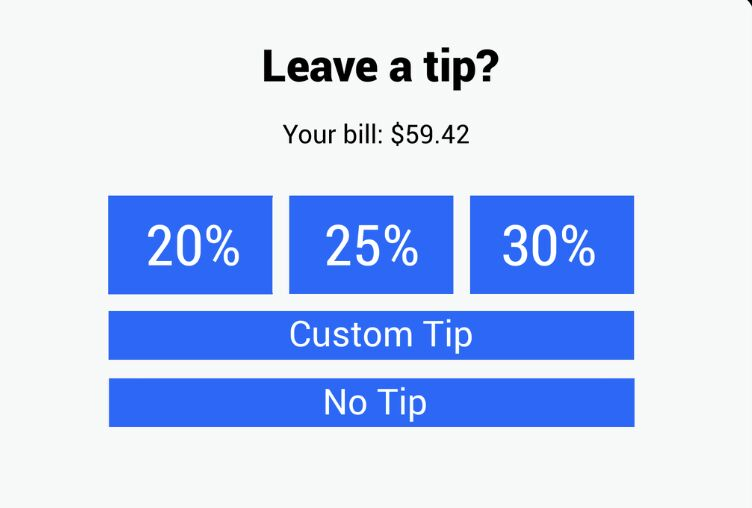
This article discusses through the former NYT food critic, Pete Wells’, perspective tipping culture in restaurants. Though this was written in 2013, it addresses a relevant conversation that continues to this day. Both the impact tips have on service, the desire for servers to continue with tips, the potentially extreme level that tips are expected in restaurants (up to 30% sometimes). It also brings up the idea of the gap between wages for front-of-house workers and kitchen workers. Kitchen workers’ wages have remained fairly constant in recent decades, and since they do not directly interact with customers, they don’t get tipped out.
Question: This concept begs the question of whether kitchen workers should be tipped out or whether wages should increase. Should restaurants pay their employees a living wage and do away with tips, also meaning employees would be taxed on their entire salary (whereas tips are not taxed now)?
NY Times Video with a lunch cook at NYC’s largest middle school, I.S. 61. This video explores how 2,000 or more students get fed every day at a middle school in one of the largest public school systems in the country. She discusses how students prefer fast food options like pizza. This also plays into the fact that Ruth cooks for thousands of students a day, but her work often goes unrecognized —she also speaks Spanish and raises the question of who is doing this labor? Additionally, providing school breakfast and lunch is a matter of providing food for children who may not have food secure households.
When we think of cooks and dining, we often forget about schools. What do we remember from our school lunches? Was it healthy? What policies go into school lunches and providing a filling, nourishing meal presumably for very cheap?
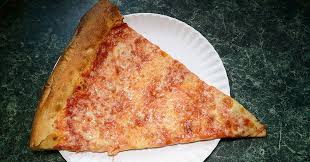
This article breaks down the history of how the classic NY slice came to be. It began with Italian immigrants in the late 19th and early 20th centuries. They brought over their Neapolitan-style pizzas, which were much smaller and had a different dough. But this was not sustainable with the ingredients available here in the city at the time, and further, the demand for a cheaper, quicker “slice” began. Lombardi’s, in Little Italy, began this trend and used a coal oven for its pizzas. The result was a thinner, crispier slice. Later, the invention of gas ovens furthered this trend, and here began the crispy, foldable slice we now associate with NY pizza. The affordability and portability of this slice, meant to be eaten by hand while commuting rather than with a fork like Neapolitan pizza, were revolutionary and appealed to busy NYers.
Question: What other forces (cultural, economic, and political) played a role in other classic New York foods, for example, the bacon egg and cheese or pastrami sandwiches?
Daya Cohen (she/her)
Need help with the Commons?
Email us at [email protected] so we can respond to your questions and requests. Please email from your CUNY email address if possible. Or visit our help site for more information: