Annotated Google Map: https://www.google.com/maps/d/edit?mid=10ajt681kR6f1uDtkXsx3JISXem7rGio&usp=sharing
Foodscapes Count Table:
| Food System Map | |
| 10 minute radius from (subway station, line): W 4th Station, F / A / C / E line | |
| Researchers (initials): Daya Cohen | |
| Category | Count |
| Food Service (prepared meals or beverages) | |
| Restaurants – full service | ~ 350 |
| Restaurants – limited service | ~ 200 |
| Bar / Coffee / Beverage | ~ 175 |
| Street Vendors – service (permitted) | ~ 0 |
| Street Vendors – service (informal) | ~ 0 |
| Total Service Establishments | ~ 725 |
| Food Retail (food products or ingredients) | |
| Big Box Retailer | ~ 7 |
| Supermarket | ~ 5 |
| Market (small or specialty retailer) | ~ 12 |
| Deli / Bodega | ~ 29 |
| Street Vendors – retail (permitted) | ~ 0 |
| Street Vendors – retail (informal) | ~ 0 |
| Total Retail Establishments | ~ 53 |
| Additional Indicators | |
| Chain establishments (all types) | ~ 15 |
| Independent establishments (all types) | ~ 37 |
| Street Vendors (total) | ~ 0 |
| Total Food Businesses Identified | ~ 778 |
Visual Documentation:
Foodscape Description:
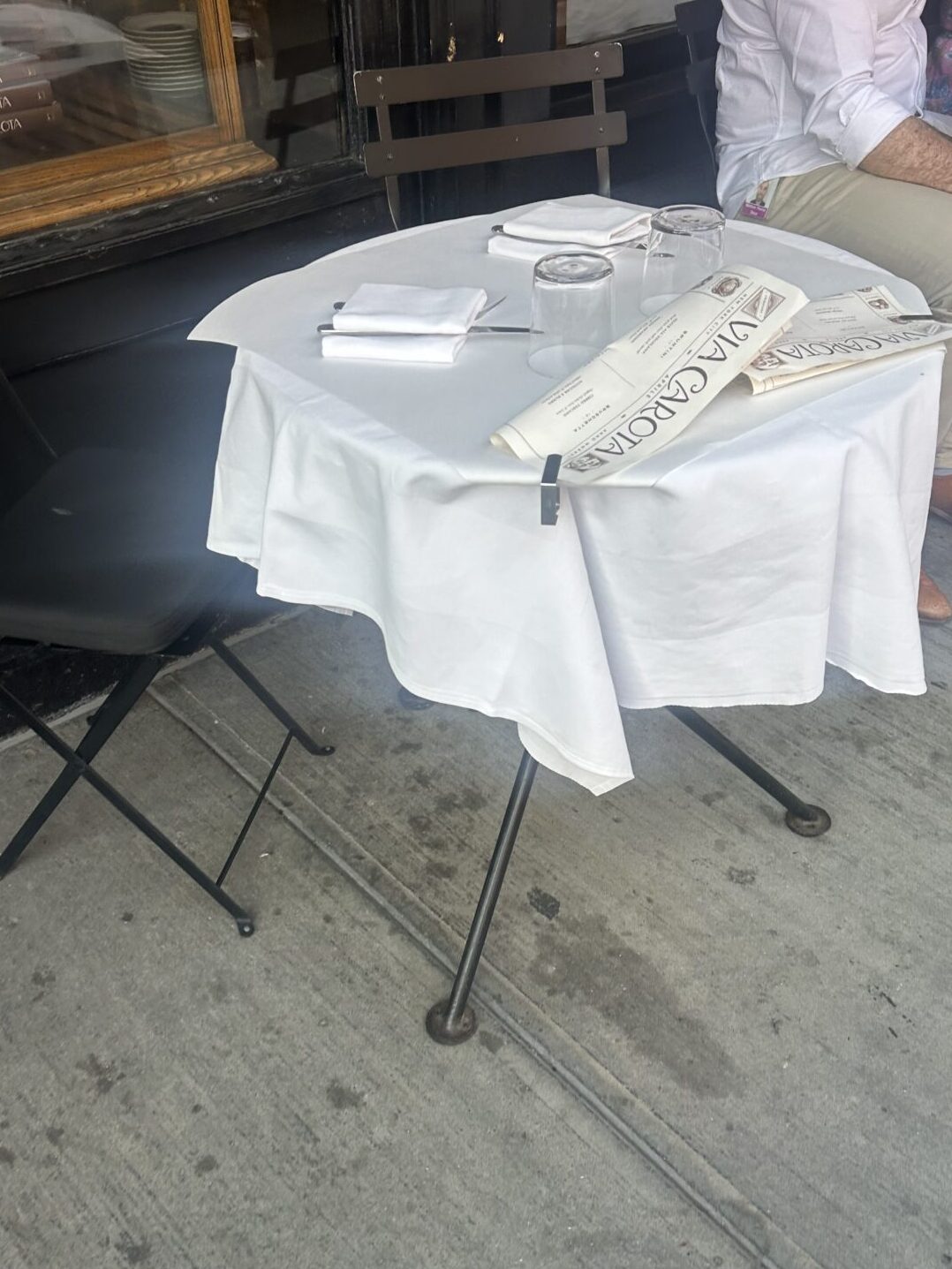
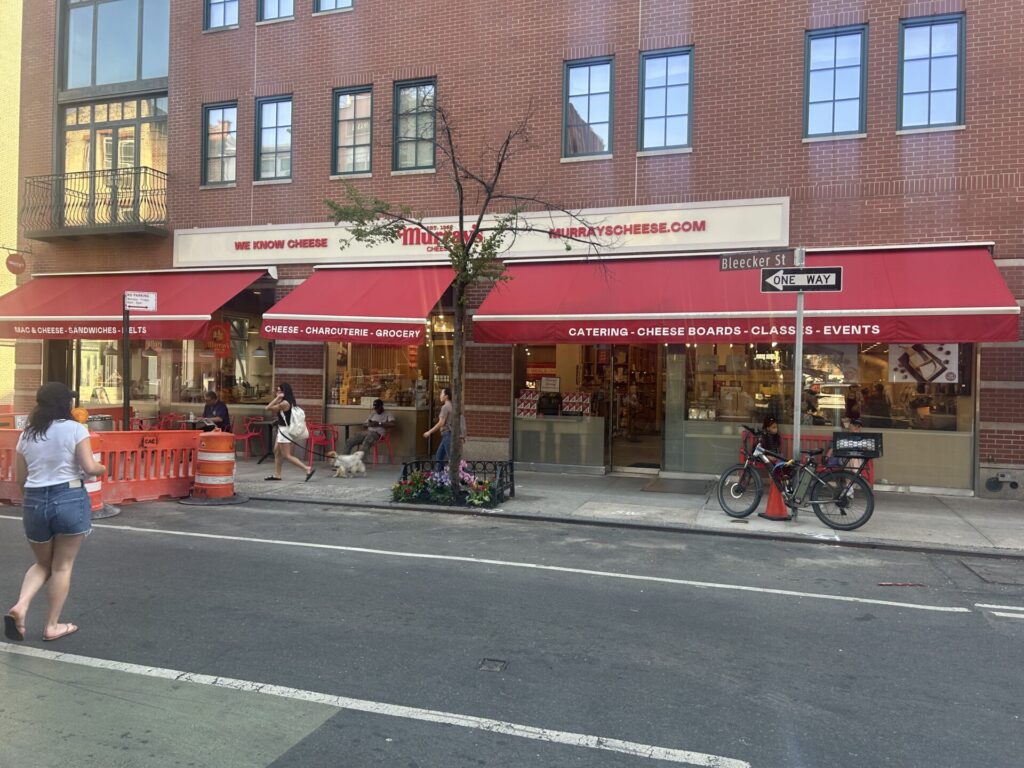
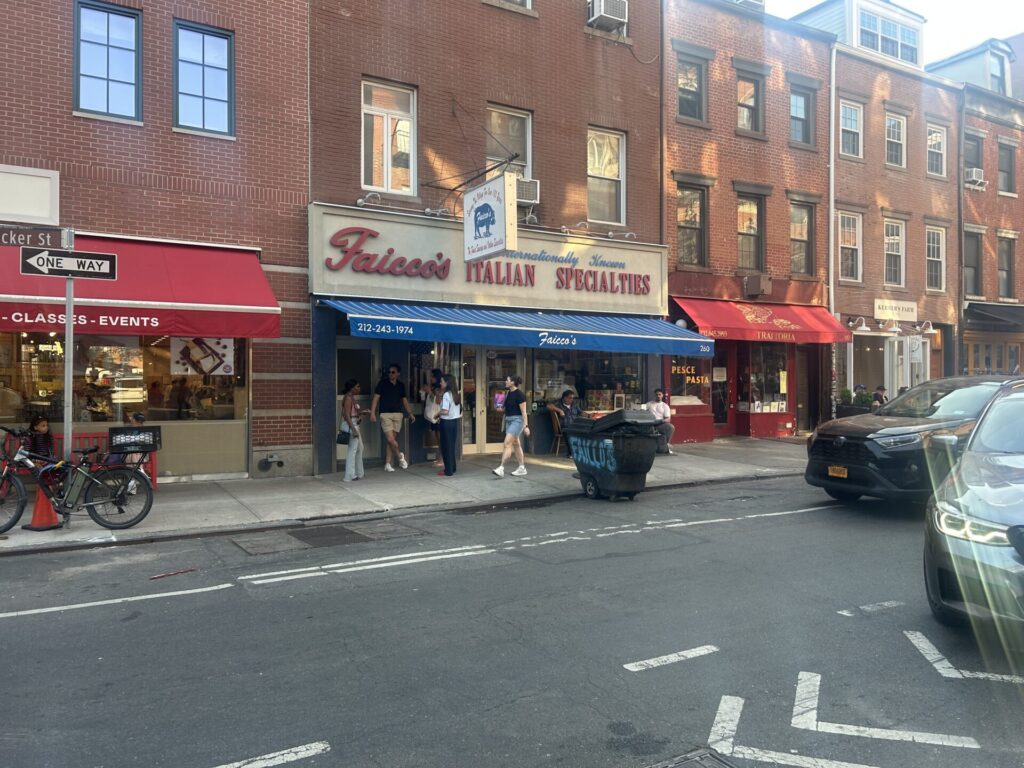
The West Village neighborhood surrounding the W 4th Street A/C/E station is an incredibly densely populated foodscape predominantly made up of fine-dining and sit-down establishments. Most restaurants are full-service, with few limited-service or counter-service options – this reflects its positionality in the New York City food scene as a place people come to eat, as well as a tourist destination. I believe this also signals a sense of wealth and gentrification in the area, which is obvious from other metrics as well. The traffic in the West Village also seems to be driven by an online front, not via delivery platforms, but by social media and reservation apps like Resy and OpenTable. From research on many of the restaurants and cafes, many of which are sought after, hard to get into, with people paying excessive amounts of money simply for a reservation to dine there. Dining here is a status symbol. In terms of cuisines, the majority of establishments were Italian, ranging from slice shops to fine dining. There was also a significant number of Japanese restaurants, including omakase. Lastly, I also observed many French bistro or tavern-style dining sites, as well as many cafes, tea shops, and dessert places. Food retail also plays a central role in the area, with the majority of retail consisting of specialty shops and delis. Gourmet cheese and meat shops, especially Italian ones, as well as Japanese specialty stores, are at the forefront of retail here. Uniquely, many of these places also have a focus on prepared foods, with fewer supermarkets for cooking products and produce. There are also generally few food chains here, reflecting the neighborhood’s upper-class demographic, as grocery stores and dining out are both very expensive. In terms of customer and worker interactions, it seems that many workers in this foodscape are career industry workers and are predominantly Latino or workers of color, whereas the consumers are disproportionately white.


Leave a Reply
You must be logged in to post a comment.