Category: Posts

  • Woman in the Kitchen

    Women Belong In The Kitchen — But It’s Not What You Think

    The article above is challenging the phrase/insult most women have probably heard in their lives, “You belong in the kitchen.” The article explains why that insult doesn’t really work and helps us rethink/restructure our thinking when we hear it. The kitchen is a place that brings families nourishment, but it’s also a place where marginalized communities unite to share ideas that can change society. Mlaba writes, “The argument here is not that women actually do belong in the kitchen, but rather that women shouldn’t be underestimated. The kitchen is not the prison that the patriarchy imagined it would be, largely because the society that coined the phrase failed to grasp what women could actually accomplish in a kitchen.” This right here perfectly encapsulates what it actually means to truly belong in the kitchen; it’s not a prison but a sanctuary.

    Question: Is it possible in the future that we see the reclaiming and changing of what it means to “belong in the kitchen”?
  • Ways to Cook that Reduce Waste

    https://www.abc.net.au/news/2026-03-01/chef-tackles-food-waste-by-cooking-funny-meat-cuts/106384778

    This article is about a chef in New South Wales who is cutting down on food waste by buying whole steers instead of just the most popular cuts. He doesn’t just make steaks and fillets; he also makes dishes with less common or “funny” cuts that people don’t usually think of. He does this to cut down on waste, help local farmers, and get customers to try new menu items. This has to do with food and society because it shows how what people want affects how food is made and thrown away. A lot of modern food systems put convenience and certain cuts first, which makes them less efficient and puts more stress on the environment. The chef’s whole-animal approach goes against these habits and encourages sustainability, responsible eating, and a greater appreciation for where food comes from. It shows that people are becoming more aware of the need to cut down on waste and make food systems that are more resilient and moral.

    How do consumer preferences for certain meat cuts influence food waste, sustainability practices, and the way society values different parts of animals in the modern food system?

  • Cooking is a Privilege

    The YouTube Short above by morocooks highlights cooking as a “time economy.” We often treat cooking as a personal choice, but in his perspective, cooking is tied to having “time capital.” For most people who work long shifts, or have a very demanding and stressful job, it would be nearly impossible to prepare a meal that would take about an hour or so. Thus, his point sociologically argues that cooking is not just about the cost of the ingredients, or a personal choice, but about having the luxury of time. Sometimes, a $5 rotisserie chicken isn’t being “lazy,” but just a survival tool to satisfy one’s hunger.

    Question: Is the ability to cook homemade food from scratch a personal skill or a social privilege based on how much free time an individual has?

  • Cooking: The authenticity of Avocado Oil

    https://culinacooks.com/blogs/blog/which-avocado-oil-brands-are-real

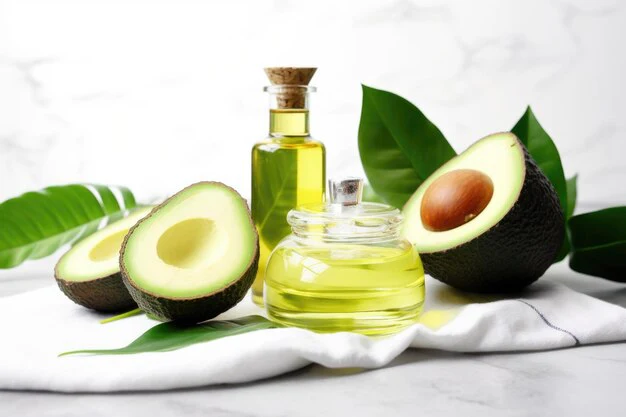
    Avocado oil is constantly being pushed as the healthier option of cooking oil and many people opt to get it however, avocado oil does not have a clear regulation for how it is supposed to be made. With ends up happening is a lot of of the oils that are put in grocery stores on the shelf and people buy are not real avocado oil but instead it’s something else that is labeled as avocado oil. There are many supermarkets where you can go and find a bottle of avocado oil for a little less than $10 and people would buy it without questioning why it’s so cheap however, even if somebody were too slightly question why the price is so low they might look at the bottle and they still would not see any indication to let them know if the avocado oil is 100% authentic or if it’s made of something else. This is because a lot of companies do not have a clear indication on their label from where they get the oil from or how it’s made. They just label it as 100% avocado oil without saying anything else so that they can have people buy the oil. To me it’s very crazy because avocado oil is something that is pushed upon us, but people cannot even get its benefits because a lot of companies are profiting off making fake avocado oil. I feel like there should be a food regulation or a law that prohibits this and makes it so that all the oil that is on display claiming to be avocado oil is 100% authentic avocado oil.

  • Cooking traditions (3 golpes)

    Screenshot

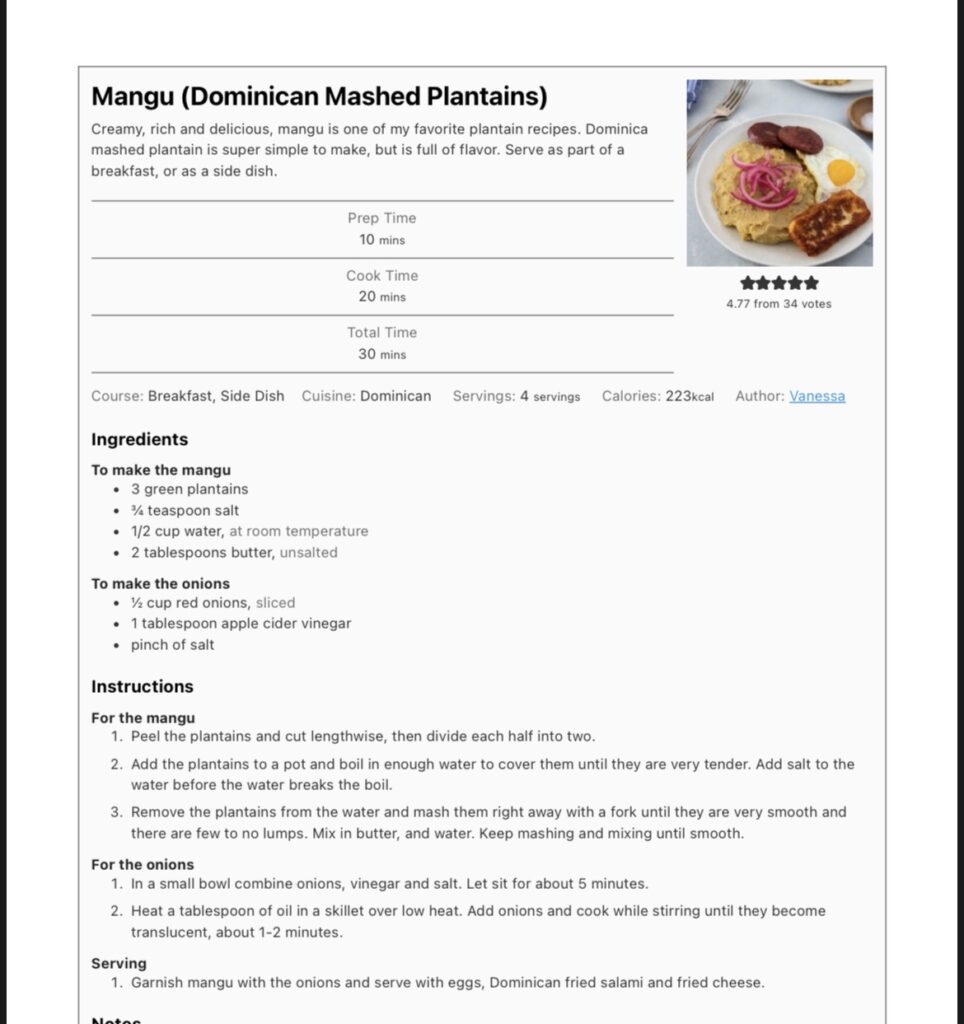
    Cooking food from my culture is my passion, and representing myself is a delicious and easy way to reconnect with my childhood memories of learning from my mother the proper way to cut onions, cheese, salami, and plantains. Food like Mangu  can be eaten at “breakfast, lunch, and dinner.” I found an interesting article named “Mangu (Dominican Mashed Plantains )” by Vanessa, that talks about the nutrition the 

    Mangu gives, that is “potassium, vitamin C, magnesium ect.”

    The background of plantains which was “influenced by the Congo of  Africa.” It was brought during the “slave trade” in the 1500s. This article talks about the word mangu, which is a similar African word to “mangusi”- “comes from west Africa.” All spices we use for cooking, and every vegetable and fruit, has a story that influences us every day. Every culture and the relationships we cook can create desserts and meals that make us feel at home. It’s important to understand the origin and history of each dish, how it was brought to our territory, and how it became ingrained in our culture.

     CQ-Before reading this post, did you know the origin of the plantains and how they were brought here, and how it still influences us today?

    What dish takes you back to your childhood?

    How does it make you feel? 

    How have certain dishes become part of your culture and influenced your life? 

    When plantains arrived in the Dominican Republic, how did they affect people’s lives? What do you think their reaction was?

    P.S. I’ll leave the recipe for Mangu that the article offers if you want to make it.Food and Society (SOC 325)

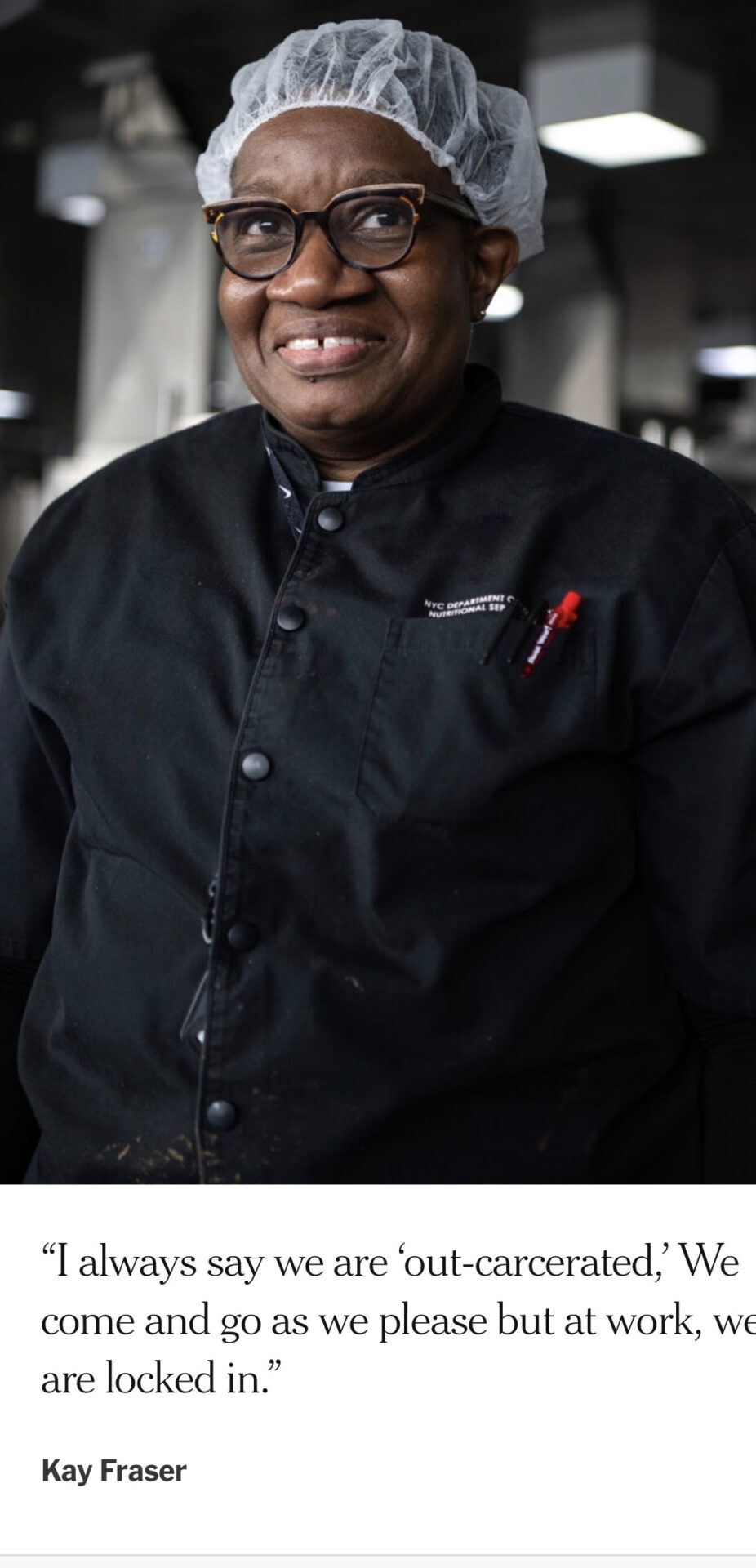
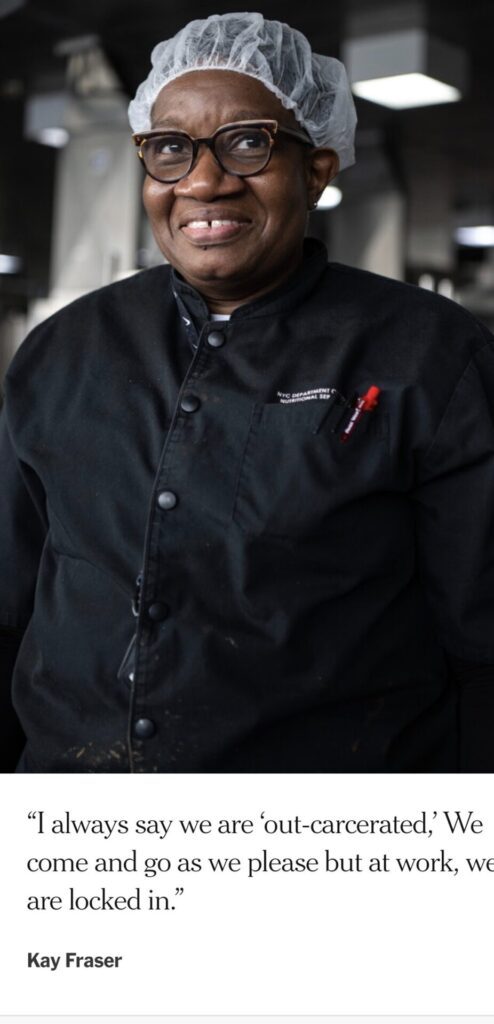
  • Inside a Rikers Island Kitchen,Dull Knives and Critical Jobs

    Inside a Rikers Island Kitchen,Dull Knives and Critical Jobs

    Screenshot

    https://www.nytimes.com/2025/02/04/dining/rikers-island-kitchen-cooks.html?smid=nytcore-ios-share

    Read/ listen to this article- about being a cook at Rikers -one of the unseen ‘essential jobs’

    Most have long commutes and stressful working conditions- starting with ‘eight-hour shifts confined behind a long series of locked doors. But some like Tamara Craddock,  ‘had left a career in restaurants for the stabler hours, health benefits and pension of a government job’ and other cooks interviewed 

    saw ‘the work as a chance to make a difference in the lives of the detainees, providing them a rare reminder of their humanity: a meal.’

    Is this a better / worse kitchen job than other ones in the industry?  What does this say about the job itself?

    ( Note why for the first time reporters were given access to the kitchen)

  • Factor meals advertisements

    https://www.tiktok.com/t/ZP8xPNYNo

    I was scrolling through TikTok when I got this add which reminded me of what professor Rossette “if you don’t cook what you eat, someone else does”. In the add the nutritionist explains how convenient and helpful it is for consumers to have their meals prepared for the week but it hides the concept of food labor and reproductive labor because cooking is often taken for granted when it is done by others. Also not everyone can afford this type of benefit of someone else preparing and cooking their food for an entire week showing us how access to convenient is shaped by inequality therefore this add reflects broader inequalities in how food work is valued and who is responsible for sustaining everyday life.

  • Struggle Meals

    Struggle meals are meals that are made with food lying around when funds are low. Everyone has their own versions of struggle meals, including foods like ramen. For me it’s interesting how different foods for certain individuals aren’t considered struggle meals but for others they are. In the TikTok clip mixing corn with mayonnaise was considered a struggle meal while for the other individuals in the video it was a regular meal called esquites. The difference of the food that they are making shows how one could be a luxury while the other would be a struggle meal. 

    How do economic and cultural differences affect the way you look and cook food ?

  • Cooking : Health Advantage

    @drjeremylondon

    Why cooking your meals at home can be a gamechanger for your health #doctor #surgeon #food #foodtok #fypシ

    ♬ original sound – Dr. Jeremy London, MD

    Cooking is always a great idea for most specifically health reasons and you get to control the specifics in what you eat. I know many will say it is hard to cook when you have no experience but we live in a world where the internet loves to have people that have everything set up for us. The tutorials and people leaving all the instructions are endless, and most even work in a way for those who can’t afford the highest of ingrediants. Health wise we would normally reduce the amount of in take of unknown substances we could be consuming from bought meals or restaurant meals.

    Question : If cooking at home is healthier, why do so many people still rely on eating out, and what does that say about our daily lives and society?

  • The Invisible Cook: How Bangladeshi Labor Built the “Indian” Restaurant Empire

    This video highlights how the public sphere of cooking often relies on the complete erasure of the “invisible” culinary worker, as Bangladeshi immigrants were forced to hide their true cultural identity to participate in the hospitality market. It demonstrates that when cooking moves into the commercial sphere, immigrant laborers must frequently package their work to fit the dominant culture’s colonial imagination, stripping away their own history to serve a sanitized commodity.

    Sociological Question: How does the commercial necessity for Bangladeshi chefs to rebrand themselves as ‘Indian’ illustrate the power of the consumer’s gaze in dictating which immigrant identities are considered ‘marketable’ in the global food system?

  • Still Eating Out?

    https://www.bbc.com/news/articles/c0ljpxek5w2o

    The article points to the impact that increasing food costs and the cost of living crisis are having on people’s lives in Britain, showing how even something as simple as having a meal outside can become an economic burden for many people in the country. People like James Deegan, who used to enjoy having meals outside frequently, now only do so occasionally due to the high costs of food in restaurants in the country. In contrast, many restaurants in the country are struggling due to the high costs of doing business in the country, including taxes, wages, fuel costs, and food costs, with fewer restaurants in operation than before the pandemic hit the country. The article also points to the broader change in food culture in today’s society in that having food outside is no longer just about bringing people together but is also about value for money spent in many ways.

    Q:In today’s economic climate, is dining out becoming a luxury rather than a normal part of social life ?

  • Chinese Restaurants

    @toryshiloh

    Why the Hood Runs on Chinese Food @Amy Chen

    ♬ original sound – Tory Bullock

    The TikTok above shows us how racism impacts the type of cuisine and restaurants available in communities with POC. He explains how the myth of the model minority and the Chinese Exclusion Act led to Chinese immigrants being able to open restaurants in Black communities, but Blacks couldn’t open restaurants in their own communities. That is so interesting to me because in my neighborhood there are about 2-4 Chinese restaurants like a block or 2 apart, showing you how prevalent it is to this day.

    Question: How has structural racism limited Black restauranteurs from opening restaurants in communities of color while allowing other POCs/immigrants to open restaurants?

  • “We have food at home”

  • “Diabetes in a Cup” How our daily coffee is not coffee at all.

    In this video “The INSANELY Sweet Sugary Coffee Epidemic” by YouTuber Kiana Docherty, we look into the rise of sugar based coffee drinks and how customizing our take out coffee’s at places such as Dunkin or Starbucks is actually altering our coffee to not be coffee at all and instead heaping amounts of sugar and caffeine thus Diabetes in a Cup. This is important because Gen Z and Millennials make up the large population on take out coffee drinks driving a global business focused on distancing itself from coffee in place for unhealthy sugary drinks increasing diabetes.

    Sociological Question: How does eating out change how we perceive average foods and drinks that we can make at home?

  • Tipping Culture in America

    This video shows growing frustration among Americans who believe tipping expectations have moved beyond conventional service professions. According to a WalletHub survey, approximately 90% believe tipping culture has become “out of control.”Many people are unhappy about being asked to tip in places where tipping was not previously expected, especially as inflation and economic constraints tighten budgets. This backlash reflects a broader discussion about whether tips should remain voluntary expressions of gratitude or whether firms should reconsider how they compensate employees.

    Has tipping culture gone too far in America, or is it still an important way to support service workers?

  • Never Too Broke for Eating Out

    Link: https://www.instagram.com/reel/CyHeLRLgj_C/?igsh=MTRycXl1bWZzZmRyMw%3D%3D

    The Instagram Reel above shows a comical video of two friends who state that they’re “broke” (don’t have money), yet have the finances to cover for eating out. This sociologically highlights that individuals prioritize “eating out” in order to maintain a socially acceptable standard of living, even when their personal finances (bank accounts) are saying otherwise. Thus, this shows that eating out isn’t always solely for the food; but rather, a possible coping mechanism to provide comfort and normalcy despite going through financial stress, being “broke.”

    Question: Is the normalcy of “eating out” influencing the financial instability of today’s society?

  • Eating out can affect earn and body.


    I found the article named “Eating Out Increases Daily Calorie Intake” by Jessica E. Todd and Lisa Mancino from (6/1/2010).

    This article is a clear example and explains that in 2010, the U.S. people spent 40% of their wages on eating out. This article compares the percentage of wages spent on food purchased outside the home (restaurants, grocery stores, etc.) with 1970, when 25% of their wages were spent eating out. We see a 15% eat out increase in eating out over 40 years. 

    They also show that when people eat out at restaurants, they choose foods with more “calories, saturated fats, and fried foods”  than “meals prepared at home.” This causes a big difference in the “daily diet”.

    Eating out, the type of food you order, and the number of calories it contains affect your daily “calorie intake compared to” meals prepared at home, by increasing fat and sugar.” Also, talk about the weight and height of the adult that are consumed food. 

    Critical Q: 

    -What do you think about how much the U.S. people spend 40% in 201l of their earnings eating out compared to 25% in 1970?  Did you have any idea why?

    -Do you think the percentage of money people spend eating out has increased or decreased in the 16 years since this article was published? What could be the cause of this, and how can we improve our calorie intake? What solution would you suggest?Food and Society (SOC 325)

  • Rent and eating out

    El Rio Grande was a restaurant located in Murray Hill in Manhattan that was open for over 40 years. My father was a cook at the restaurant for more than 10 years and was laid off when the restaurant had to shut down due to rent prices. Many local and loved restaurants are forced to close because of rent increases. There are many different factors that influence the price of food we’re eating. Rent is a big aspect in whether a restaurant is able to close its doors or stay open and the cost of the food. 

    Question- When eating out do you go to nice areas or stay local ? Do you know of any restaurants that had to shut down due to a rent increase ?

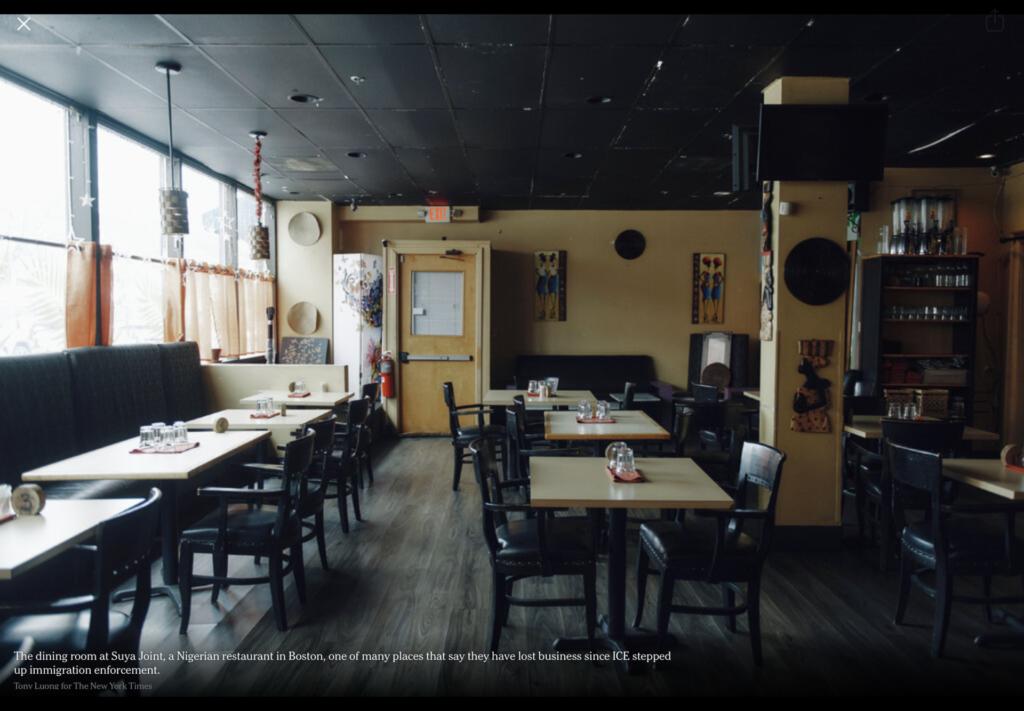
  • ‘Worse Than the Pandemic’: Restaurants Say ICE Presence Imperils Business

    https://www.nytimes.com/2026/02/13/dining/restaurants-food-delivery-immigrants-ice.html?smid=nytcore-ios-share

    We’ve been reading academic papers on the ‘invisible ‘ workers that are a consequential part of the food system.  This New York Times article shines a light on these workers -how many restaurant workers are being affected by ICE 

    ‘The fear of detention among customers and employees — in an industry in which more than one-fifth of the work force nationwide was born abroad — has taken a toll.’

    In addition, this article also points to the importance of restaurants in a community as a third space. 

    “As community hubs, restaurants have the power to mobilize locals in a way few other businesses can, said Diana Dávila, the chef and owner of Mi Tocaya, a Mexican restaurant in Chicago. She helped organize a fund-raiser last month that collected $115,000 to buy groceries for families facing food insecurity because of ICE actions.

    “Restaurants put a face to what is happening,” 

    Question: how does what’s happening today intersect with ‘ the essential worker’ of the Pandemic?

  • Eating “Out”: Disadvantages

    The world will always have new and reoccuring fast foods and restaurants popping up and ready for people to try but is it really worth it. In my opinion, most places are okay as a one time but most people are obsessed with constantly going out and this video lists out reasons to why its not the best of choices to do so. When we make food at home or eat home made food, it is usually a lot more controlled and we get to control the ingrediants that we put in the food. Eating out usually means eating food with things in it that could be a lot worse than you think but thats why most places are good for one time purposes but it gets worse when it becomes a constant.

    Question : To what extent is frequent fast food consumption really an individual choice, and how much is it shaped by convenience, work schedules, marketing, and broader social pressures?